DOSSIER 047 / DOCUMENTED OPERATIONS
MKULTRA: the CIA experiments, the victims and the cover-up
How Cold War fears became secret experiments—and why so many answers disappeared with the files.
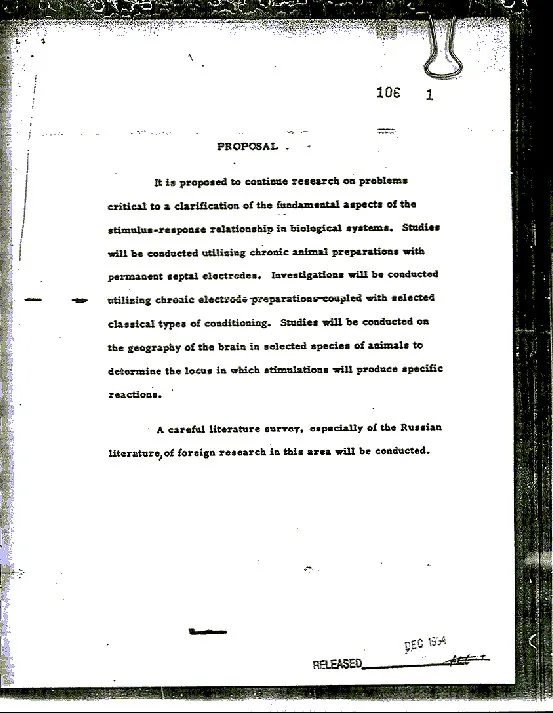
In 1953, the Central Intelligence Agency (CIA), the American agency responsible for foreign intelligence and covert operations, began paying for experiments intended to find out whether drugs and psychological techniques could change people’s behavior, weaken their resistance or interfere with memory. The program was called MKULTRA. Some people took part knowingly. Others were drugged without warning or received experimental treatment without knowing who was behind it. The story began with Cold War fears, spread through laboratories, hospitals and secret apartments, and became public only after much of its record had been destroyed.
01 / A drug in the drinks, November 1953
Frank Olson was a civilian scientist working for the Army at Camp Detrick, Maryland. In November 1953, he attended a meeting with colleagues and CIA personnel at a retreat. Someone put LSD into a bottle of liqueur. Olson and the others who drank it had not agreed to take a drug; they were told afterward what had been done.
Within days, Olson was in serious distress. He was taken to New York, where, in the early hours of November 28, he died after going through a tenth-floor hotel window. His wife and children knew that he had died while away on government business. They would wait twenty-two years to learn about the CIA experiment.
Olson’s death became the best-known case associated with MKULTRA, a secret CIA program that paid for research into drugs and ways of altering human behavior. Its subjects included people who had volunteered for studies, patients seeking treatment, prisoners, and people who never knew they were being tested. To understand how such a program was approved, the story has to go back to the fears that gripped Washington after the Second World War.
02 / The fear that started it
The Cold War was the long struggle between the United States and the Soviet Union and their allies. Intelligence services expected espionage, sabotage and another possible war. When Communist governments extracted confessions from prisoners, American officials wondered whether an unfamiliar drug or psychological technique could explain them. The Korean War, fought from 1950 to 1953, sharpened fears about what could happen to captured servicemen.
“Brainwashing” became a popular name for the supposed ability to remake someone’s beliefs or loyalties. CIA officers worried that an enemy might force an agent to reveal secrets, make a prisoner confess to something untrue, or leave someone unable to remember an interrogation. They wanted protection against those possibilities. They also wanted techniques they could use themselves.
The CIA had already approved Project BLUEBIRD in 1950 to investigate interrogation, memory and resistance to hostile control. It was renamed ARTICHOKE in August 1951. These earlier efforts included drugs and hypnosis. MKULTRA grew out of this work, but gave the agency a much broader way to commission research outside its own offices. The belief that the other side possessed a remarkable weapon helped justify experiments before anyone had established that such a weapon actually worked.
03 / Dulles approves; Gottlieb runs the research
On April 13, 1953, CIA director Allen Dulles approved MKULTRA. The agency’s Technical Services Staff supplied the clandestine tools its officers needed. Sidney Gottlieb, a chemist who headed its chemical division, became the central figure in the program’s research. Senior official Richard Helms backed the work and later became CIA director.
MKULTRA was an umbrella for separately funded projects, rather than one experiment in one laboratory. Its interests included drugs, hypnosis, ways of disrupting memory, and methods of quietly giving someone a substance. Some work concerned basic knowledge; some was aimed directly at interrogation or covert operations. The money could pass through an intermediary so that a university or researcher would see a foundation’s grant instead of a CIA contract.
This arrangement insulated the program from ordinary scrutiny. It also meant that knowing a scientist received money connected to MKULTRA does not establish that the scientist knew its source, or that everyone at the institution participated in abusive experiments. The question has to be asked project by project: who knew, what was authorized, and what happened to the subjects?
04 / What the CIA hoped LSD could do
LSD, short for lysergic acid diethylamide, can profoundly change perception and a person’s sense of reality. At the time it was still a relatively unfamiliar substance. CIA officers thought it might confuse an opponent, lower resistance during questioning, or produce an apparent breakdown that could discredit someone. They also wanted to know what would happen if an agent were secretly dosed.
The program covered much more than LSD. The records describe studies of other drugs and alcohol, hypnosis, psychological assessment and methods of delivery. In the files recovered in 1977, the CIA identified 149 subprojects associated with this research and related activities. It also identified 185 nongovernment researchers and assistants, and 80 institutions where work had been done or with which participants were affiliated. Those figures describe the recovered network; they are not a count of victims.
Some subjects knowingly took part in research. Others knew they were receiving treatment or taking a drug but did not know the CIA was involved or understand the experimental purpose. Others were given substances secretly. Those differences matter, particularly when the person being asked to “volunteer” was a prisoner or a patient dependent on the people running the study.
05 / Behind the mirror: Operation Midnight Climax
One branch of the work moved out of laboratories and into furnished apartments used as CIA safe houses. George Hunter White, a federal narcotics agent working with the CIA, helped run this covert testing. In the San Francisco operation commonly called Midnight Climax, sex workers brought men to premises where their behavior could be watched. The wider safe-house program involved secretly administering drugs to unsuspecting people.
Investigators later described drugs being put in food or drinks, with observers using a one-way mirror and recording equipment. The visitor could believe he was having an ordinary private encounter while someone in the next room treated him as a subject. No meaningful consent was possible under those circumstances.
The CIA’s own 1963 inspection found serious problems with this supposed research. The observers were not qualified scientists, the subjects usually disappeared from view after the first hours, and there was no systematic medical follow-up. Some became ill; the report described at least one hospitalization. The setup could show whether a drug could be delivered secretly, but it was poorly suited to establishing what it did to a person over time. The separate Midnight Climax file follows this part of the story in greater detail.
06 / Patients in Montreal
Another part of MKULTRA reached the Allan Memorial Institute in Montreal, where psychiatrist Ewen Cameron treated patients. His “depatterning” approach tried to break down existing patterns of thought and behavior. It involved intensive electroshock and prolonged drug-induced sleep. “Psychic driving” added recorded messages played repeatedly, with the aim of installing new patterns afterward.
The CIA financed Cameron’s work through the Society for the Investigation of Human Ecology. A later federal court opinion identifies the grant as MKULTRA Subproject 68, approved in March 1957 and covering work through June 1960. Cameron continued his work after that funding period ended.
In the patients’ later lawsuit, the court recorded that nine plaintiffs had undergone at least one part of the procedures during the grant period. They had given various forms of consent to treatment, but did not know its alleged experimental nature. Patients claimed serious injuries; the government disputed whether Cameron’s work should be described as experimentation or accepted treatment. That dispute should not hide the basic problem for someone entering a hospital: agreeing to psychiatric care did not tell them that an intelligence agency was secretly financing the research behind it.
07 / The Olson family learns what was withheld
After Olson’s death in 1953, the CIA investigated internally. Dulles criticized the personnel involved, but the program continued. The family was left with an explanation of a fatal accident and no knowledge of the LSD. In a statement preserved in Ford’s papers, they described learning the connection from news coverage of the Rockefeller Commission in June 1975. An Olson colleague confirmed that the unnamed scientist in the report was their father.
President Gerald Ford and CIA director William Colby met with the family and apologized. Congress authorized a $750,000 settlement in 1976, divided among Olson’s widow and three children, in exchange for waiving claims arising from his death.
The family later challenged the explanation of suicide and alleged that Olson had been murdered. Their 2012 lawsuit pointed to an examination of his exhumed body and alleged concealment. A federal court dismissed that suit in 2013 on grounds including time limits, the earlier settlement and restrictions on claims against the government. It did not conduct a trial resolving the murder allegation. The secret dosing is established; the precise circumstances of the fatal fall remain disputed.
08 / Warnings inside the agency—and the destroyed files
In 1963, the CIA’s inspector general examined MKULTRA. An inspector general is an internal official charged with investigating an agency’s conduct. The inspection raised the dangers of unwitting testing, the lack of useful scientific observation and the consequences if the work became public. Opposition to these practices therefore existed inside the CIA well before the congressional revelations.
The unwitting safe-house testing was halted after the inspection, and the program was reduced. Its ending is often compressed into a single date, which obscures the continuation of related work. Director Stansfield Turner described MKULTRA itself as a 1953–1964 project in his 1977 statement. Material entered in the same hearing describes its successor, MKSEARCH, as funded from fiscal year 1966 through fiscal year 1972. Ending a code name did not end every related research effort.
In January 1973, Helms ordered MKULTRA records destroyed, with Gottlieb involved in carrying out the destruction. By the time outside investigators began asking questions, much of the operational history was gone. Payments could sometimes be reconstructed, but an invoice could not restore a subject’s medical history or reveal everything done during an experiment. The destruction made it harder to identify victims, establish responsibility and test the agency’s later explanations.
09 / Who the Church Committee was
The Church Committee was a US Senate investigating committee named after its chairman, Senator Frank Church of Idaho. It had no religious role. Created in January 1975, it investigated misconduct by American intelligence agencies, including the CIA, FBI and National Security Agency. Watergate and disclosures of domestic spying had made Congress less willing to accept assurances that secret work was being properly supervised.
Ford also appointed a separate presidential investigation, led by Vice President Nelson Rockefeller, into CIA activities within the United States. Its June 1975 report disclosed the fatal LSD experiment. The Church Committee pursued a broader investigation through 1975 and 1976, taking testimony and examining surviving records. Its work documented secret drug testing as well as surveillance and other abuses.
This is how MKULTRA moved into public history. The evidence came from agency documents, internal inspections and testimony by people involved, gathered by investigators with the authority to demand answers. They were working against a major obstacle: the most important collection of project files had already been destroyed.
10 / Seven boxes reopen the story in 1977
The CIA had not destroyed everything. In 1977, a further records search prompted by Freedom of Information Act requests found seven boxes in a retired records center. They contained largely financial and administrative material filed in a way that had allowed it to escape the earlier searches and destruction. They revealed more of the research network, including institutions and researchers investigators could try to contact.
On August 3, 1977, CIA director Stansfield Turner appeared at a joint Senate hearing involving the Intelligence Committee and the health and scientific research subcommittee. Senators Daniel Inouye and Edward Kennedy were prominent in the proceedings. This was a later hearing, separate from the Church Committee’s completed investigation. Turner described the recovered records and promised efforts to identify institutions and people affected.
The hearing also exposed how little could be recovered about some unwitting subjects. Names were absent, observers had not followed people afterward, and the destroyed operational files could not be replaced. A list of institutions offered investigators a place to start. It did not give every person who had been drugged a way to find out what had happened.
11 / Did the CIA actually learn to control minds?
The records establish an ambitious effort to influence behavior and a willingness to harm people while pursuing it. They do not demonstrate a dependable method for turning someone into an obedient, remotely controlled person. Confusing a subject, inducing fear, impairing memory and making someone carry out a precise instruction reliably are different achievements.
John Gittinger, a CIA psychologist who testified in 1977, offered an illuminating retrospective account. By the early 1960s, he said, he had come to understand the coercive “brainwashing” associated with captivity largely in terms of isolation, prolonged stress and interrogation. He criticized the impression created by The Manchurian Candidate, the fictional story of a programmed assassin. His testimony was an insider’s assessment, rather than proof that every question about the program had been answered.
Later theories about programmed celebrities, assassins or continuing hidden control draw much of their plausibility from MKULTRA’s real secrecy and the destroyed records. The reasons for suspicion are understandable. Each additional allegation still needs evidence connecting the people, method and event involved. Missing files leave unanswered questions about actual experiments; they cannot tell us what an imagined experiment accomplished.
12 / What changed, and what could never be repaired
The investigations helped bring intelligence agencies under more sustained congressional oversight. The Senate established a permanent Intelligence Committee in 1976. Ford’s February 1976 executive order prohibited intelligence drug experimentation on human subjects without informed consent, witnessed by a disinterested third party. These changes belonged to a wider response to intelligence abuses, rather than to MKULTRA alone.
For victims and families, official acknowledgment was only a beginning. The Olson settlement and the Montreal litigation show how long the effort to obtain answers could last. People whose names never appeared in surviving files faced a still more basic problem: they might never learn that the CIA had been involved at all.
MKULTRA matters because it shows how ordinary institutions can become part of secret government activity, how consent can disappear behind a claim of national necessity, and how destroying records can outlast the program itself. Its history is already disturbing in the details we can verify: an undisclosed drug, a hospital grant whose sponsor was concealed, a family searching for an explanation, and investigators arriving after the files were gone.
QUESTIONS LEFT ON THE DESK
The questions readers bring.
FAQ & search review: 2026-10-10 · Source links identify the record behind each answer. This date does not certify a new investigation of every chapter.
What was MKULTRA?
MKULTRA was a secret CIA research program approved in April 1953. It funded studies of drugs, hypnosis and other ways of affecting behavior, memory and interrogation. Some experiments involved people who did not know they were being tested.
Who exposed MKULTRA?
The Rockefeller Commission and the Senate’s Church Committee investigated CIA drug testing in 1975. Additional records discovered in 1977 led to a separate joint Senate hearing where CIA director Stansfield Turner testified.
When did MKULTRA end?
Turner’s 1977 statement described MKULTRA as a 1953–1964 project. Related work continued under other names: the hearing identifies MKSEARCH funding from fiscal year 1966 through fiscal year 1972. Major MKULTRA files were destroyed in 1973.
Did MKULTRA produce reliable mind control?
The records document attempts to alter behavior and serious abuses. They do not establish a reliable method for programming someone to obey precise commands. Drugs could disorient or harm people without delivering the control researchers hoped for.
Compare the records: Behind the Mirror: The CIA’s Secret LSD Rooms · Project SHAMROCK: thirty years of secret telegram collection · Did the CIA Turn America On—and Tune Its Rebels Out?.
The allegation, in brief
The CIA secretly financed research into drugs and behavioral manipulation, including experiments on people who had not given informed consent.
Where the archive stands
Congressional records document MKULTRA’s origins, unwitting testing, concealed research funding, the 1973 destruction of files and the investigations of 1975–1977. They establish serious abuses without demonstrating reliable control of a person’s mind.
The missing records are part of the history
The Senate hearing describes the recovery of financial records that survived the destruction of other project material. That leaves a real limitation: the surviving archive cannot supply a complete account of every activity or every person harmed. It can still establish the program and serious abuses. The destruction of records is consequential evidence about accountability; it is not a blank cheque for every later claim about secret psychological control.
- Identify whether a claim appears in a surviving record or a later retelling.
- Distinguish the experiment’s objective from what it successfully achieved.
- Do not turn gaps in the archive into invented findings.
Some people spent decades looking for an explanation. Others may never have known that they were part of an experiment.
ARCHIVIST’S NOTE / EXPANDED RESEARCH: 10 OCT 2026
THE SHELF BEHIND THE FILE
For further reading
Take the longer trail. These are the books we would keep beside this file.
As an Amazon Associate I earn from qualifying purchases. Purchases through these links may earn this archive a commission.
- THE WATCHER’S
FAVORITE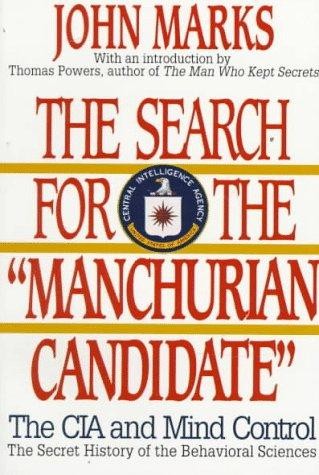 01 / Investigative history
The Search for the “Manchurian Candidate”
Documents and interviews behind the CIA’s mind-control experiments.
View book on AmazonBook & source detailsWhy this pick?
Selected for its direct documentary investigation of the CIA experiments.
The stamp is an editorial recommendation informed by published reviews, source quality, and relevance. It is not a claim about the highest Amazon customer rating. Selection source.
 02 / Investigative history
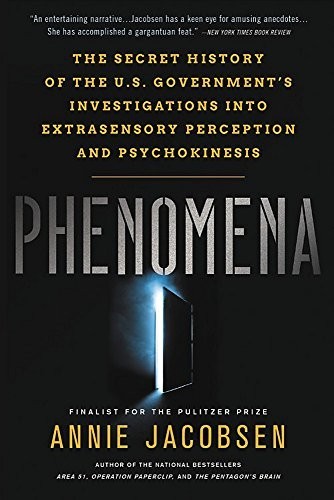
Phenomena
The government’s investigations into psychic abilities. Funding a program does not establish that its claims worked.
View book on AmazonBook & source details
A place on this shelf is not a verdict on every claim inside. Selection checked 2 October 2026. Cover artwork belongs to its respective rights holders; cover sources & editions. Links open a specific edition. Cover artwork may show a different edition; check the format, availability, and price on Amazon before buying.
A QUESTION LEFT IN THE MARGIN / EDITORIAL PROMPT
Bring one source.
The experiments were real. How far can we follow the surviving records before the missing files become an excuse to invent a story?
A useful first note: the source, what it establishes, and what it leaves open.
FOLLOW ANOTHER THREAD
Follow this thread.
Secrecy, surveillance, and the records left behind.
 DocumentedDOSSIER 057
Stargate: psychic espionage
They funded remote viewing. Success is another question.
DocumentedDOSSIER 060CIA relationships with journalists
The relationship was acknowledged. The legend grew wider.
 DocumentedDOSSIER 048
COINTELPRO
The bureau did more than watch.