DOSSIER 093 / DIGITAL FOLKLORE
Did Entering the Competition Also Enter You on a Marketing List?
A competition form, a partner list and a marketing message raise separate questions about the permission given at entry.
Documented refers to the regulator announcement and reported findings. Individual company submissions, present-day interfaces and a particular entrant experience are not established.
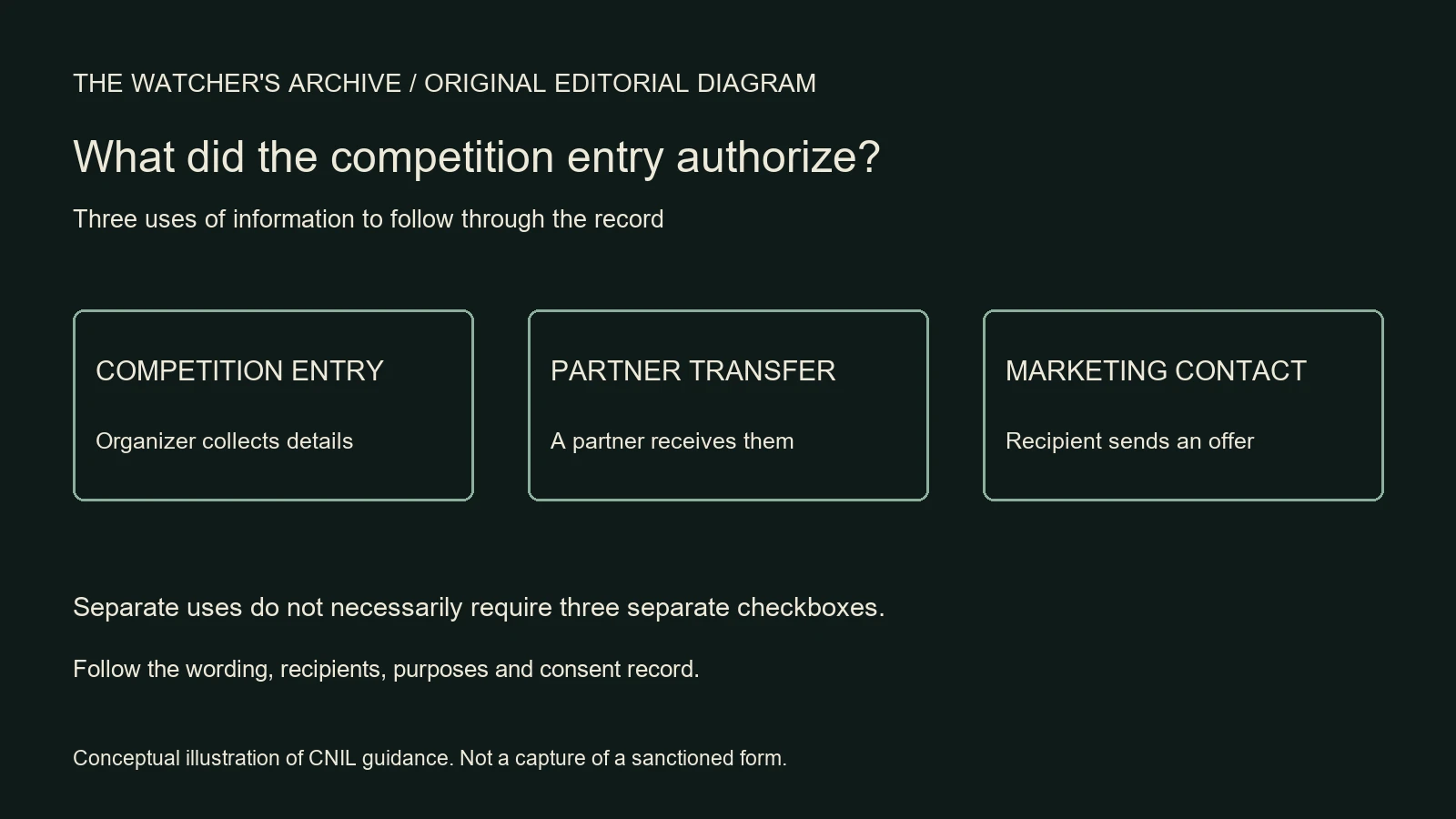
On November 17, 2026, France's data-protection authority, the CNIL, described competition forms that made acceptance of promotional offers look like the way to complete an entry. The account appeared in a roundup of sanctions against unnamed organizations. It raised a question about the decision an entrant believed they were making when they submitted their details.
01 / The choice presented to the entrant
The CNIL reported six marketing-related sanctions within a group of 38 decisions issued between June and October 2026. It described personal information gathered through competitions and used for electronic marketing, or passed to partners for that purpose, without valid consent. The announcement says the designs emphasized accepting offers in a way that could make entrants believe agreement was necessary to participate.
The published summary does not identify the organizations or reproduce each form. It therefore supports a bounded account of the regulator's findings, rather than a reconstruction of one person's entry or a claim that every competition uses the same design.
02 / From entry details to a partner's message
Entering a competition, sending contact details to another organization and receiving its marketing are separate uses of information. A form can place those decisions close together while they have different consequences. A reader following the data needs to know who collected the details, who received them and what contact the entrant agreed to receive.
The CNIL's June 2026 partner-data guidance distinguishes rules according to the medium used for contact. Its electronic-marketing discussion separates consent to transmission from consent to the partners' marketing. It describes informing people about recipients and purposes, including a maintained list of partners when consent is collected for their campaigns.
03 / When a partner passes the details on
Consent collected for specified partners does not simply travel onward to every organization those partners might choose. The guidance says a partner seeking to pass the information further must obtain fresh permission for that transfer and, where applicable, the next recipients' marketing. The existence of a contact file alone does not demonstrate permission for every later use.
The guidance allows the initial form to gather permission both for a transfer and for marketing by the specified partners through one box that is not selected in advance. Separate purposes therefore do not necessarily mean three different checkboxes. What matters in this account is whether the person can understand the recipients and uses, and make the relevant choice.
The same guidance describes a different general framework for postal marketing: prior information and an opportunity to object. This file follows the electronic-marketing findings in the November announcement. It does not apply one consent formula to every kind of advertising.
04 / What the simplified record can tell us
The simplified procedure is intended for matters without particular factual or legal difficulty. The CNIL describes an investigator's report, notification to the organization and written exchanges before a designated decision-maker acts. Organizations can inspect their files and present observations. The availability of those safeguards does not reveal what a particular organization argued in these six cases.
The regulator's reproduction of the national law says decisions made through this procedure cannot be published. The public announcement consequently leaves a gap between the authority's description of the designs and the individual case records behind it. The archive cannot fill that gap with a guessed company, an invented entrant or an assumed defense.
The practical evidence would include the form as displayed at the time, the wording beside each choice, the recipient list and the stored consent record. Together those records could show whether entry and marketing permission were presented as distinct decisions. The announcement establishes what the CNIL says it sanctioned; it does not establish the present behavior of every competition form.
The allegation, in brief
Accepting promotional offers was presented as necessary to complete a competition entry.
Where the archive stands
The CNIL describes misleading consent design among six marketing-related sanctions. Its public announcement does not identify the organizations or reproduce each form. Dated guidance explains separate uses and permissions.
Follow the historical form, recipient list and consent record before treating entry as permission for later marketing.
ARCHIVIST’S NOTE / EXPANDED RESEARCH: 22 NOV 2026
THE SHELF BEHIND THE FILE
For further reading
Background on commercial personal-data collection. Published before these sanctions; not evidence about the unnamed organizations.
As an Amazon Associate I earn from qualifying purchases. Purchases through these links may earn this archive a commission.
- THE WATCHER’S
FAVORITE 01 / Commercial surveillance and privacy
The Age of Surveillance Capitalism
Background on the commercial collection and use of personal data; published before this case.
View book on AmazonBook & source detailsWhy this pick?
Selected for relevant background and substantial published reception documented by the publisher; no Amazon customer-rating comparison is claimed.
The stamp is an editorial recommendation informed by published reviews, source quality, and relevance. It is not a claim about the highest Amazon customer rating. Selection source.
A place on this shelf is not a verdict on every claim inside. Selection checked 21 November 2026. Cover artwork belongs to its respective rights holders; cover sources & editions. Links open a specific edition. Cover artwork may show a different edition; check the format, availability, and price on Amazon before buying.
A QUESTION LEFT IN THE MARGIN / EDITORIAL PROMPT
Bring one source.
What record would show that a person could enter the competition while declining permission for partner marketing?
A useful first note: the source, what it establishes, and what it leaves open.
FOLLOW ANOTHER THREAD
Follow this thread.
Compare tracking after a refusal with permission for partner marketing.
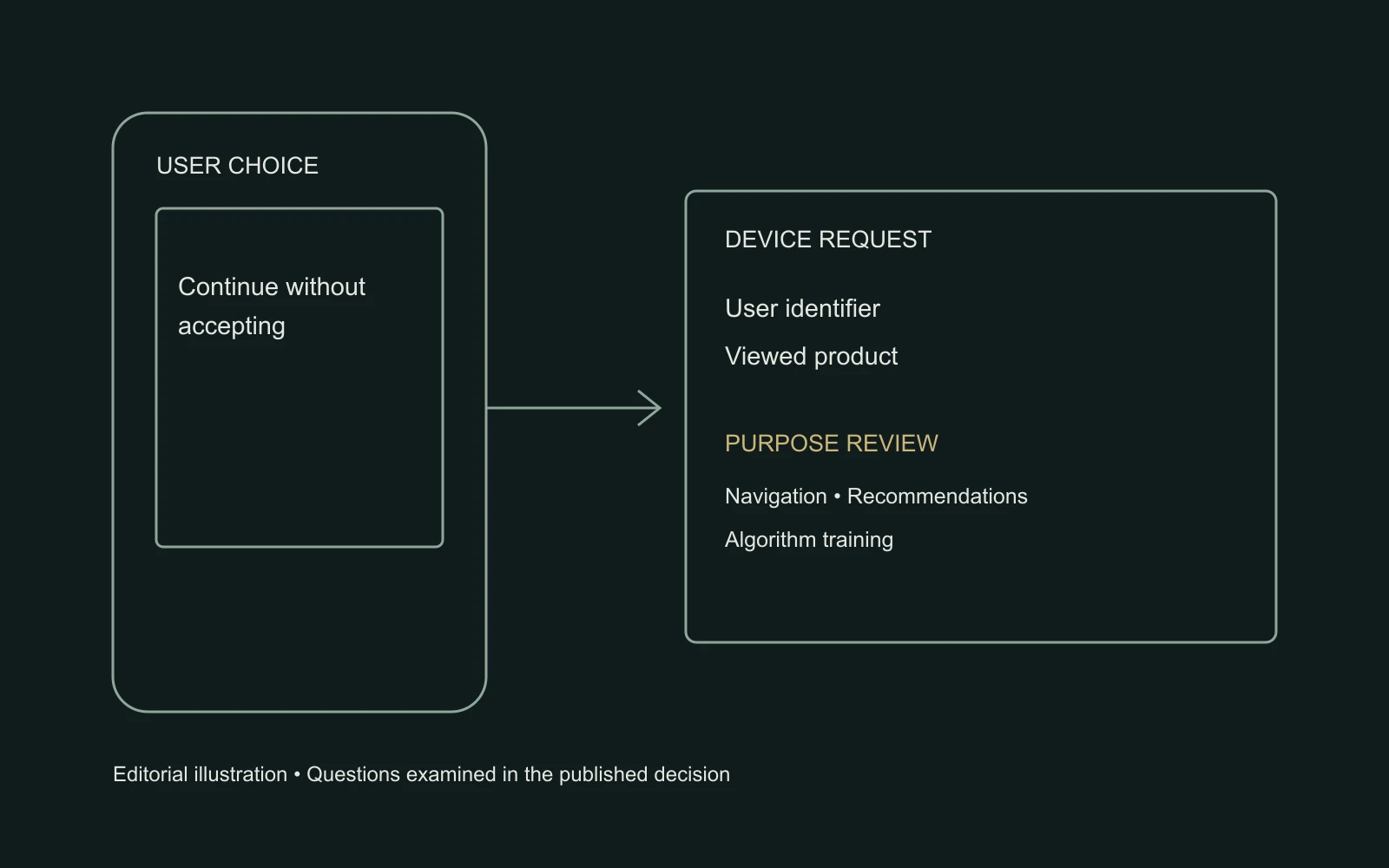 CONSENT BREACH FOUND / CURRENT APP BEHAVIOR UNVERIFIEDDOSSIER 091
What Happened After the App User Refused Tracking?
A French app inspection followed the requests sent after a refusal, and a dispute over what product recommendations required.
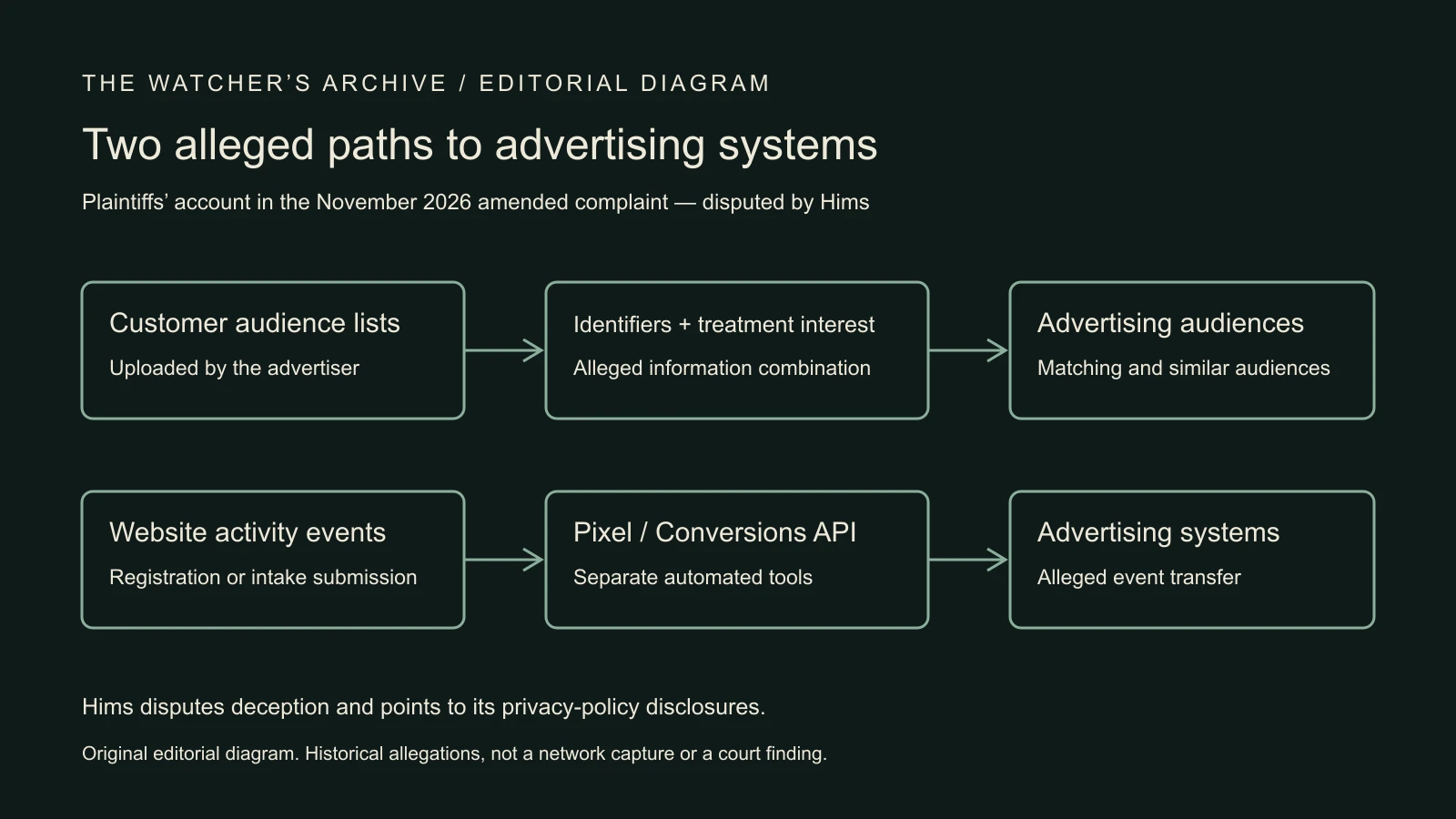 LAWSUIT PENDING / ALLEGATIONS DISPUTEDDOSSIER 092
Where Did the Health Intake Answers Go?
An expanded lawsuit follows the path from a request for medical treatment to subscription charges and advertising systems.
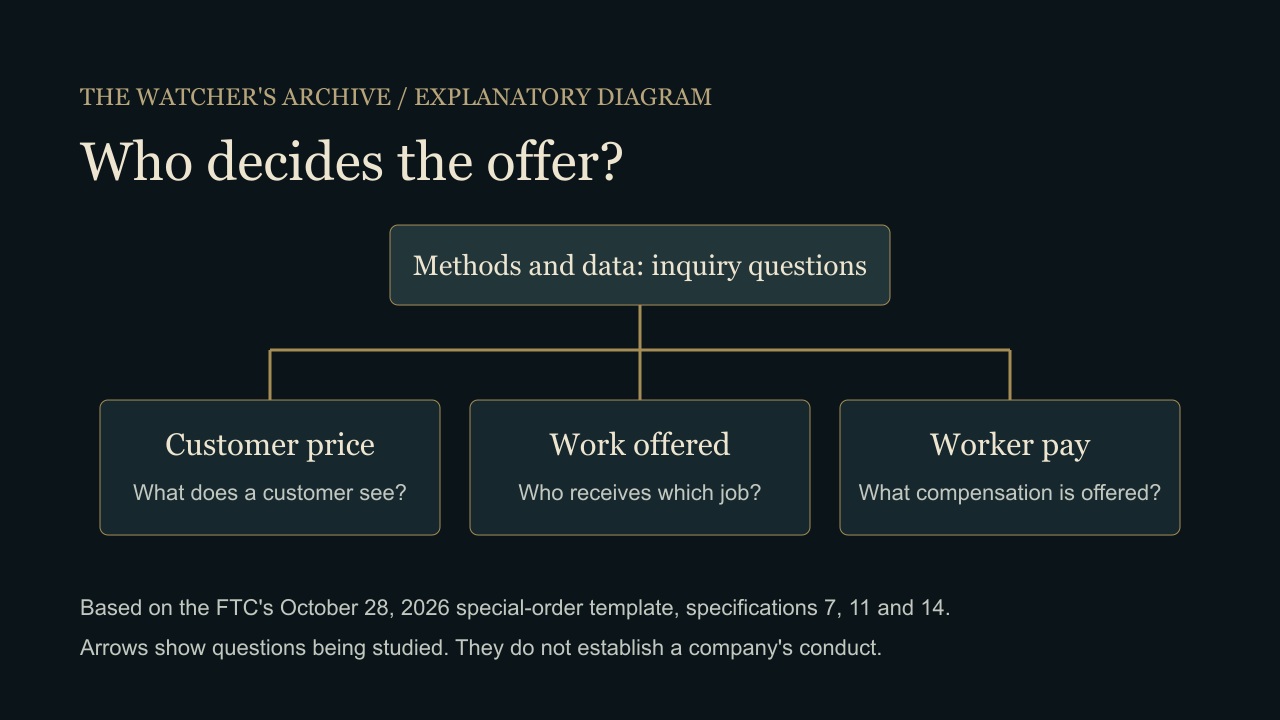 INQUIRY DOCUMENTED / OUTCOMES OPENDOSSIER 090
Who Decides Your Price and Your Pay?
The FTC asks how personal data enters customer prices, work offers and worker compensation.