DOSSIER 091 / DIGITAL FOLKLORE
What Happened After the App User Refused Tracking?
A French app inspection followed the requests sent after a refusal, and a dispute over what product recommendations required.
Documented refers to the regulator’s findings about inspected conduct and the October22 decision. A current inspection, notification date and subsequent appeal or compliance outcome are not established.
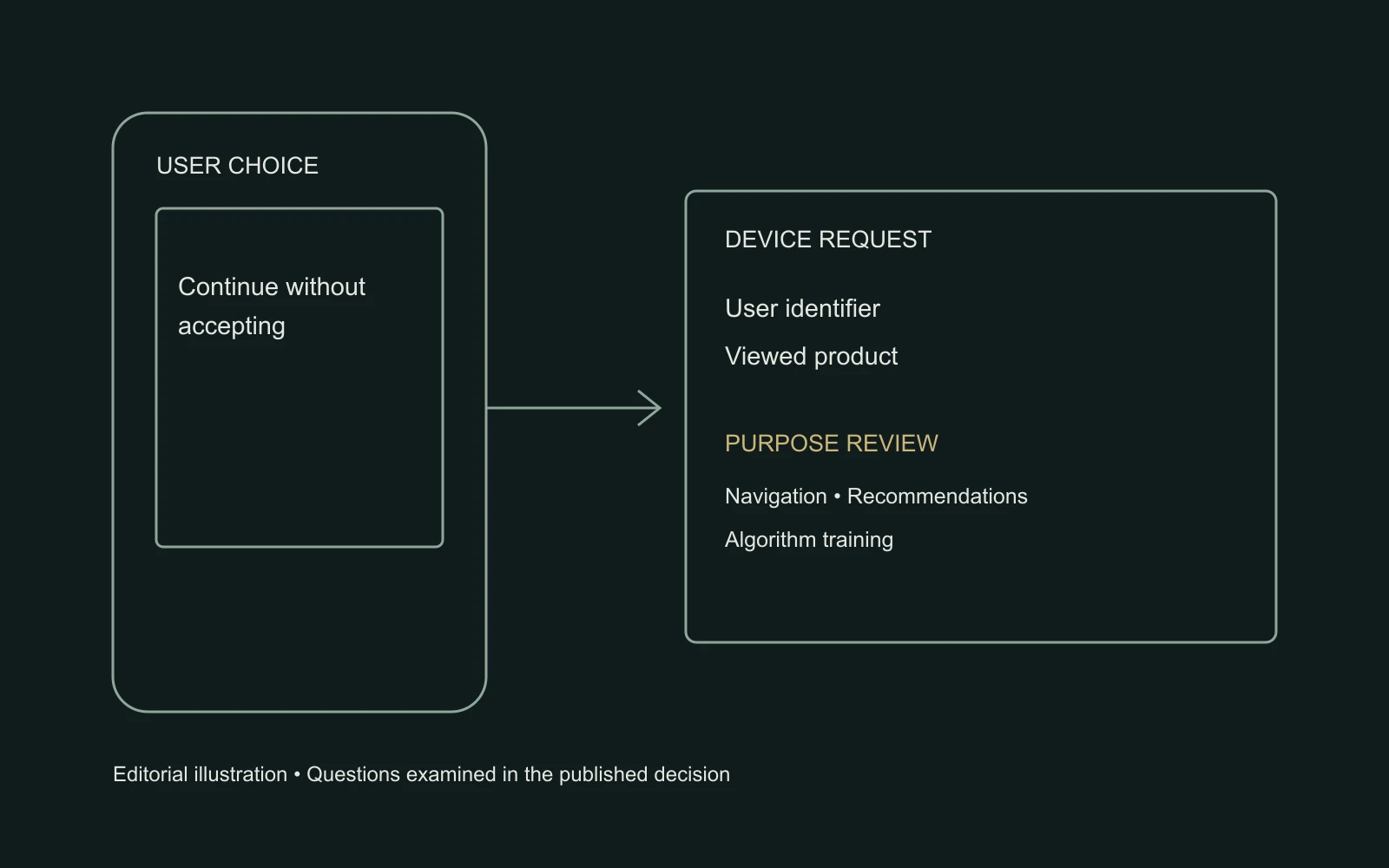
During a March 2024 inspection, French privacy investigators followed the path of someone opening the Fnac shopping app. They selected the option to continue without accepting tracking. According to the resulting decision, requests still left the phone carrying an identifier and information about products viewed. The disagreement that followed concerned what those requests were for, and whether the app needed permission to make them.
01 / How a complaint became an inspection
Fnac is a retailer whose shopping app lets customers browse a catalogue and receive product suggestions. A customer can see the suggestions without seeing the requests that make them possible. In this case, investigators examined that connection after a user refused tracking. The dispute developed into a decision about which recommendation functions could run without permission.
The organisation None of Your Business, known as noyb, brought a complaint in 2023. Its October 2026 account places Fnac alongside two other apps challenged that September. Those were separate complaints; the findings in the Fnac decision should not be assigned to the other companies. Noyb is the complainant and an advocate for stronger privacy enforcement. Its account helps establish why it pursued the case, while the regulator's decision records the findings and the companies' defenses.
02 / What the refusal was supposed to control
Article 82 of France's data protection law concerns reading information from a device or writing information to it. In the Fnac case, the question was whether those operations needed prior consent. The exception the companies invoked concerned operations strictly necessary to provide a service the user had explicitly requested. The dispute therefore turned on the purpose of the requests the investigators observed after refusing tracking.
Consider a shopper who opens a product page. A list of similar products can help that shopper continue searching. A recommendation system can also use earlier browsing to decide what to promote. The two features may look alike on screen. The inspection mattered because it gave the authority a way to examine the requests behind the interface and ask which purposes the same tracker served.
03 / The boundary between navigation and selling
The companies argued that recommendations helped customers navigate a large catalogue. They compared that organisation with physical shop aisles. The committee accepted that similar-product navigation might, depending on implementation, be necessary. But a shared tracker also served commercial recommendation purposes. A potentially exempt purpose could not isolate the same operation from its other uses.
04 / What the authority announced
The Commission Nationale de l'Informatique et des Libertés, France's data-protection authority, announced its decision on October 29, 2026. The decision itself was dated October 22. It imposed fines totalling seven million euros on two Fnac entities. The authority said the app's tracker collected browsing information for recommendations and training the recommendation algorithm without the required consent. Its account describes the transmission of requests through an application programming interface, or API, a software connection through which systems exchange information. Device tracking therefore involves more than the familiar cookie file in a web browser.
05 / Replacing a tool and proving compliance
The decision records evidence that the old API was retired in December 2024. It separately finds that the companies had not demonstrated implementation of the replacement's described safeguards by the close of the proceedings. The authority required the companies to demonstrate that the new tool obtained consent where necessary within one month of notification. The daily penalty for delay was set at 10,000 euros. Because the reviewed sources do not establish the notification date or subsequent compliance, those terms cannot be converted into a claim that a particular penalty has accrued.
The published decision provides an appeal route. A November 20 source check did not establish whether an appeal had been filed or resolved. The evidence here describes the inspected conduct and the October decision. It does not establish what a fresh inspection of the app would find today. For a reader assessing a consent screen, the case shows why the visible choice and the requests made after that choice need to be examined together.
The allegation, in brief
Refusing app tracking prevents the requests used for commercial recommendations.
Where the archive stands
The CNIL found that the inspected Fnac app sent an identifier and browsing information without required consent. The companies argued that recommendations were necessary for navigation; the committee distinguished that claim from the shared tracker’s commercial purposes.
Compare the visible refusal with the purposes of the device requests that follow it.
ARCHIVIST’S NOTE / EXPANDED RESEARCH: 20 NOV 2026
THE SHELF BEHIND THE FILE
For further reading
Background on commercial data collection; this book predates the Fnac decision and is not evidence of the inspected conduct.
As an Amazon Associate I earn from qualifying purchases. Purchases through these links may earn this archive a commission.
- THE WATCHER’S
FAVORITE 01 / Commercial surveillance and privacy
The Age of Surveillance Capitalism
Background on the commercial collection and use of personal data; published before this case.
View book on AmazonBook & source detailsWhy this pick?
Selected for relevant background and substantial published reception documented by the publisher; no Amazon customer-rating comparison is claimed.
The stamp is an editorial recommendation informed by published reviews, source quality, and relevance. It is not a claim about the highest Amazon customer rating. Selection source.
A place on this shelf is not a verdict on every claim inside. Selection checked 20 November 2026. Cover artwork belongs to its respective rights holders; cover sources & editions. Links open a specific edition. Cover artwork may show a different edition; check the format, availability, and price on Amazon before buying.
A QUESTION LEFT IN THE MARGIN / EDITORIAL PROMPT
Bring one source.
What evidence would demonstrate that a refusal in an app changes the data requests it sends?
A useful first note: the source, what it establishes, and what it leaves open.
FOLLOW ANOTHER THREAD
Follow this thread.
Compare evidence of tracking consent with a separate inquiry into how personal data enters offers.
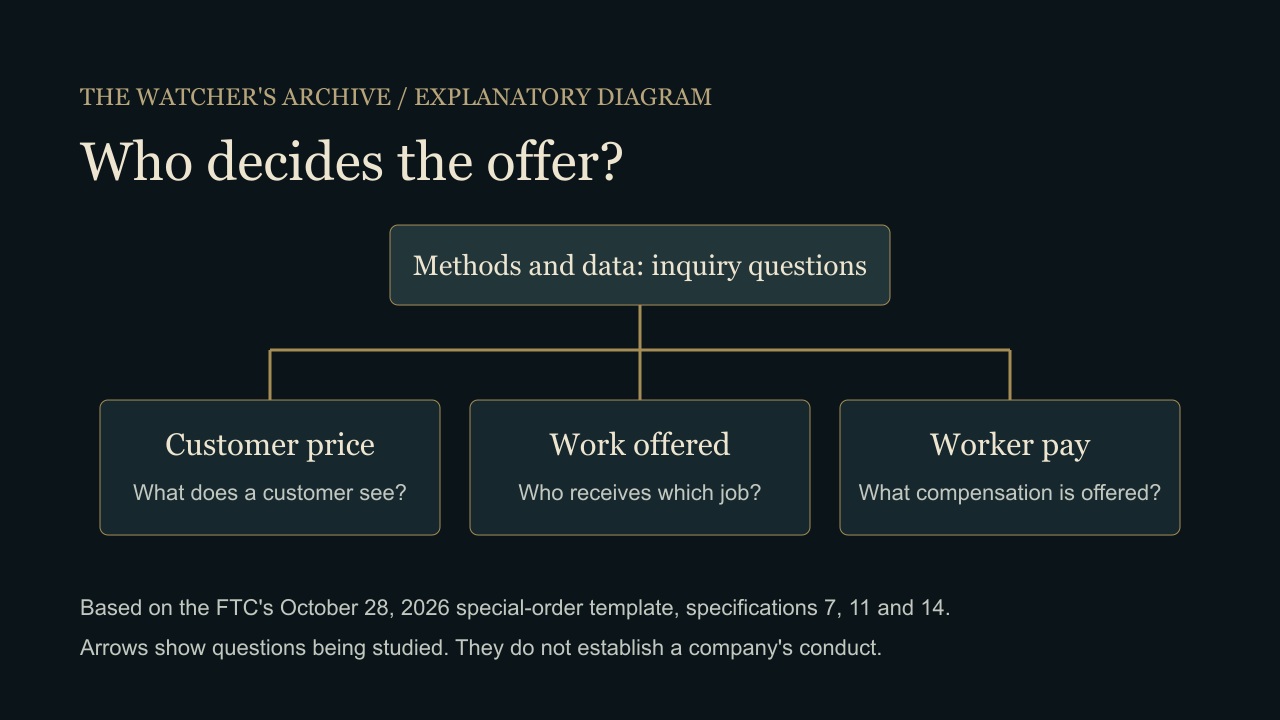 INQUIRY DOCUMENTED / OUTCOMES OPENDOSSIER 090
Who Decides Your Price and Your Pay?
The FTC asks how personal data enters customer prices, work offers and worker compensation.
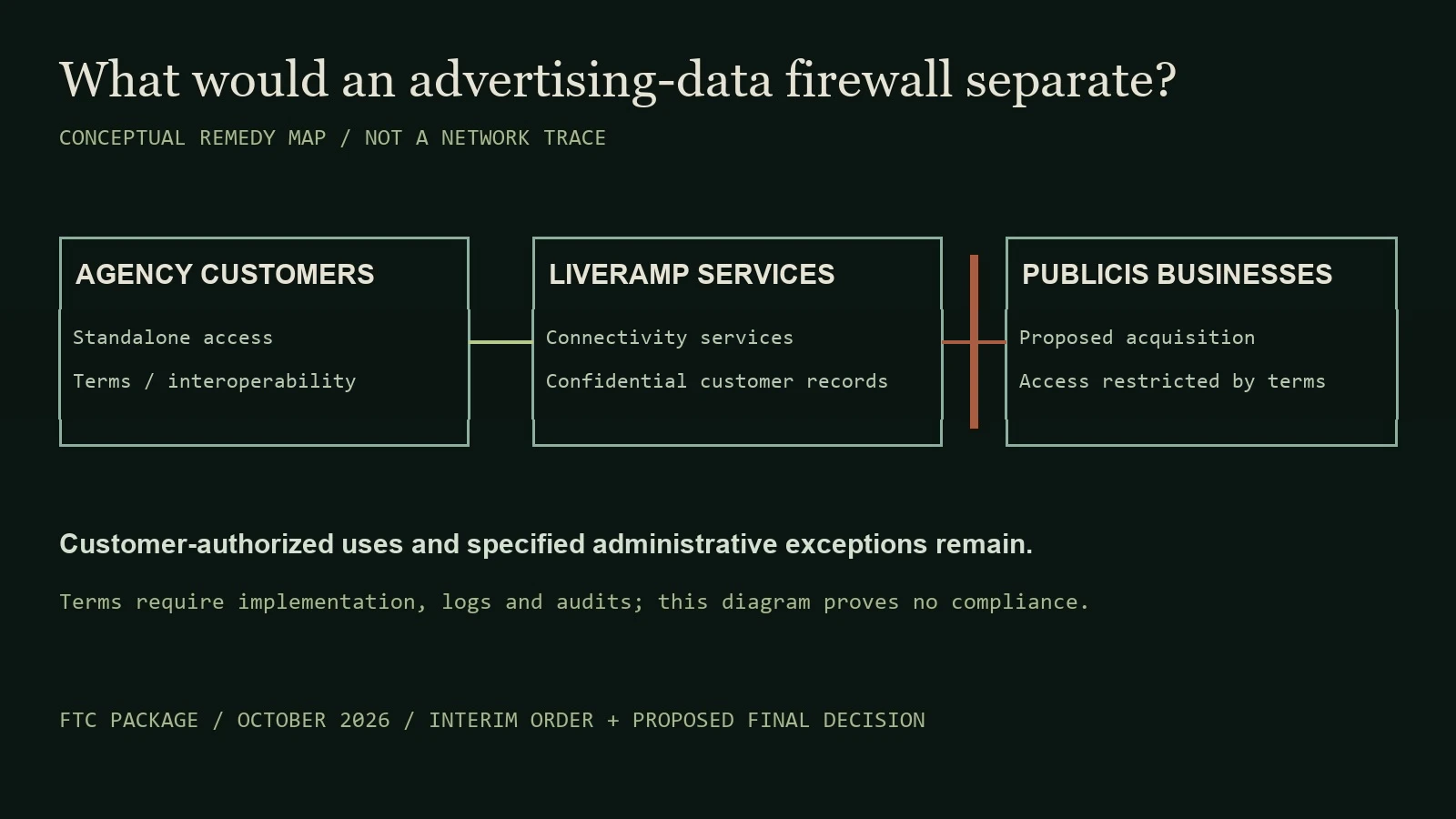 MERGER REMEDY DOCUMENTED / COMPLIANCE UNVERIFIEDDOSSIER 088
What Keeps an Advertising Data Intermediary Neutral?
The FTC, Publicis and a proposed advertising-data acquisition raise a practical question: how does a shared connection stay neutral after a competitor buys it?
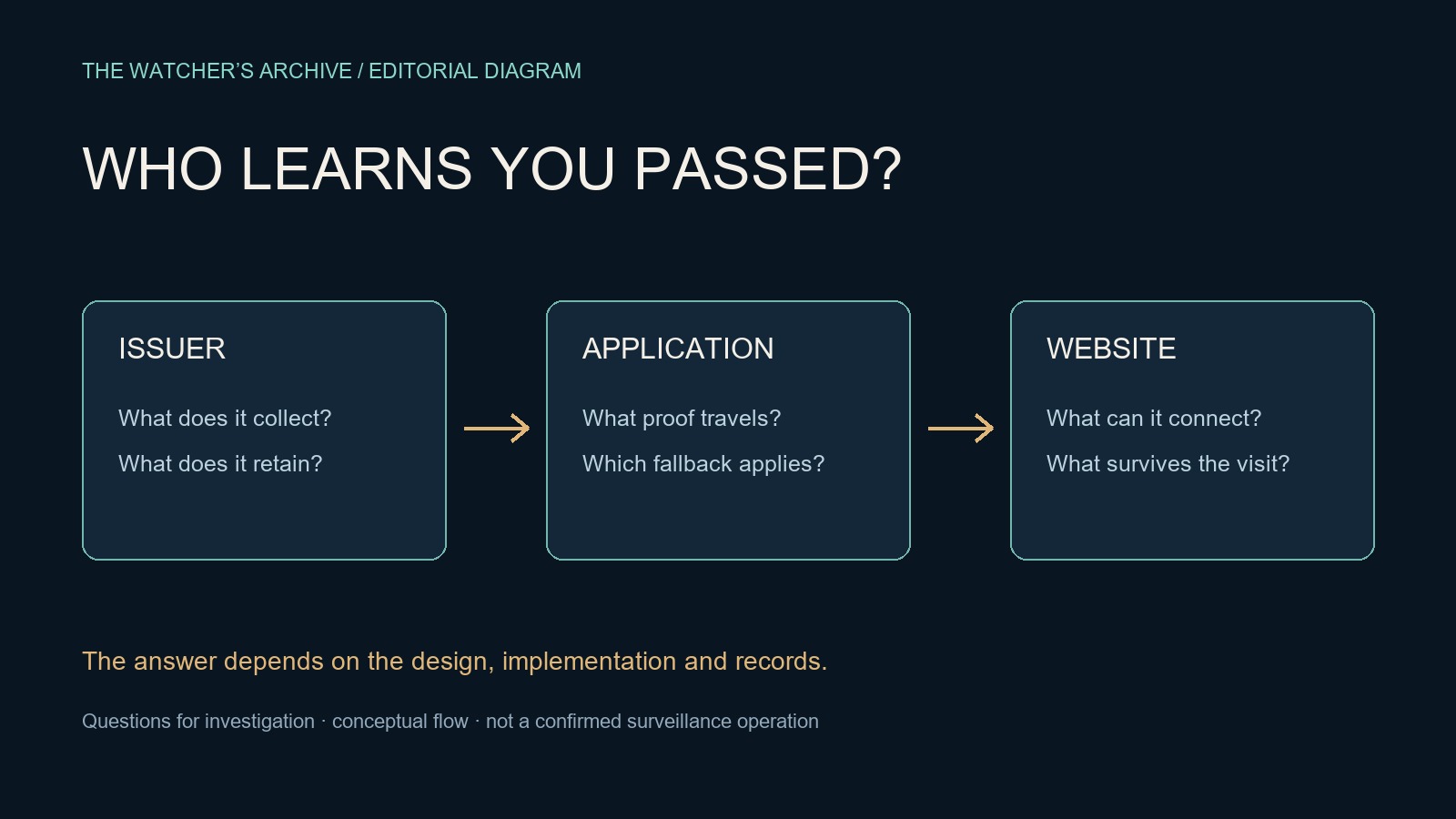 PRIVACY RISKS DOCUMENTED / COORDINATED PLAN UNPROVEDDOSSIER 085
Who Gets to Know You Passed the Age Check?
A Roblox shareholder complaint and a European privacy dispute reveal different questions behind the internet’s new gates.