DOSSIER 088 / DIGITAL FOLKLORE
What Keeps an Advertising Data Intermediary Neutral?
The FTC, Publicis and a proposed advertising-data acquisition raise a practical question: how does a shared connection stay neutral after a competitor buys it?
Documented refers to the transaction proposal, issued interim order and public settlement terms, not a finding that confidential information was misused or a consumer-data breach occurred.
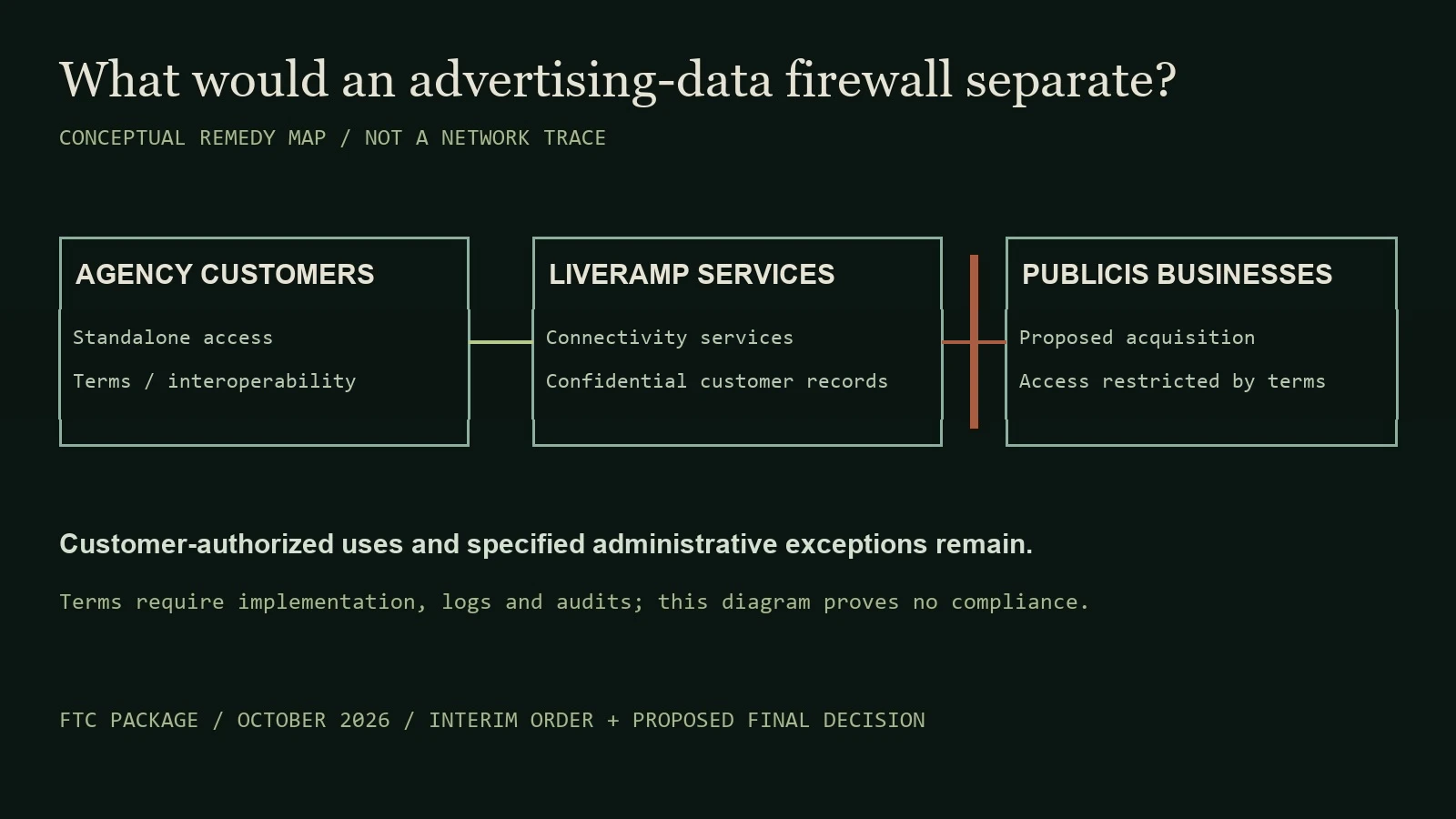
On October 23, the Federal Register published a question about the infrastructure behind digital advertising: what protections should accompany Publicis's planned purchase of LiveRamp? The notice invited comments on a proposed settlement. Behind that procedural language was a dispute about who could see a competitor's information and who could control the connections that competitors need.
01 / The connections between the companies
An advertiser can hire an agency to plan and place a campaign. A separate business may supply information used to choose an audience. Another service connects those participants so that information can move through the advertising workflow. LiveRamp operates in this last part of the system. Publicis supplies agency services and, through Epsilon, audience-data services.
The acquisition agreement was dated May 16, 2026. The FTC describes an approximately $2.2 billion transaction. The proposed buyer would therefore gain ownership of a supplier used by businesses that also compete with it. An advertiser choosing an agency would still appear to have several firms to choose from, but those firms could depend on a connection controlled by one of their competitors.
The FTC's complaint describes a competition problem created by bringing these roles under one owner. It alleges that Publicis could disadvantage competing agencies and data suppliers through access to LiveRamp or through sensitive information obtained there. Those are allegations about incentives and possible effects of the acquisition. They do not establish an observed incident in which an individual consumer's records were stolen.
That dependence explains why the complaint follows the route between companies. A rival's campaign information may reveal commercially useful details about how it operates. Making access worse could also force that rival to spend money finding another route. These are the mechanisms the agency alleges; the public complaint does not present a completed post-acquisition incident proving they occurred.
02 / The company's answer
Publicis's October 19 statement presents the agreement as preserving commitments already central to LiveRamp: neutrality, customer choice, control of information and interoperability. The company says it proactively proposed commitments, including independent oversight. Its expectation that the transaction would close before year-end is a forecast, rather than proof that closing occurred.
The company's response addresses the same relationship from the customer's side. Customers should retain a choice of services and outside partners, it says, while their information stays under their control. Those positions explain why Publicis supports a remedy built around continued access and separation of information. The statement offers a commitment and a timetable, rather than an independent assessment of implementation.
03 / What a firewall would have to do
The proposed final decision addresses standalone access and confidential customer information. Technical separation, access logging and staff restrictions are part of its design. There are exceptions: customer-authorized uses and specified administrative functions remain possible. A reader assessing the firewall needs those boundaries as well as the headline prohibition.
The access provisions also allow some objective service differences and ordinary business changes. New integrated products are treated differently from existing standalone services. The remedy therefore calls for careful comparison of similarly situated customers, rather than an assumption that every customer must receive every product on identical terms.
The proposed firewall consists of organizational and technical restrictions: who may obtain information, what purposes justify access, and what records would allow that access to be examined afterward. A written prohibition supplies a rule; access logs and independently checked implementation would help establish what happened under that rule.
The distinction between standalone and new integrated services matters in a practical dispute. A customer complaining about changed access would need to identify the service it used, the terms it was offered and the reason for a difference. Without those details, an unfavorable experience cannot establish whether the conduct falls within a permitted business change or violates the required neutrality.
04 / A settlement has several clocks
October 19 brought several documents into the public record. The complaint states the agency's case, the consent agreement records the settlement framework, and an issued asset-maintenance order supplies interim obligations. The later Federal Register notice opens the public-comment stage, with comments due November 23. As checked on October 30, the FTC docket still labels the matter pending.
The package includes an interim asset-maintenance order issued on October 19 and a proposed final decision subject to the comment process. The consent agreement also contains a commitment to comply from signing. Calling the entire package merely a future promise would miss that distinction; calling the final decision already adopted would miss it in the other direction.
The interim order starts a reporting timetable: an initial compliance report is due 30 days after issuance, followed by reports every 30 days until the Commission issues its decision. Its term ends the day after that decision becomes final, or if the Commission withdraws acceptance. Customer notices and contract amendments use another trigger, issuance of the decision, while periodic audits run from acquisition. The notice attached to the interim order is a prescribed template; its presence does not establish that customers received it.
Independent audits and compliance reporting provide ways to examine whether the restrictions are followed. Their presence in a document is not evidence that an audit has taken place or that the firewall works. The useful next records will include actual implementation, reports and any documented dispute about access or information use.
05 / What would establish that the safeguards work?
The people closest to the disputed systems may eventually produce the most useful evidence: a customer documenting unequal access, an auditor testing separation, or an enforcement record explaining how a restriction was applied. The records reviewed here do not include a customer's verified firsthand account of a post-acquisition violation.
For now, the documents establish the proposed ownership change, the FTC's competition theory, the company's public commitments and the terms intended to govern access. A claim that the arrangement protects customers needs evidence of implementation. A claim that it enables a secret abuse needs evidence of that conduct. Following the same service, information and decision through the record gives either claim something concrete to test.
The allegation, in brief
The acquisition could let Publicis disadvantage rival businesses through access to LiveRamp or confidential commercial information.
Where the archive stands
The FTC alleges competition risks. An issued interim order and proposed final decision set different obligations; Publicis says neutrality and customer choice remain central. The public documents do not establish a completed post-acquisition violation.
Compare the obligation, its exceptions and actual implementation evidence before judging whether a data firewall works.
ARCHIVIST’S NOTE / EXPANDED RESEARCH: 31 OCT 2026
THE SHELF BEHIND THE FILE
For further reading
Background on data collection and power. This edition predates the acquisition and does not establish misconduct or the effectiveness of its remedies.
As an Amazon Associate I earn from qualifying purchases. Purchases through these links may earn this archive a commission.
- THE WATCHER’S
FAVORITE 01 / Personal data, corporate collection and government surveillance
Data and Goliath: The Hidden Battles to Collect Your Data and Control Your World
Background on data collection and surveillance; published before the current disputes.
View book on AmazonBook & source detailsWhy this pick?
Selected for relevant background; publisher, author bibliography, Amazon paperback and matching publisher cover verified. No customer-rating comparison is claimed.
The stamp is an editorial recommendation informed by published reviews, source quality, and relevance. It is not a claim about the highest Amazon customer rating. Selection source.
A place on this shelf is not a verdict on every claim inside. Selection checked 30 October 2026. Cover artwork belongs to its respective rights holders; cover sources & editions. Links open a specific edition. Cover artwork may show a different edition; check the format, availability, and price on Amazon before buying.
A QUESTION LEFT IN THE MARGIN / EDITORIAL PROMPT
Bring one source.
What evidence would convince you that a data intermediary stays neutral after a competitor buys it: access logs, comparable service terms, independent audits or documented customer disputes? Explain which claim your evidence would test.
A useful first note: the source, what it establishes, and what it leaves open.
FOLLOW ANOTHER THREAD
Follow this thread.
Compare documented vehicle-data transfers with restrictions on commercial information access; connected-car article production verified October30.
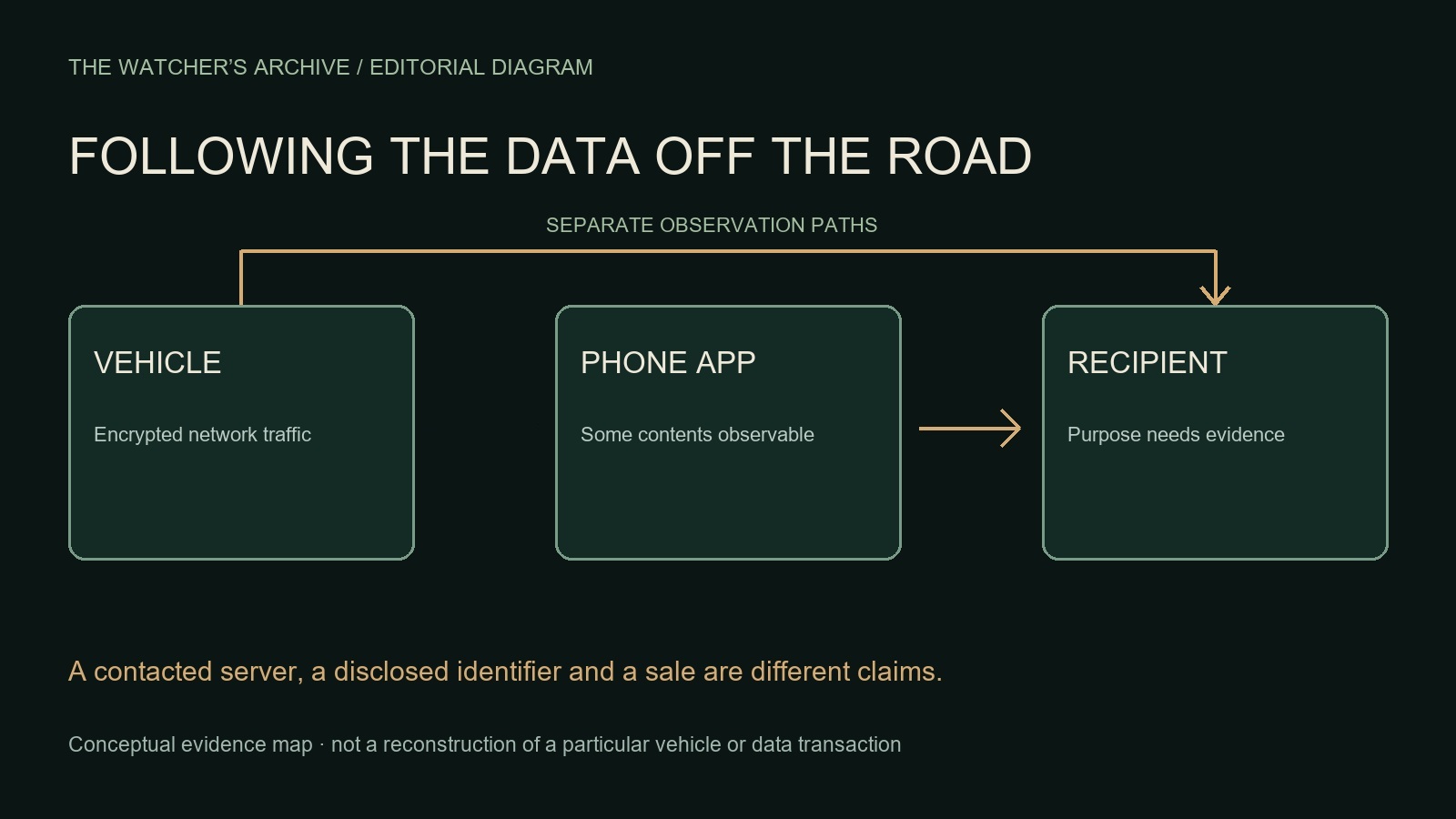 SAMPLED DATA TRANSMISSIONS DOCUMENTED / SCOPE LIMITEDDOSSIER 087
What Leaves a Connected Car?
A new OnStar announcement meets a separate research record about vehicles, phone apps and the information they transmit.
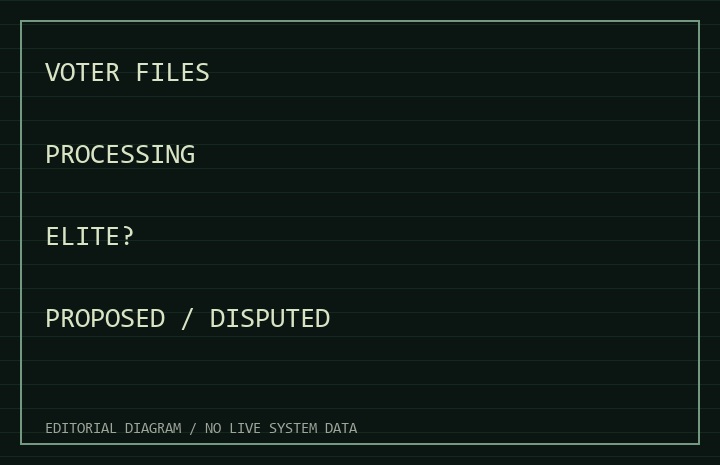 PROPOSED PIPELINE REPORTED / INGESTION DENIEDDOSSIER 084
Why Were Voter Files Waiting for Palantir? Inside the ELITE Dispute
An internal plan, a company denial and a new lawsuit leave a data trail worth following.
 DocumentedDOSSIER 058
Project SHAMROCK: thirty years of secret telegram collection
How a wartime arrangement outlived the war—and put Americans’ messages in government hands.