DOSSIER 058 / DOCUMENTED OPERATIONS
Project SHAMROCK: thirty years of secret telegram collection
How a wartime arrangement outlived the war—and put Americans’ messages in government hands.
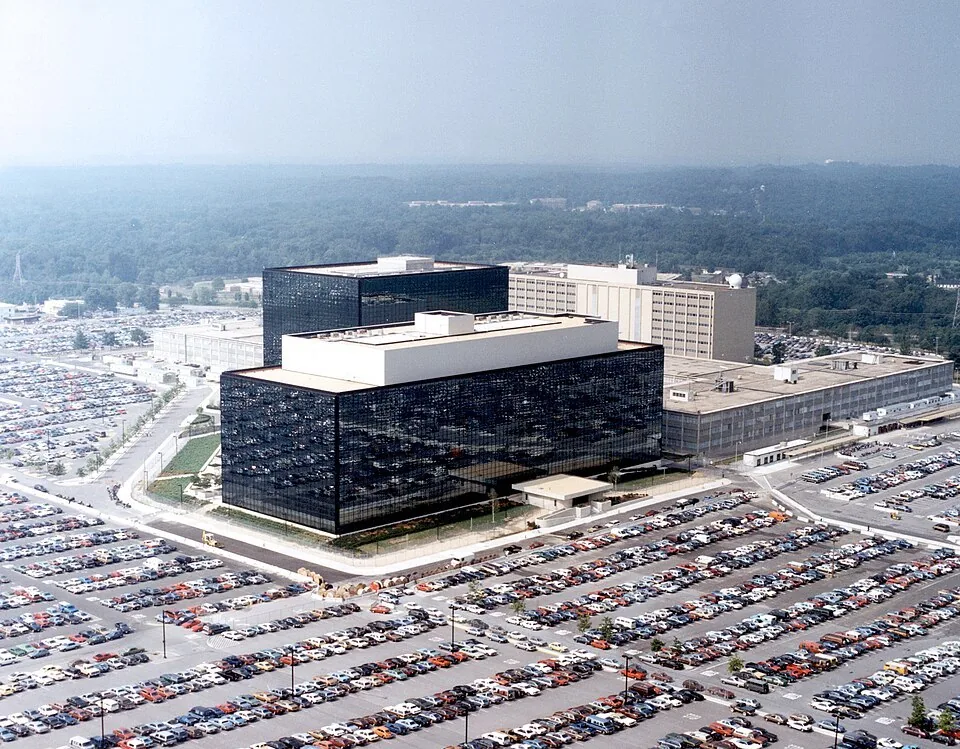
THE RECORD, IN BRIEF
What was Operation SHAMROCK?
SHAMROCK was a secret arrangement in which international telegraph companies supplied messages to American intelligence from 1945 to 1975. It began with an Army request after World War II and later operated under the National Security Agency (NSA). A Senate investigation led by Frank Church exposed the program in 1975.
Before email, a telegram was a way to get a written message somewhere quickly. You paid a company to transmit it electrically, often across an ocean. Businesses used telegrams to arrange deals. Families used them to send news. The company needed a copy to deliver the message. For thirty years, American intelligence quietly obtained copies too.
01 / A secret arrangement that lasted thirty years
The arrangement was called SHAMROCK. It began in 1945 and lasted until 1975. Its existence is established by congressional testimony and government records. The story starts with the end of World War II, when the government wanted to keep access it had enjoyed during the fighting.
02 / The war ended. The access continued.
During World War II, military intelligence had received foreign telegram traffic under wartime arrangements. In August 1945, Army Signals Security Agency representatives approached the international telegraph companies about continuing access to foreign government messages in peacetime. Breaking an adversary’s encrypted communications could reveal plans that no diplomat would willingly disclose.
The companies worried about the law. Their lawyers warned that peacetime cooperation could be illegal. Executives wanted protection from prosecution and action to legalize the arrangement. Snider later found Army documents indicating collection began without a formal opinion from the attorney general. Later assurances, in 1947 and 1949, invoked President Harry Truman, Attorney General Tom Clark, and national security. SHAMROCK went on without a public debate over the customers whose messages it would collect.
03 / The agency that inherited it
SHAMROCK was older than the National Security Agency, or NSA. Created under Truman in 1952, the NSA brought together the government’s communications intelligence work. Its job included extracting intelligence from foreign communications and protecting American government communications. As Cold War rivalry between the United States and the Soviet Union deepened, communications intelligence became a permanent part of national security. SHAMROCK became one of the NSA’s sources.
The participating carriers were RCA Global, ITT World Communications, and Western Union International. The last of these operated international services; its involvement should not be confused with a claim that every domestic Western Union telegram was collected. The distinction matters because an international message could still belong to an American customer.
04 / What happened to a message
The machinery changed over time. Punched paper tape gave way to magnetic tape. In the later operation described to investigators, couriers carried copied reels from New York to the NSA at Fort Meade, Maryland. Computers sorted the traffic for material of intelligence interest. The Central Intelligence Agency (CIA), which gathers foreign intelligence, helped provide a New York copying office in 1966; after it withdrew in 1973, the NSA arranged its own space.
A customer did not need to be individually wiretapped for a message to enter this system. Cooperation at the carrier gave the government access before it decided which messages to examine. That made the arrangement unusually powerful: the choice of what to search belonged to the agency receiving the copies.
05 / How much did they collect?
The final report described millions of international telegrams obtained over the program’s life, with roughly 150,000 a month reviewed by analysts in its later years. That monthly figure describes reviewed telegrams, rather than the full volume supplied. Collection and human review were different stages.
RCA and ITT provided broad access to international traffic, including Americans’ messages. Western Union International’s contribution was generally more selective. The committee found no evidence that SHAMROCK received wholly domestic telegrams. It nevertheless gave an intelligence agency extensive access to private correspondence crossing the border, without obtaining warrants.
06 / When foreign intelligence reached American dissent
During the 1960s, other agencies supplied the NSA with names to search for in international communications. Concern about alleged foreign influence on antiwar protests and civil rights activity helped expand those watch lists. In 1969, the operation received the codename MINARET. Information selected through it went to agencies including the Federal Bureau of Investigation (FBI), responsible for federal criminal investigations and domestic counterintelligence, and the CIA.
SHAMROCK supplied messages; MINARET supplied search targets. Their overlap meant an American’s telegram in the collected traffic could be selected because that person’s name was on a watch list. MINARET ended in 1973. SHAMROCK continued for nearly two more years. Keeping those dates straight explains why the two programs appear together in accounts of the scandal.
07 / Who was the Church Committee?
It was a United States Senate investigation, named for its chairman, Idaho Democrat Frank Church. Texas Republican John Tower was vice-chairman. The Senate created the committee in January 1975, after Watergate—the scandal involving the Nixon administration’s political spying and cover-up—and disclosures of intelligence abuses had raised questions about what federal agencies were doing in secret. Its brief covered illegal, improper, and unethical intelligence activities.
The committee investigated the CIA, FBI, NSA, and other agencies. Senators and staff requested records, questioned witnesses, and held both private and public hearings. They were trying to establish what had happened and what controls Congress should impose. SHAMROCK was one discovery within a much larger inquiry.
08 / The clue that opened the file
Committee investigators initially struggled to find an opening into the NSA. Then the CIA’s internal compilation of questionable activities, known as the “Family Jewels,” mentioned an office used to copy telegrams. Staff lawyer L. Britt Snider followed that lead. Interviews and records gradually revealed SHAMROCK.
The surviving paperwork mattered. Documents found late in the inquiry showed the companies’ early legal concerns, complicating the reassuring account that cooperation had simply been patriotic. A reader can follow that discovery in Snider’s later recollection, while checking the final report for the committee’s findings.
09 / Closing the operation, then opening the story
Defense Secretary James Schlesinger ordered SHAMROCK terminated on May 15, 1975. The NSA told investigators that its intelligence value had declined and the risk of exposure had increased. The shutdown preceded the autumn public hearings; it was not an order issued after a televised revelation.
Disclosure still provoked a fight. President Gerald Ford’s administration opposed publishing the details, arguing that exposure would damage intelligence cooperation. Church discussed SHAMROCK publicly on October 29. On November 6, he read the report identifying the three companies into the committee’s public record. The administration declined to provide witnesses for that session. Americans could finally learn which carriers had been giving the government their telegrams.
10 / The argument over responsibility
Officials defended access to foreign communications as necessary intelligence work. Company witnesses said they understood their cooperation to serve that foreign mission. Church challenged the secrecy and the intrusion into Americans’ privacy. The dispute concerned both the agency’s power and a carrier’s obligation to its customers.
A presidential assurance of protection could keep an executive cooperating, but it left the customer outside the decision. The committee’s judgment about abuses also should not be mistaken for a criminal verdict against every participant. What the public record establishes is the operation, the companies’ participation, and the use of Americans’ communications within it.
11 / What changed afterward
The Church Committee published its final report in April 1976. The broader investigation helped bring permanent Senate intelligence oversight in 1976 and the Foreign Intelligence Surveillance Act in 1978. FISA created a special court and a statutory framework for covered foreign intelligence surveillance. Those reforms addressed more than SHAMROCK alone.
SHAMROCK shows how secret cooperation can become routine. A wartime request survived into peacetime, passed to a new agency, and continued as technology and search targets changed. By the time Congress examined it, thirty years had gone by. The people sending the messages had never been given a chance to object.
QUESTIONS LEFT ON THE DESK
The questions readers bring.
FAQ & search review: 2026-10-10 · Source links identify the record behind each answer. This date does not certify a new investigation of every chapter.
Who was the Church Committee?
A United States Senate committee created in January 1975 to investigate intelligence abuses. It was named for its chairman, Senator Frank Church of Idaho, and examined the CIA, FBI, NSA, and other agencies.
How did SHAMROCK begin?
In August 1945, Army intelligence approached international telegraph companies about continuing access to foreign government messages after World War II. The companies raised legal concerns but participated in the secret arrangement, which continued for thirty years.
How did SHAMROCK differ from MINARET?
SHAMROCK obtained telegram traffic. MINARET used watch lists to select international communications linked to named people, including Americans. SHAMROCK traffic could be searched against those names. MINARET ended in 1973; SHAMROCK ended in May 1975.
When did SHAMROCK end, and when was it exposed?
Defense Secretary James Schlesinger ordered the operation terminated on May 15, 1975. Senator Church discussed it publicly that October and read a report naming the cooperating companies into the public record on November 6, 1975.
Compare the records: Project MINARET · NSA bulk telephone records · CIA relationships with journalists.
The allegation, in brief
From 1945 to 1975, American intelligence secretly obtained international telegrams from cooperating communications companies, including messages sent by ordinary Americans. Congressional investigators eventually documented the arrangement.
Where the archive stands
SHAMROCK began with an Army request for continued access to foreign government messages after World War II. The NSA inherited the operation, collected telegram traffic without warrants, and used some of that material in its watch-list searches. The Church Committee exposed the program and identified the participating companies in 1975.
The customers who paid to send these messages had no part in the agreement to hand them over.
ARCHIVIST’S NOTE / EXPANDED RESEARCH: 10 OCT 2026
THE SHELF BEHIND THE FILE
For further reading
Take the longer trail. These are the books we would keep beside this file.
As an Amazon Associate I earn from qualifying purchases. Purchases through these links may earn this archive a commission.
- THE WATCHER’S
FAVORITE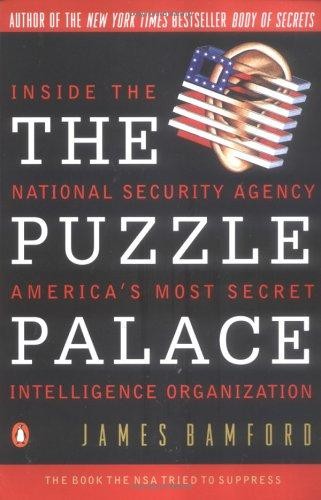 01 / Investigative history
The Puzzle Palace
The NSA’s institutional history and its hidden collection programs.
View book on AmazonBook & source detailsWhy this pick?
A foundational investigation of the NSA and its historical collection programs.
The stamp is an editorial recommendation informed by published reviews, source quality, and relevance. It is not a claim about the highest Amazon customer rating. Selection source.
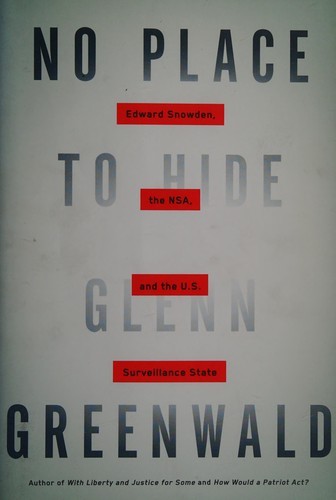 02 / Reporter’s firsthand account
No Place to Hide
The Snowden documents and the journalist’s argument about mass surveillance.
View book on AmazonBook & source details
A place on this shelf is not a verdict on every claim inside. Selection checked 2 October 2026. Cover artwork belongs to its respective rights holders; cover sources & editions. Links open a specific edition. Cover artwork may show a different edition; check the format, availability, and price on Amazon before buying.
A QUESTION LEFT IN THE MARGIN / EDITORIAL PROMPT
Bring one source.
What did the program’s documented collection cover, and what would be an unsupported extension of that finding?
A useful first note: the source, what it establishes, and what it leaves open.
FOLLOW ANOTHER THREAD
Follow this thread.
Secrecy, surveillance, and the records left behind.
DocumentedDOSSIER 059Project MINARET
The watch list reached into American life.
DocumentedDOSSIER 054NSA bulk telephone records
The surveillance story had a paper trail.
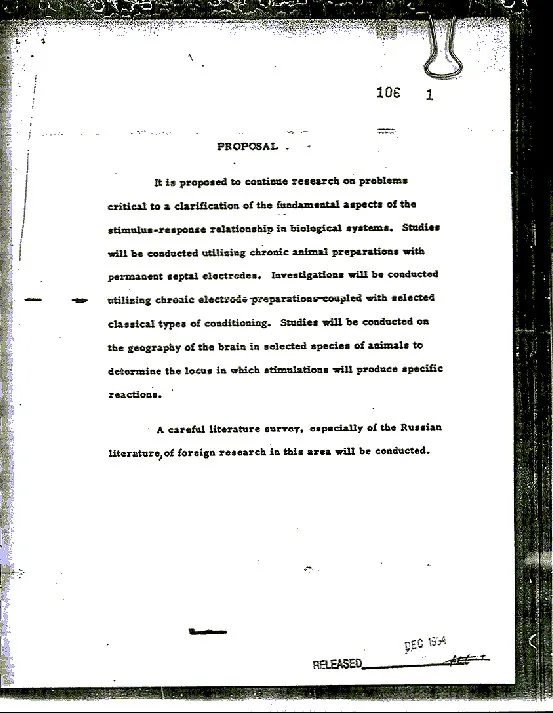 DocumentedDOSSIER 047
MKULTRA: the CIA experiments, the victims and the cover-up
How Cold War fears became secret experiments—and why so many answers disappeared with the files.