DOSSIER 087 / DIGITAL FOLKLORE
What Leaves a Connected Car?
A new OnStar announcement meets a separate research record about vehicles, phone apps and the information they transmit.
Documented concerns the sampled app transmissions described in the study. It does not establish that every vehicle sells data or that an announced future feature has been independently tested.
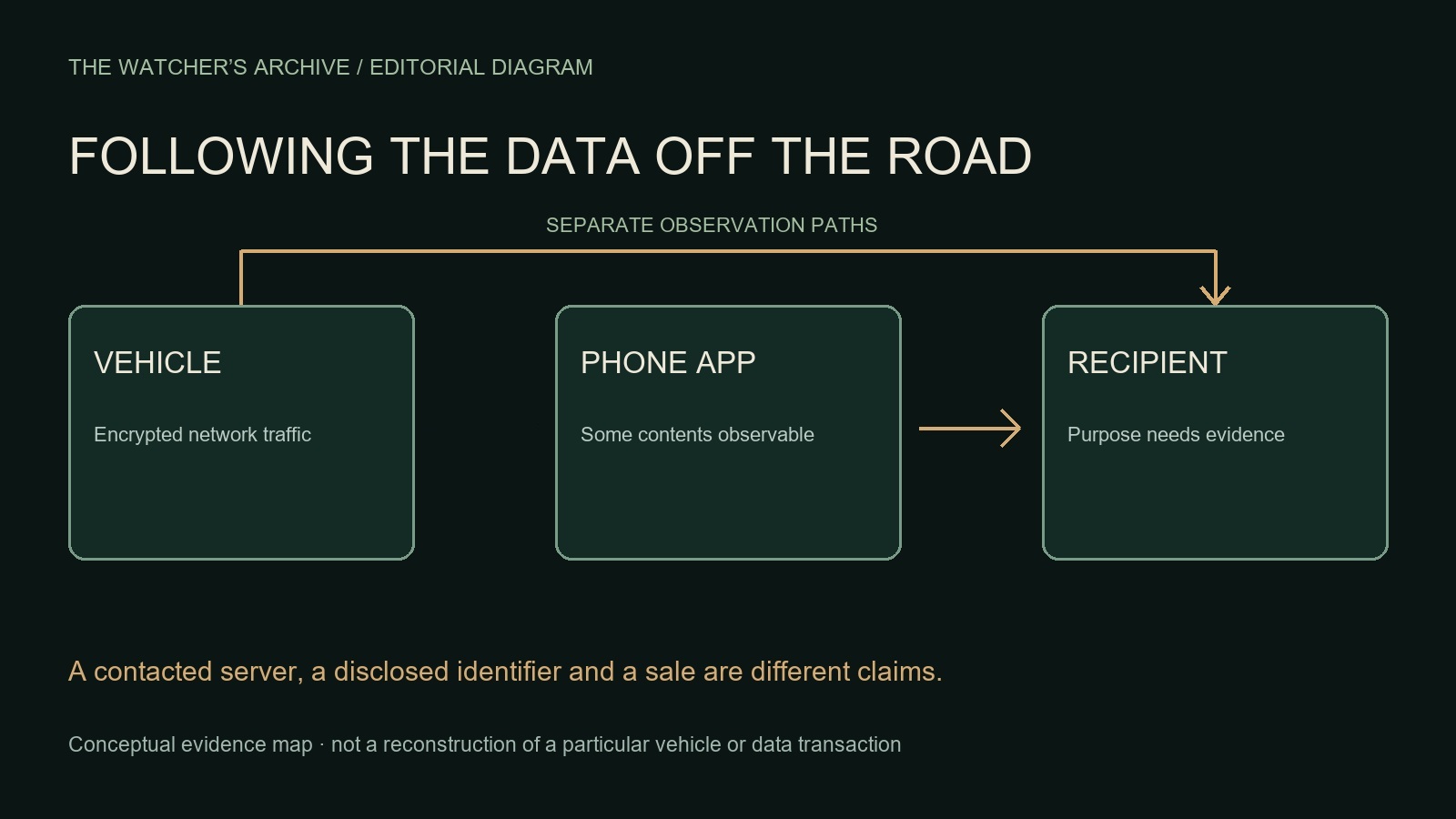
On October 21, General Motors described a more personal kind of OnStar, its connected-vehicle service: an AI assistant for the 2027-model Cadillac LYRIQ, due through an over-the-air update in the coming months, and a new mobile app planned for calendar 2027. The company said customers would control permissions and that connected-camera recordings would be encrypted and inaccessible to GM. Those are promises in a company announcement, awaiting implementation and independent testing. The announcement gives an older question a new setting: when a vehicle becomes more useful through its connections, who receives the information that makes those features possible? The academic measurements and FTC records examined below concern earlier systems. They do not establish how the newly announced features will behave. A car can be parked while its connections remain active. The question is what those connections reveal. To investigate, Northeastern University researchers partnered with Consumer Reports to study vehicles and the phone apps their owners use. Their paper, Automatic Transmission, examines the vehicle together with its companion app—the manufacturer’s phone software for managing features remotely. Their network measurements and a separate Federal Trade Commission (FTC) case offer different views of the same practical problem: information can leave a vehicle ecosystem in ways an owner may find difficult to follow. This file examines observed data flows and the limits of the measurements. A transmission to an outside company does not by itself establish a sale, and evidence involving selected vehicles cannot support a claim that every model behaves alike.
01 / What the experiment could see
The researchers could test the vehicles available in Consumer Reports’ fleet, which made their sample practical rather than random. They examined 21 Wi-Fi-capable vehicles, placed 11 electric vehicles inside a tent that blocked outside cellular signals, and directly intercepted one vehicle’s cellular connection. Their separate app tests involved 32 vehicles using 30 distinct apps. Those groups overlapped only partly.
Most traffic from the vehicles remained encrypted. The researchers could see destinations, timing and volume, but generally could not read the contents. Instrumented phones gave them greater visibility into app communications. A connection to an advertising-associated domain therefore needs to be distinguished from an observed identifier in an app payload, and neither observation alone establishes a sale.
02 / Following the app
The phone beside the steering wheel matters to this story. In the study, companion apps introduced advertising and analytics connections that vehicle-only measurements would miss. Researchers searched decrypted app communications for identifiers associated with the test accounts and cars. Seven apps transmitted personal identifiers to third parties. A Vehicle Identification Number, or VIN, is a persistent identifier assigned to a car. Pairing it with information about its owner creates a route for connecting records across settings.
The measurement still needs careful reading. A car that stops using Wi-Fi while driving may have switched its communications elsewhere. A domain flagged by a tracking list may instead provide maps or support. The paper distinguishes these cases; a claim about what an entire car collects must do the same.
03 / The manufacturers answer
The researchers received 14 replies from manufacturers. Their paper describes companies pointing to service-provider contracts, webpages opened inside apps, and terms that owners accept for third-party software. Those explanations matter because an observed transmission does not establish what a recipient is contractually allowed to do with it.
The paper also reports a concrete response: Honda said it requested deletion of location information received by Amplitude and changed its app to stop sending that information. This is an account attributed to the researchers and company, rather than an independent test of today’s app. The response belongs beside the original finding.
04 / A record that reached the insurance market
The FTC complaint follows information into the insurance market. Smart Driver was a connected-vehicle feature that collected driving-event information. The agency alleges that this information reached consumer-reporting agencies, companies that assemble records used to assess people, and contributed to insurance decisions that surprised some drivers. The agency distinguishes this driving-event stream from a separate location-data operation. Those are allegations in the complaint, and the consent settlement does not turn them into admissions.
The chronology also matters. The complaint describes reporting-agency agreements ending in March 2024 and the Smart Driver feature being fully withdrawn later that year. A reader should not assume a historical service still operates under the same name, or treat subsequent app measurements as proof that the same pipeline continued.
05 / What the order changes
The FTC finalized its order on January 14, 2026. It addresses particular companies and defined categories of driver information. Its five-year restriction concerns disclosures to consumer-reporting agencies; broader consent provisions include exceptions for purposes such as emergencies and safety. The settlement does not establish that every observation in the separate academic study violated the order.
The definitions also matter. A service provider acting under restricted instructions may sit outside the order’s defined third-party category even though a network study counts its server as an outside destination. The two documents answer different questions. Compliance still needs evidence of its own.
06 / What remains to be established
The records reviewed here support a more specific investigation than a general accusation that a car knows everything. The next questions concern identified transmissions, measured software versions, the purposes recipients may pursue, and whether subsequent changes can be independently verified. A company’s obligations under an order and its actual compliance are separate parts of that inquiry.
For an owner, the next step in understanding a particular transmission is to identify the app version, the recipient and the information actually sent. The study shows why looking only at the vehicle can miss part of that picture. Its measurements describe the tested vehicles and apps; later versions require their own examination.
The allegation, in brief
Some tested connected-car apps transmitted personal identifiers to network recipients.
Where the archive stands
Researchers observed identifiers in some app transmissions. Vehicle network contacts, readable app payloads and sales of data require different evidence. A separate FTC consent order addresses specific allegations and obligations.
The recipient, transmitted fields and software version can tell us more than the fact that a car connected to a server.
ARCHIVIST’S NOTE / EXPANDED RESEARCH: 26 OCT 2026
THE SHELF BEHIND THE FILE
For further reading
Take the longer trail. These are the books we would keep beside this file.
As an Amazon Associate I earn from qualifying purchases. Purchases through these links may earn this archive a commission.
- THE WATCHER’S
FAVORITE 01 / Personal data, corporate collection and government surveillance
Data and Goliath: The Hidden Battles to Collect Your Data and Control Your World
Background on data collection and surveillance; published before the current disputes.
View book on AmazonBook & source detailsWhy this pick?
Selected for relevant background; publisher, author bibliography, Amazon paperback and matching publisher cover verified. No customer-rating comparison is claimed.
The stamp is an editorial recommendation informed by published reviews, source quality, and relevance. It is not a claim about the highest Amazon customer rating. Selection source.
A place on this shelf is not a verdict on every claim inside. Selection checked 2 October 2026. Cover artwork belongs to its respective rights holders; cover sources & editions. Links open a specific edition. Cover artwork may show a different edition; check the format, availability, and price on Amazon before buying.
A QUESTION LEFT IN THE MARGIN / EDITORIAL PROMPT
Bring one source.
What would make a car-data disclosure meaningful to you: named recipients, a clear retention period, or a control you could verify? Bring a policy, measurement or experience that helps explain your choice.
A useful first note: the source, what it establishes, and what it leaves open.
FOLLOW ANOTHER THREAD
Follow this thread.
Compare a documented historical collection program with modern evidence about data movement.
 DocumentedDOSSIER 058
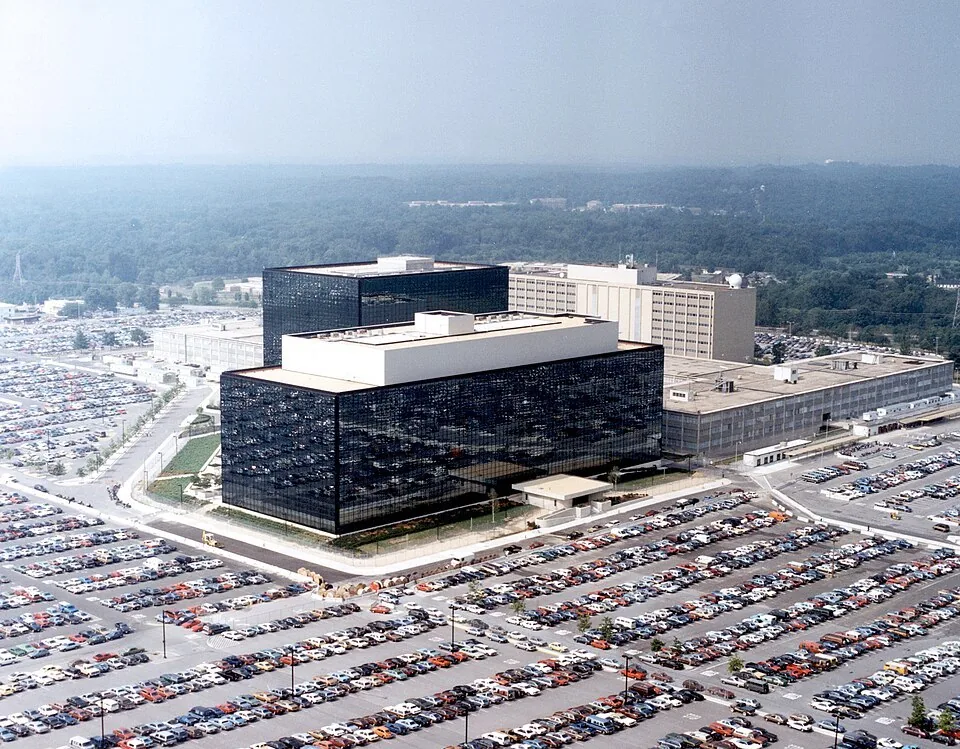
Project SHAMROCK: thirty years of secret telegram collection
How a wartime arrangement outlived the war—and put Americans’ messages in government hands.
 PROPOSED PIPELINE REPORTED / INGESTION DENIEDDOSSIER 084
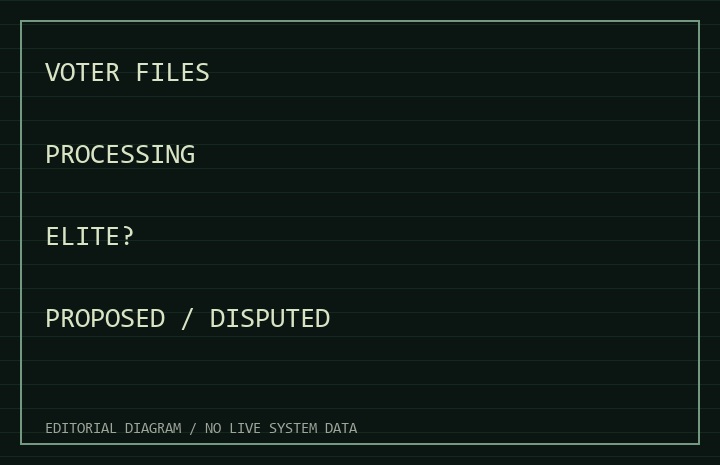
Why Were Voter Files Waiting for Palantir? Inside the ELITE Dispute
An internal plan, a company denial and a new lawsuit leave a data trail worth following.
 PRIVACY RISKS DOCUMENTED / COORDINATED PLAN UNPROVEDDOSSIER 085
Who Gets to Know You Passed the Age Check?
A Roblox shareholder complaint and a European privacy dispute reveal different questions behind the internet’s new gates.