DOSSIER 092 / DIGITAL FOLKLORE
Where Did the Health Intake Answers Go?
An expanded lawsuit follows the path from a request for medical treatment to subscription charges and advertising systems.
Contested concerns the alleged misconduct. The investigation, lawsuit and company defense are documented; the merits remain unresolved in the reviewed record.
On November 10, 2026, five states joined a federal lawsuit about what happened when people sought medical treatment through Hims & Hers. The amended complaint follows a customer through an online intake form, payment screens and attempts to stop future shipments. It also describes information allegedly sent to advertising systems. Hims disputes the allegations and says its privacy policies and transaction terms explained the practices. The lawsuit brings those competing accounts before a federal court.
01 / A medical form before a transaction
Hims launched in 2017 and the Hers brand followed in 2018. The platform connects people seeking treatment with medical providers and pharmacies. A customer can begin the process from home, without first arranging an in-person appointment. The website operator, the professional deciding whether to prescribe and the pharmacy filling an order have separate roles in that transaction.
The amended complaint divides the historical intake process into four stages: questions about treatment interests, account registration, a medical-history questionnaire and screens collecting payment information. For someone seeking help, the sequence can feel like the beginning of a medical consultation. The plaintiffs argue that the commercial consequences of completing it were inadequately explained. Hims says the screens disclosed when charges would begin and what a customer was agreeing to buy.
02 / The investigation becomes a lawsuit
The Federal Trade Commission, the US consumer-protection agency, began demanding information about the company's privacy, advertising, subscription and cancellation practices in October 2023. Hims disclosed that investigation in its financial reporting. It says it supplied information and sought a negotiated resolution, but settlement talks failed.
On July 29, 2026, the FTC sued alongside Utah's consumer-protection division and California, represented by Los Angeles County Counsel. Hims publicly rejected the allegations that day and said the agency had disregarded evidence it supplied. The company filed a motion to dismiss on October 22, asking the court to reject the original complaint on legal grounds.
Arizona, Florida, Nebraska, Ohio and Wisconsin joined in the November 10 amendment. Their participation added state-law claims to the pending action in the Northern District of California. The amended pleading is the plaintiffs' account of the evidence; the October defense memorandum addresses the earlier version of the case. Neither document is a court finding that the disputed conduct was unlawful.
03 / The timing of a charge
The billing dispute begins with the moment a medical request becomes a purchase. Plaintiffs say some customers believed they were providing payment details for a later decision, while a prescription could trigger a charge before they expected it. Customer accounts reproduced in the complaint describe attempts to stop orders and obtain refunds. These accounts were selected by the plaintiffs; the archive has not interviewed those customers independently.
Hims points to checkout language saying customers would be charged if a provider prescribed treatment. Its defense also cites disclosures about shipment frequency and refill processing. The dispute therefore concerns the words customers saw, their prominence and the point in the sequence at which they appeared. Stopping the next refill and obtaining a refund for an order already processed are separate questions.
Cancellation arrangements changed over time. According to the amendment, most customers initially had to contact customer service. A broad website cancellation route arrived in April 2023, with earlier and different arrangements in some states. Plaintiffs describe a route through an order-editing button, deselecting products and answering survey questions before completing cancellation. They say these steps and customer-service delays led to unwanted charges. Hims argues that several cancellation methods were available and that cancellation was simpler than enrollment. These filings describe historical interfaces, rather than an independent test of the service today.
04 / How an advertising audience could reveal an interest
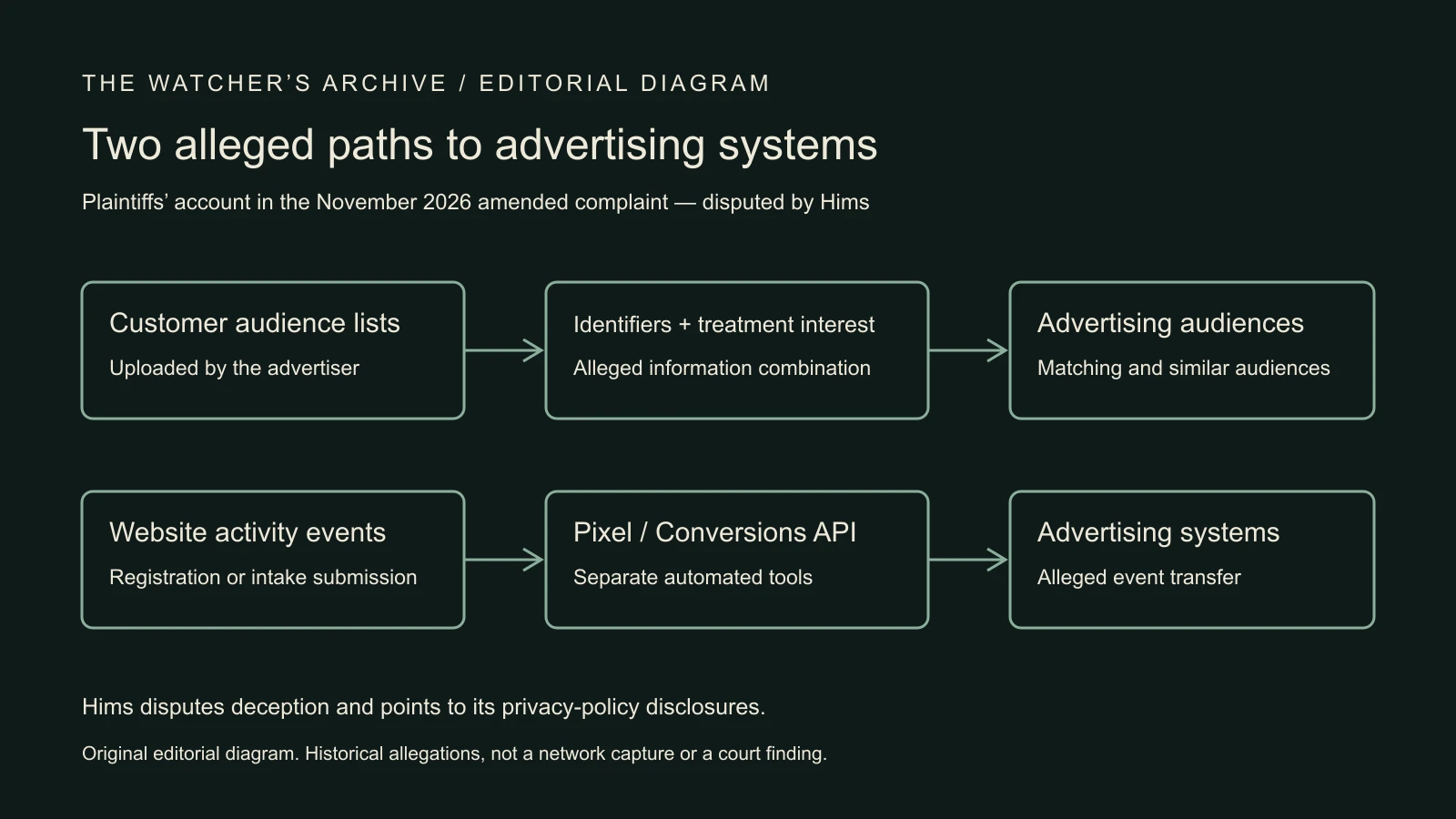
The privacy allegations follow two routes into Meta's advertising systems, which support advertising on Facebook and Instagram. One involved uploading lists of customer email addresses for matching with platform profiles. The other involved transmitting website events through the Meta Pixel and Conversions API, tools that report activity to an advertising platform.
The plaintiffs say identifiers were combined with treatment interests associated with registration or submission of a medical intake form. A matching audience can help an advertiser reach existing customers; a similar audience can help it find other people resembling them. The concern is what the combination reveals about a person seeking care. It does not require the transfer of a complete medical record, and an expressed treatment interest does not itself establish a diagnosis.
The amendment alleges that sharing continued through at least May 2024 despite privacy assurances. Hims argues that customers acknowledged policies disclosing advertising-related uses, and that promises of discreet remote care should not be interpreted as an absolute promise against data sharing. The competing positions depend on historical representations and disclosures. This article reports the parties' arguments and does not treat today's policy as proof of what an earlier customer accepted.
05 / The company answers
The company challenges both the alleged deception and the legal framework for the subscription claims. Its October memorandum argues that the original complaint failed to establish why the privacy disclosures were misleading. It also disputes the suggestion that customers could not understand the charging terms. Those are arguments for dismissal, rather than factual conclusions adopted by the court.
The subscription counts invoke the Restore Online Shoppers' Confidence Act, usually called ROSCA. It regulates certain online sales using a negative-option feature, where a customer's inaction can count as acceptance of further charges. The case includes disputes about disclosure, consent and the mechanisms for stopping recurring payments.
Hims argues that fixed-term installment arrangements do not necessarily contain the renewal feature required for those claims. That threshold argument is distinct from whether customers understood a particular payment screen. It also does not dispose of the separate privacy allegations. The October memorandum predates the expanded November complaint, so it should not be presented as the company's answer to every later allegation.
06 / What the lawsuit could change
The plaintiffs seek an injunction against future violations, monetary relief and other remedies available under the laws they invoke. State claims also request penalties or forfeitures. The court has not awarded those requested remedies in the records reviewed for this article.
Hims argues that historical conduct and later changes undermine the grounds for prospective relief. The amended complaint responds that the alleged conduct and the company's response to complaints and investigation justify intervention. The company's quarterly disclosure separately reports an approximately $60 million accrual for the matter as of September 30. An accounting provision is not a settlement or a payment awarded to customers.
The practical questions run through the same intake journey: what a person understood when asking for care, when that request authorized charges, how future shipments could be stopped and what information left for advertising. The documents expose a disagreement about those boundaries. Resolving it requires the historical screens, policies, contracts and evidence to be examined in court; the filing of a lawsuit alone does not settle them.
The allegation, in brief
Hims misled customers about medical-intake payments, cancellation and advertising uses of their information.
Where the archive stands
Federal and state plaintiffs allege deceptive practices. Hims disputes the allegations and points to privacy policies, checkout disclosures and legal limits on the subscription claims. The reviewed filings do not establish liability.
Follow the historical intake screens, payment terms and data transfers alongside both parties' accounts.
ARCHIVIST’S NOTE / EXPANDED RESEARCH: 21 NOV 2026
THE SHELF BEHIND THE FILE
For further reading
Background on commercial data collection. Published before this lawsuit; not evidence for its allegations.
As an Amazon Associate I earn from qualifying purchases. Purchases through these links may earn this archive a commission.
- THE WATCHER’S
FAVORITE 01 / Commercial surveillance and privacy
The Age of Surveillance Capitalism
Background on the commercial collection and use of personal data; published before this case.
View book on AmazonBook & source detailsWhy this pick?
Selected for relevant background and substantial published reception documented by the publisher; no Amazon customer-rating comparison is claimed.
The stamp is an editorial recommendation informed by published reviews, source quality, and relevance. It is not a claim about the highest Amazon customer rating. Selection source.
A place on this shelf is not a verdict on every claim inside. Selection checked 21 November 2026. Cover artwork belongs to its respective rights holders; cover sources & editions. Links open a specific edition. Cover artwork may show a different edition; check the format, availability, and price on Amazon before buying.
A QUESTION LEFT IN THE MARGIN / EDITORIAL PROMPT
Bring one source.
At which point in a medical intake should a person be told that their information may be used for advertising, and what would show that they understood?
A useful first note: the source, what it establishes, and what it leaves open.
FOLLOW ANOTHER THREAD
Follow this thread.
Compare a regulator's consent findings with disputed allegations about health information and advertising.
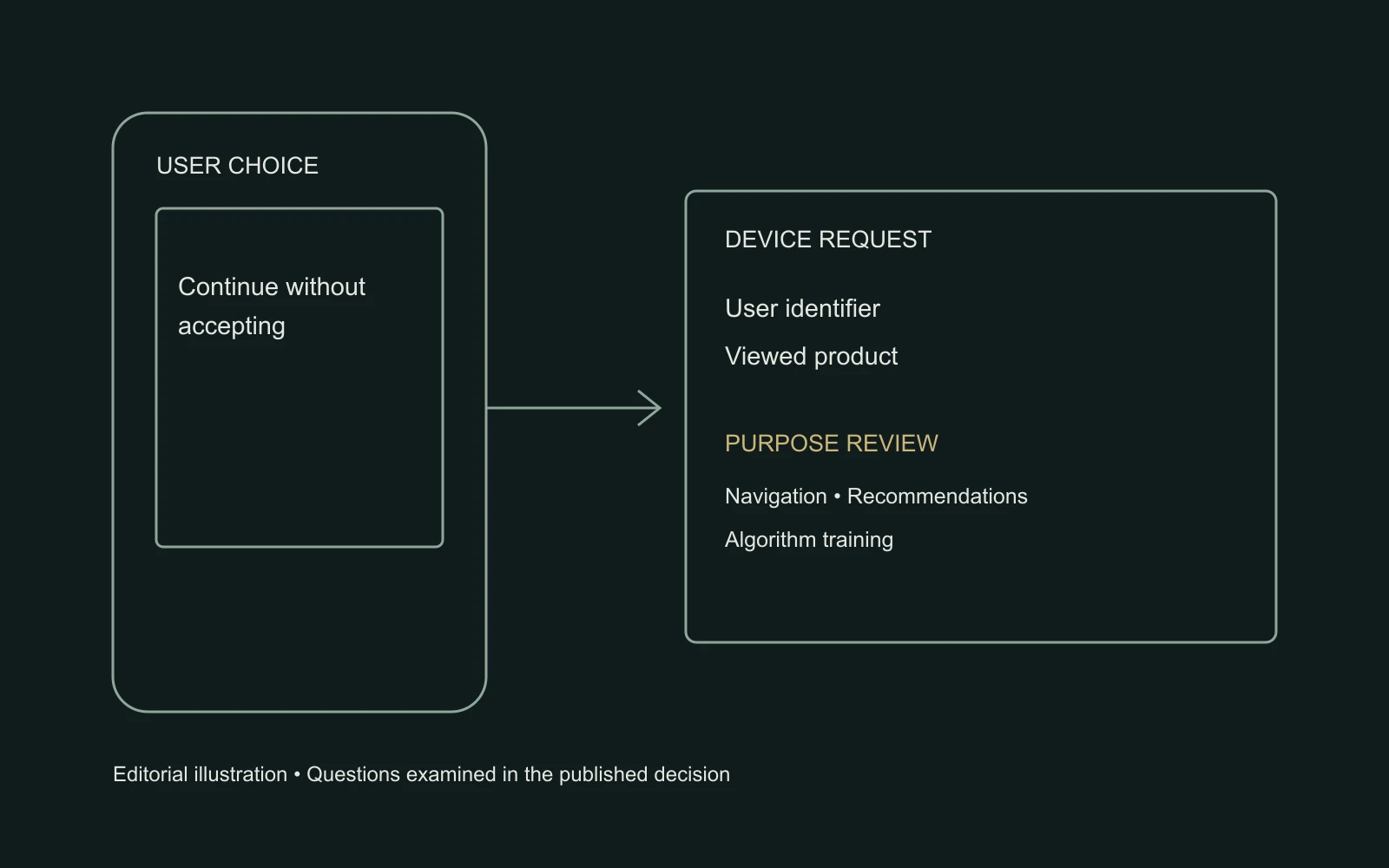 CONSENT BREACH FOUND / CURRENT APP BEHAVIOR UNVERIFIEDDOSSIER 091
What Happened After the App User Refused Tracking?
A French app inspection followed the requests sent after a refusal, and a dispute over what product recommendations required.
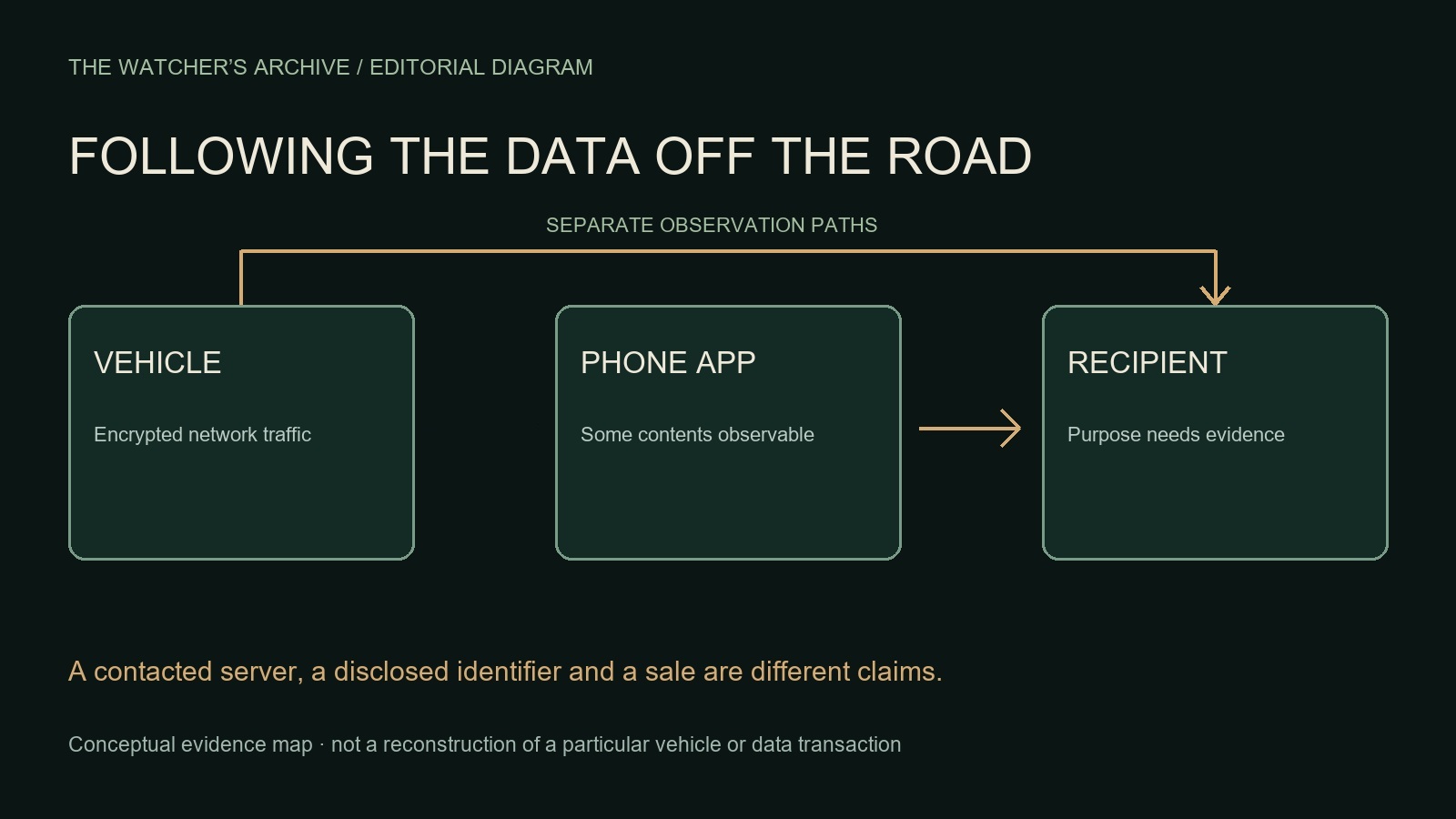 SAMPLED DATA TRANSMISSIONS DOCUMENTED / SCOPE LIMITEDDOSSIER 087
What Leaves a Connected Car?
A new OnStar announcement meets a separate research record about vehicles, phone apps and the information they transmit.
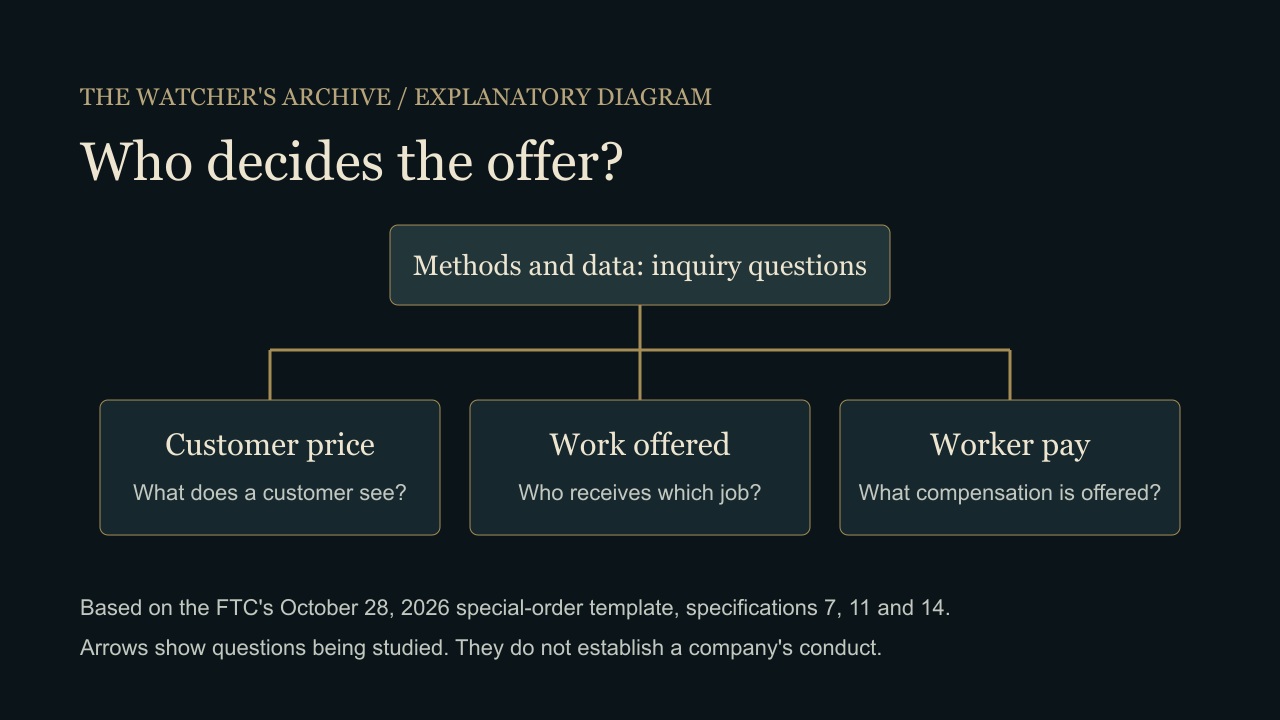 INQUIRY DOCUMENTED / OUTCOMES OPENDOSSIER 090
Who Decides Your Price and Your Pay?
The FTC asks how personal data enters customer prices, work offers and worker compensation.