DOSSIER 071 / SPECIAL EDITION: KOREA
The iron stakes that were said to wound Korea
The metal was real. Its alleged mission was another matter.
The assessment concerns the alleged colonial sabotage program, not the existence or cultural importance of Korean geomancy.
An iron rod found in a mountainside can carry two histories. One is the history of the object: its manufacture, placement, and use. The other is the history assigned to it when someone pulls it out. In this Korean file, the second history sometimes arrived first.
01 / A landscape with something to lose
Pungsu, Korean geomancy, treats the placement of graves, homes, and settlements as a relationship with the surrounding landscape. Hong-key Yoon’s specialist study examines its principles, historical development, and place in Korean culture. Mountains and water are more than scenery in that tradition. The sabotage story takes this meaningful landscape and gives it an enemy: an occupying power supposedly learning where its vitality flows, then driving metal into the crucial points to injure a people through their land.
That premise explains why a rusting object could become charged with significance. If a mountain is understood as sustaining descendants or national fortune, a stake is easily read as an intrusion rather than a neutral marker. But cultural intelligibility is different from historical proof. The question is not whether Korean geomancy exists, or whether colonial rule caused immense harm. It is whether particular objects can be connected to a deliberate program, and whether the alleged perpetrators intended the purpose later attributed to them. An account of a belief cannot quietly become an account of an operation.
02 / The colonial building and the hidden wound
Soyang Park’s research follows the geomantic-invasion story through South Korea’s public culture between 1990 and 2006. The former Japanese Government-General Building and iron spikes became connected in arguments about colonial injury and its removal. The building was a visible inheritance of occupation; the spikes suggested damage hidden below the surface. Demolition could therefore be imagined as more than architectural change. It could look like extracting a foreign obstruction from the nation’s body.
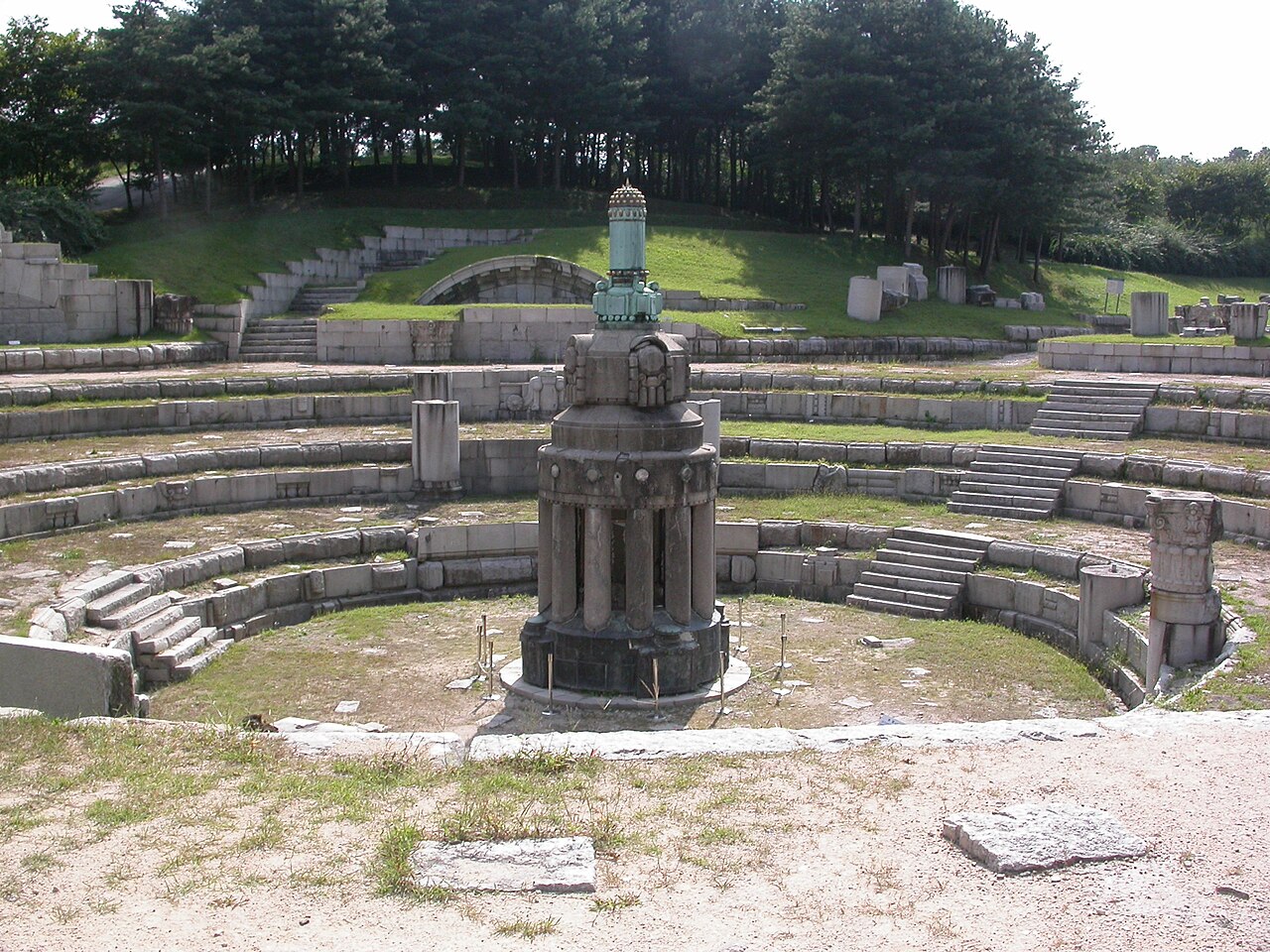
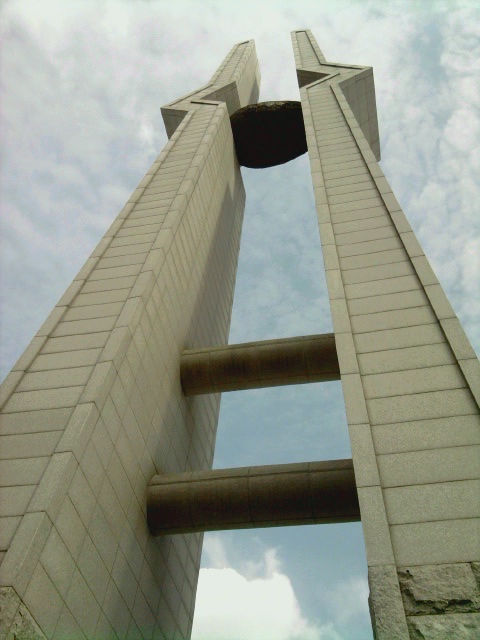
The building was demolished, and surviving fragments can be seen at the Independence Hall of Korea. Korea.net’s heritage reporting identifies them there. The photograph accompanying this dossier shows those remains, not a cache of proven ritual weapons. A preserved piece of masonry has an identifiable connection to the colonial building. A mountain rod still needs its own provenance. The two can belong to the same public story without sharing the same evidentiary chain. That is why the image caption matters: an evocative photograph must not appear to authenticate a claim it merely helps explain.
03 / A historian remembers helping the story travel
Minsoo Kang’s August 2024 essay about Exhuma includes an unusually valuable admission. He had encountered the iron-stake story while living in Korea roughly twenty-five years earlier and helped circulate it in an American literary journal without adequate checking. Looking back, he describes his failure of due diligence. This is a firsthand account of a story’s transmission by someone trained to examine history. It is not firsthand testimony from a Japanese official ordering occult sabotage.
The film gave the motif another life by turning buried colonial injury into horror. Kang’s reflection shows why a scholar’s earlier repetition can later be mistaken for corroboration. Readers may encounter several references and assume several independent investigations stand behind them, when some may trace back to a story repeated with insufficient scrutiny. The important discovery is the broken chain of verification. His willingness to revisit his own contribution is more useful than a confident retelling that never asks where its confidence came from. The film is fiction; the circulation of the historical claim is a research subject.
04 / The rod does not come with a confession
Historian Kirk W. Larsen asked pointed questions in a public Korean-studies discussion in May 2005. What evidence showed that Japanese officials held the relevant geomantic beliefs? What established their intent? Would the supposedly weakened landscape distinguish Koreans from Japanese residents and institutions occupying the same peninsula? He raised ordinary construction as a possibility when discussing reported metal in foundations. Those are methodological challenges, not a laboratory determination that every discovered stake has the same innocent origin. They expose what the allegation still has to establish.
A responsible file on an individual find would start with location, material, installation date, and archaeological context. Surveying, construction, and other practical explanations should be tested against the particular object, not pronounced from a distance. Colonial planning documents, verified testimony, or a demonstrable pattern linked to an actual order could change the historical case. Photographs of removal, public conviction, and an object’s resemblance to the legend cannot do that work alone. The land has a long memory in this story. The archive needs a chain of custody as well. Until then, the alleged sabotage campaign remains unproved, even where the metal in someone’s hands is perfectly real.
The allegation, in brief
A recurring story alleges that Japanese occupiers planted iron stakes in Korea’s mountains and auspicious sites to sever the land’s vital energy and suppress Korean fortunes. Finding a rod does not establish when it was installed, who installed it, or an occult purpose.
Where the archive stands
Scholars have studied the story’s circulation through colonial memory, geomancy, and demolition debates. The sources here do not establish a coordinated Japanese geomantic-sabotage project. Historian Minsoo Kang has described his own role in spreading the narrative before reconsidering its evidence. Pungsu is a historical cultural tradition; the alleged sabotage campaign requires a separate historical demonstration.
An iron object may survive its installer by a century. The story told over it can be much younger.
ARCHIVIST’S NOTE / EXPANDED RESEARCH: 02 OCT 2026
THE SHELF BEHIND THE FILE
For further reading
Begin with the landscape tradition itself. Understanding pungsu does not require believing that colonial officials secretly weaponized it.
As an Amazon Associate I earn from qualifying purchases. Purchases through these links may earn this archive a commission.
- THE WATCHER’S
FAVORITE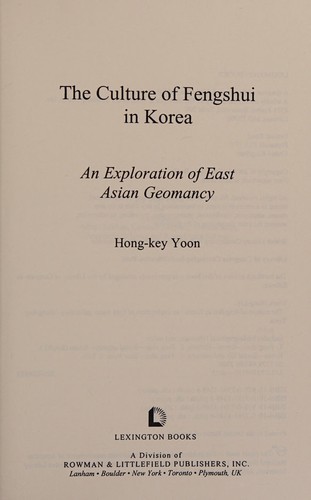 01 / Geography / cultural history
The Culture of Fengshui in Korea: An Exploration of East Asian Geomancy
Specialist scholarship on pungsu, its landscape principles, and its Korean history. Cultural context, not proof of the iron-stakes allegation.
Find editions on AmazonBook & source detailsWhy this pick?
Selected for its specialist treatment and favorable scholarly reception. The publisher collects reviews including Geographical Review, praising the breadth of its analysis. It examines a cultural tradition without establishing a colonial sabotage operation.
The stamp is an editorial recommendation informed by published reviews, source quality, and relevance. It is not a claim about the highest Amazon customer rating. Selection source.
 02 / History / reportage
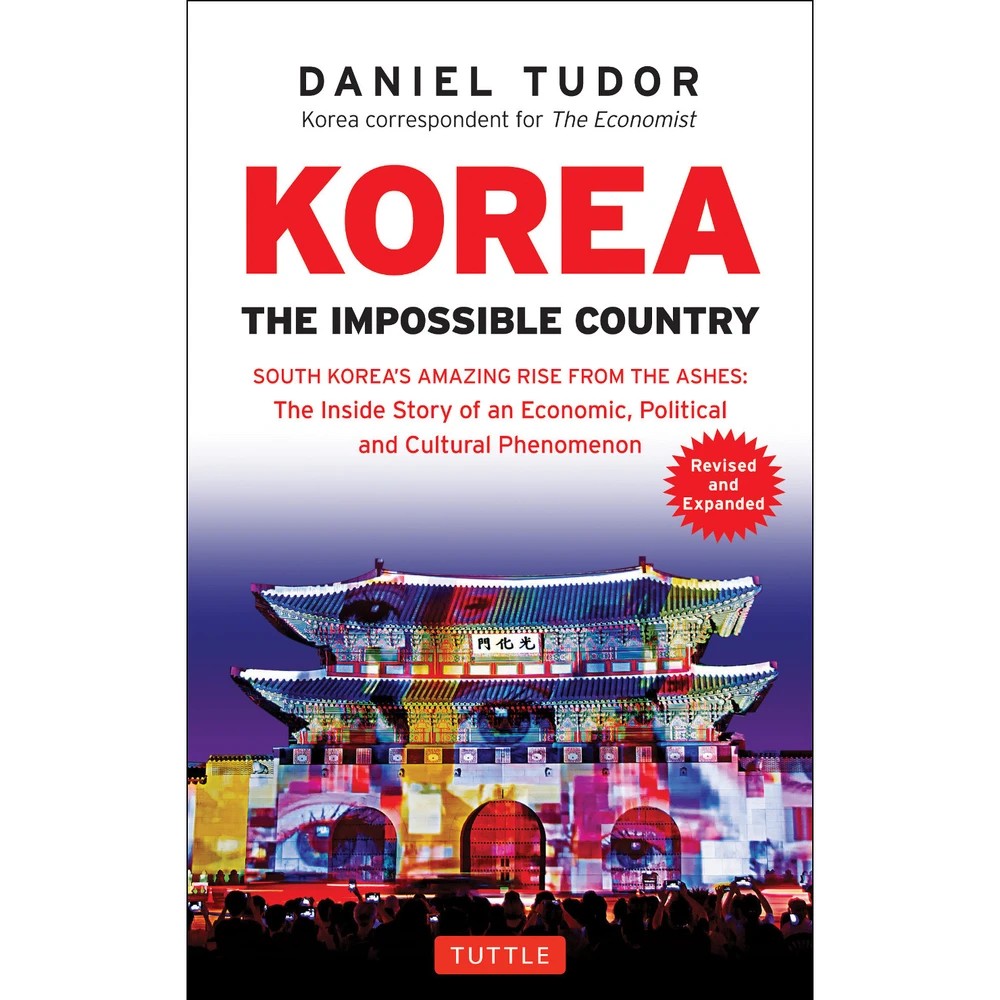
Korea: The Impossible Country
Choose the updated edition: it includes Sewol and Park’s impeachment, alongside the political and cultural setting of modern South Korea.
Find editions on AmazonBook & source details
A place on this shelf is not a verdict on every claim inside. Selection checked 2 October 2026. Cover artwork belongs to its respective rights holders; cover sources & editions. Covers identify a selected edition; Amazon lists current editions, availability, and prices.
A QUESTION LEFT IN THE MARGIN / EDITORIAL PROMPT
Bring one source.
What would establish who installed a particular stake and why? How does the cultural meaning of the landscape differ from that historical question?
A useful first note: the source, what it establishes, and what it leaves open.
FOLLOW ANOTHER THREAD
Adjacent files
 COLLISION UNPROVENDOSSIER 067
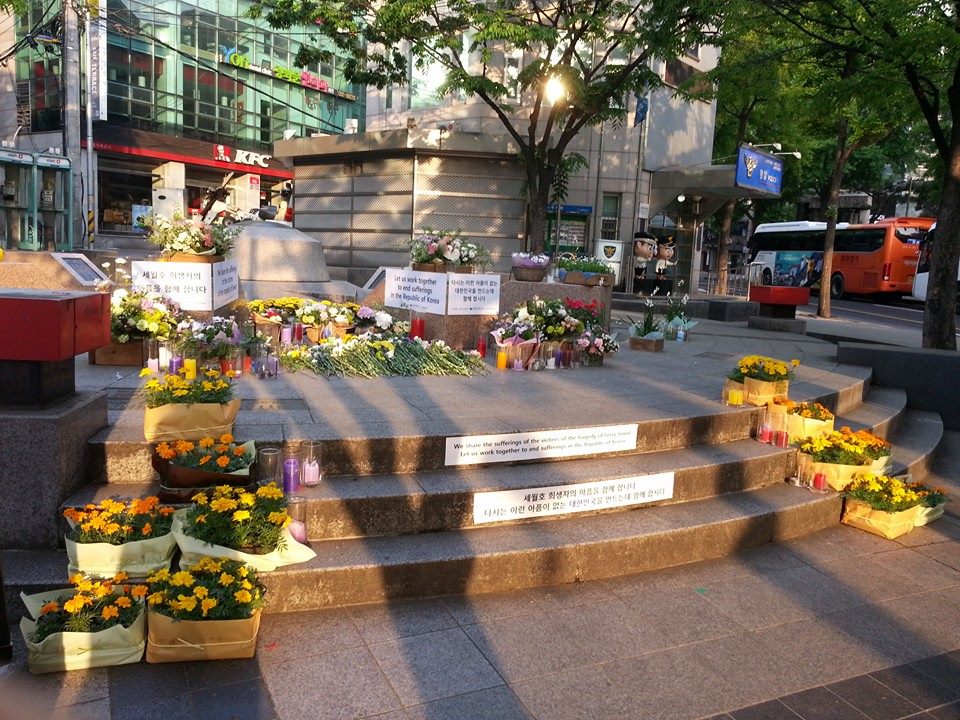
Sewol: the submarine beneath the story
The children were told to wait. Years later, a radar trace became an accusation.
 COVER-UP UNPROVENDOSSIER 068
Cheonan: collision and cover-up claims
A warship split in darkness. The argument survived the salvage.
 INFILTRATION CLAIM REFUTEDDOSSIER 069
Gwangju: the invented infiltrators
The witnesses asked the world to look. Another story tried to change who they were.