DOSSIER 079 / CULTURE & BELIEF
The DMT Expedition: Another World—or a Brain That Won’t Let Go?
The experiment changes the clock. The destination remains disputed.
Research establishes prolonged experiences, participant reports and accompanying brain changes. It does not establish an external realm or independent entities.
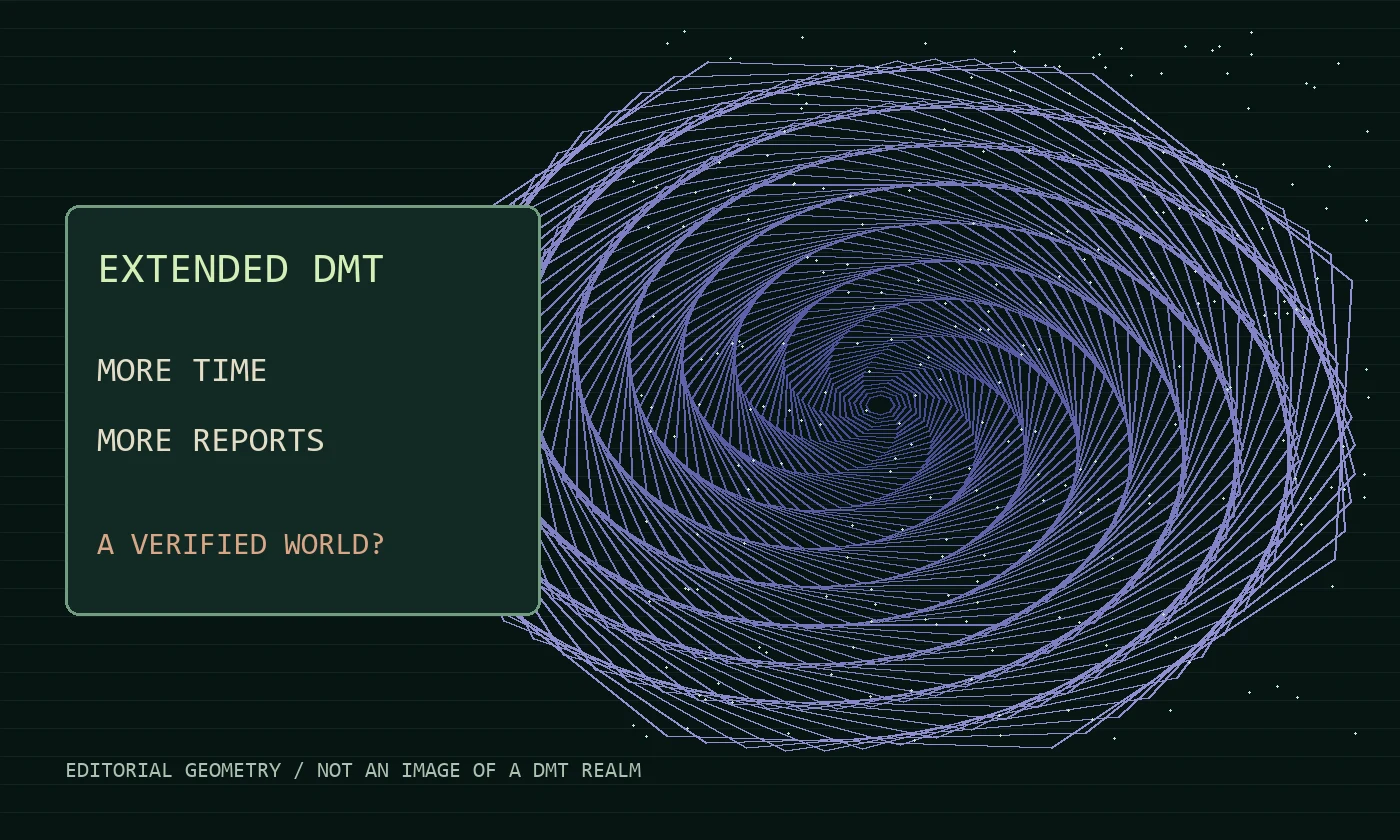
The ordinary DMT story is brief: a sudden departure, an encounter, a return. Extended-infusion research changes the clock. If the experience can be held open, what can a person learn there—and what would count as evidence that there is a “there” at all?
01 / Keeping the door open
In a small study described by Imperial College London, eleven healthy volunteers received DMT through a controlled intravenous procedure that extended the experience to roughly half an hour. The important development was duration. Researchers were testing whether an intense altered state could be sustained in a monitored setting, giving them more time to investigate consciousness than a rapidly disappearing peak allows.
Lisa Luan, a study co-author, explained that the flexibility of strength and duration might be useful for clinical work. Chris Timmermann described extended administration as a probe into consciousness. Their comments concern a research method. They do not announce the discovery of another inhabited dimension. The difference is easy to lose when a laboratory result arrives in a headline written like a dispatch from space.
02 / A proposal becomes an experiment
Andrew Gallimore and Rick Strassman published a pharmacokinetic model in 2016 for prolonging an immersive DMT experience. The proposal tried to address a practical obstacle in consciousness research: the strongest effects ordinarily pass quickly. A model can help investigators design a study; it cannot certify what the experience means.
The later extended-infusion paper reported sustained subjective effects and monitored physiological responses. Participants were screened and observed. That context matters. An account of tolerability in a small selected sample is neither a guarantee for everyone nor a reason to reproduce the procedure outside research. This archive follows the experiment as evidence, without turning its methods into a recipe.
Holding an experience longer changes what can be asked about it. It may allow more descriptions, comparisons or measurements. But more time inside a perception does not automatically convert it into an external location. The laboratory has lengthened the observation window. It has not settled the identity of the thing being observed.
03 / What the witnesses actually describe
The most vivid published participant accounts in this file come from a separate naturalistic field study by Pascal Michael, David Luke and Oliver Robinson. They should not be spliced into the infusion trial. One participant, identified as GR, described an immense informational expanse and compared it to an empty blueprint. Another, SH, described a feminine guiding presence that seemed to pull her through vortices. These are anonymized firsthand experiences recorded in research interviews, not independently witnessed journeys.
The study’s selected reports include apparently autonomous beings, strange spaces and a powerful feeling that the encounter disclosed something fundamental. Its recruitment and selection prevent its percentages from becoming odds for any person taking DMT. Still, the accounts explain why a simple dismissal often fails to satisfy the person who had the experience. The witness is reporting an encounter, not merely a moving pattern.
Johns Hopkins researchers also surveyed more than 2,500 people about their most memorable DMT entity encounter. That retrospective, self-selected sample captures interpretation and lasting belief. It does not provide independent confirmation of the reported being. A person’s conviction is evidence about the experience’s impact; it remains a different measurement from the existence of an external agent.
04 / The case for an external world
Gallimore gives the external-reality interpretation a recognizable proponent. His publisher presents Death by Astonishment as an account of DMT’s history and the difficulty of explaining experiences that seem to reveal complex alien environments and intelligent beings. The attraction is not only unusual imagery. It is the apparent autonomy of the encounter: the sense that the person has arrived somewhere already occupied.
Believers can reasonably ask why reports recur and why some encounters feel more convincing than ordinary surroundings. They may propose that the brain functions as an interface capable of accessing realities usually unavailable to it. That is an interpretation to investigate, not a conclusion established by infusion research. Calling the method an expedition lends the claim a geography it has not yet earned.
This is a consciousness-and-metaphysics case rather than evidence of a demonstrated covert operation. There is no need to invent a government cover-up to make the dispute compelling. Two people can agree that an experience was extraordinary and still disagree profoundly about where it occurred.
05 / The brain is also in the room
A 2023 EEG-fMRI study summarized by Imperial examined how DMT changed brain activity and connectivity. It described major alterations in the organization of networks associated with ordinary perception. That offers an experimentally grounded route into the experience: a brain whose usual constraints have changed can produce a world that feels radically different.
Luan’s doctoral thesis extends the research record into subjective reports and EEG during prolonged administration. It describes entity experiences alongside changes in measured activity. A correlation is valuable because it brings the experience into a reproducible research framework. It does not prove that the perceived being is imaginary, and it does not prove that the being exists outside the participant. Neither conclusion follows simply from locating an accompanying brain signal.
The skeptical case is therefore strongest when it makes a positive demand: demonstrate information or agreement that ordinary perception, expectation and communication cannot explain. Shared human neurobiology and shared storytelling remain candidate explanations for recurring motifs. They need careful tests too. The goal is to compare explanations rather than declare victory from the intensity of a feeling.
06 / What would a map have to do?
A credible map would have to survive more than a fascinating interview. Could independent participants, unaware of one another’s reports, identify the same stable features? Could an apparent entity provide specific information hidden from the participant and the interviewer? Could the result survive preregistration, blinded assessment and replication by a separate team? These are proposed tests, not experiments this file claims have already succeeded.
The sources reviewed on 6 October 2026 establish that researchers can prolong DMT experiences and study what people report during them. They do not establish a verified shared geography or independent intelligence. The most interesting question is still open to investigation: can the encounter yield anything another observer can check?
Until then, keep two records. One records what the person experienced. The other records what the experiment established. The mystery lives between them; collapsing them makes the story easier and the evidence worse.
QUESTIONS LEFT ON THE DESK
The questions readers bring.
FAQ & search review: 2026-10-06 · Source links identify the record behind each answer. This date does not certify a new investigation of every chapter.
Have researchers proved DMT opens another dimension?
No. The cited studies concern subjective experience, prolonged administration and brain activity. They do not establish an independently existing destination.
Are the witness accounts from the infusion trial?
The named-by-initials accounts here come from a separate naturalistic interview study. They are explicitly kept separate from extended-infusion participants.
What would strengthen the external-world claim?
Blinded, independently replicated evidence of stable shared information unavailable through ordinary means would be stronger than a participant’s certainty alone. This is a proposed evidentiary test, not a reported success.
Compare the records: DMT and the machine elves · Danny Goler: the DMT laser and the Code of Reality · Did the CIA Turn America On—and Tune Its Rebels Out?.
The allegation, in brief
Extended DMT experiences give access to an independently existing world inhabited by intelligent entities.
Where the archive stands
Research establishes prolonged experiences, participant reports and accompanying brain changes. It does not establish an external realm or independent entities.
Read the accounts. Keep the evidence attached to its claim.
ARCHIVIST’S NOTE / EXPANDED RESEARCH: 06 OCT 2026
THE SHELF BEHIND THE FILE
For further reading
Take the longer trail. These are the books we would keep beside this file.
As an Amazon Associate I earn from qualifying purchases. Purchases through these links may earn this archive a commission.
- THE WATCHER’S
FAVORITE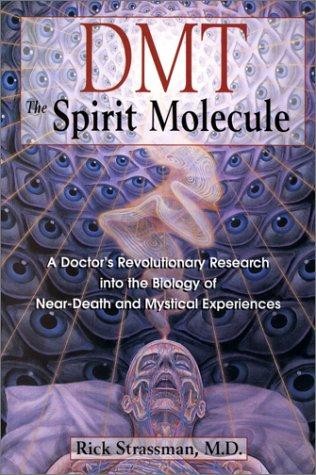 01 / Researcher’s account / interpretations
DMT: The Spirit Molecule
Human DMT research and the author’s interpretations of participants’ experiences.
View book on AmazonBook & source detailsWhy this pick?
A foundational participant-research account; published reception is collected by the publisher. Its metaphysical interpretations are not established findings.
The stamp is an editorial recommendation informed by published reviews, source quality, and relevance. It is not a claim about the highest Amazon customer rating. Selection source.
 02 / Research / speculative interpretations
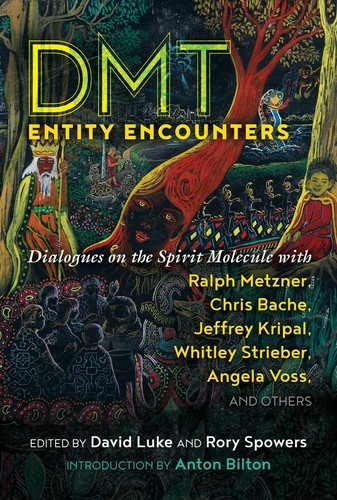
DMT Entity Encounters
Different approaches to reported entity encounters. External beings are not established by those reports.
View book on AmazonBook & source details
A place on this shelf is not a verdict on every claim inside. Selection checked 6 October 2026. Cover artwork belongs to its respective rights holders; cover sources & editions. Links open a specific edition. Cover artwork may show a different edition; check the format, availability, and price on Amazon before buying.
A QUESTION LEFT IN THE MARGIN / EDITORIAL PROMPT
Bring one source.
If an entity gave you a message, what test would let someone who was not there verify it? Design a test that could genuinely fail.
A useful first note: the source, what it establishes, and what it leaves open.
FOLLOW ANOTHER THREAD
Follow this thread.
Follow the separate claim, its accounts and the evidence that can test it.
 ENTITIES UNVERIFIEDDOSSIER 065 / FICTIONAL ART
DMT and the machine elves
They arrive as strangers. Some witnesses insist they were already there.
 REALITY CODE UNVERIFIEDDOSSIER 066
Danny Goler: the DMT laser and the Code of Reality
A red light on a wall. A claim that the wall is hiding the machinery.
 CIA EXPERIMENTS REAL / CULTURAL CONTROL UNPROVENDOSSIER 078 / FICTIONAL ART
Did the CIA Turn America On—and Tune Its Rebels Out?
The money entered the laboratory. The story escaped onto the road.