DOSSIER 065 / MIND & MEDICINE
DMT and the machine elves: the encounters, the history and the research
From McKenna’s changing creatures to the question researchers are still trying to answer: why does it feel like someone else is there?
The Unsupported label applies to the claim that DMT entities have been established as independently existing beings. It does not deny that people report vivid, meaningful encounters.
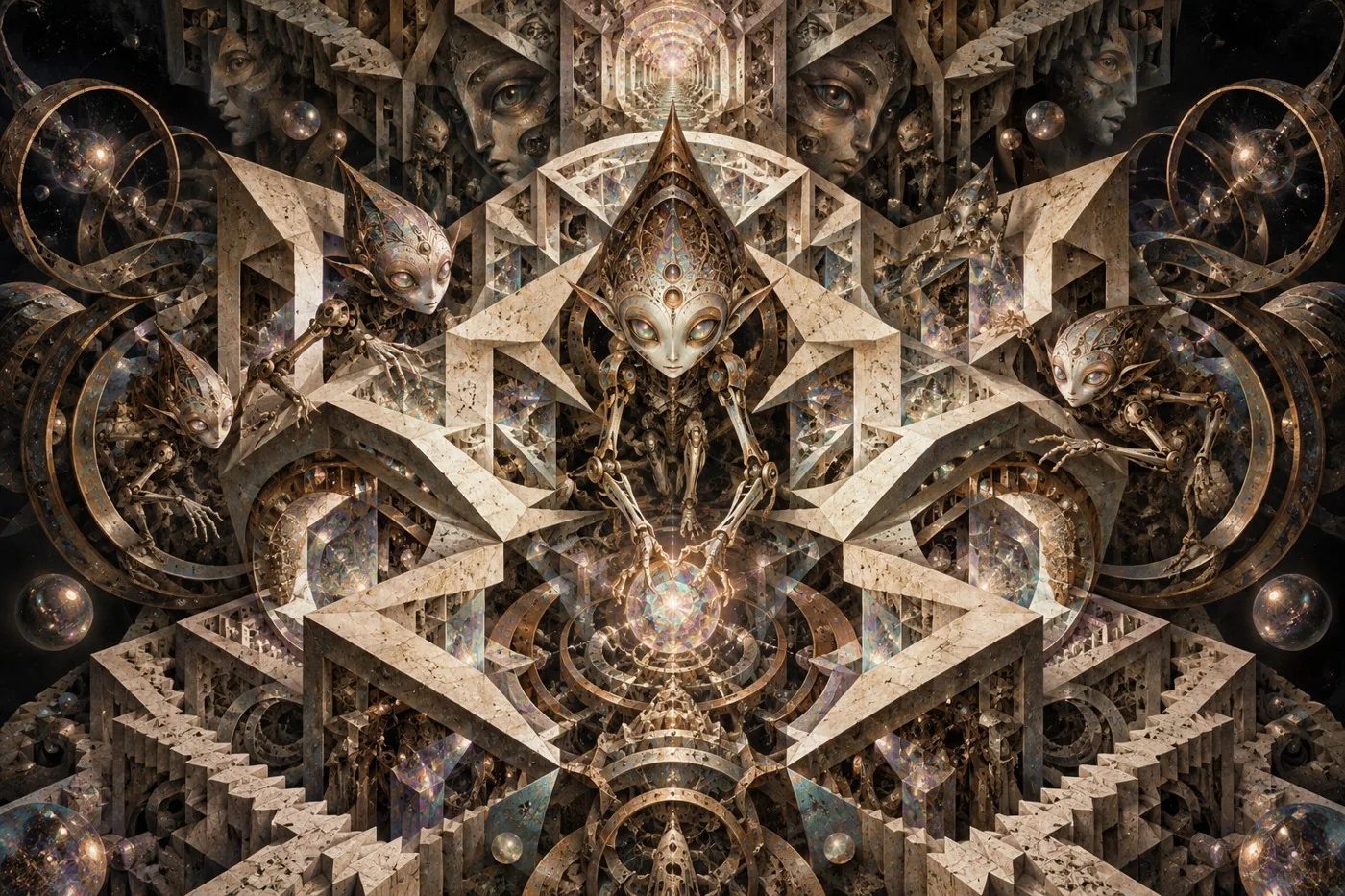
Terence McKenna called them “machine elves”: strange, changing beings he said he encountered after taking DMT. Other people describe guides, jesters, aliens or a presence they cannot see but feel is there. These accounts have become part of psychedelic culture and a subject of scientific research. Their backstory reaches from South American plant traditions to hospital studies and brain scanners, with a question running through it all: why does a chemically altered experience sometimes feel like meeting another mind?
01 / The beings in McKenna’s story
In a taped workshop excerpt from 1990, Terence McKenna described a place he believed he had entered under DMT. There were beings there, he said, busy showing him things. He called them “self transforming machine elves,” then reached for another image: objects that bounced and changed shape. His audience laughed, but he was trying to describe an experience that had left him astonished. He also told them these names were metaphors: ordinary words strained to fit what he remembered.
McKenna was a writer, lecturer and explorer of psychedelic experience. His talks gave listeners a memorable vocabulary for something difficult to put into words: the feeling that a drug had taken them somewhere populated by other minds. In his 1992 book Food of the Gods, he described small beings whose sounds appeared to become intricate objects. Language, in that account, could be seen taking shape.
The name escaped the confines of his own account. Today, “machine elves” can mean those particular changing figures or, more loosely, almost any being encountered during a DMT experience. The broader reports include guides, jesters, animals, aliens, humanlike figures and presences with no visible body. Understanding the story starts with keeping that variety in view.
02 / What DMT is, before the elves enter the picture
DMT stands for N,N-dimethyltryptamine. It is a psychedelic compound: a substance that can radically alter perception, emotion and the sense of self. It occurs in a number of plants and has also been detected in humans. The N,N prefix matters because similarly named compounds, including 5-MeO-DMT, have different properties. Their experiences should not be treated as interchangeable.
DMT acts on several molecular targets, including the serotonin 2A receptor. A receptor is a protein through which a chemical changes a cell’s activity; serotonin is one of the brain’s chemical messengers. That gives researchers a starting point for explaining the drug’s effects. It does not, by itself, explain why someone might experience a conversation with a being.
Inhaled DMT and DMT administered intravenously in studies act quickly and usually produce a short, intense experience, with the main effects often lasting around ten to twenty minutes. Ayahuasca, an orally consumed plant preparation containing DMT in many traditions, works differently and lasts much longer. Other plant constituents slow the breakdown that would ordinarily limit DMT’s effects when swallowed. The same molecule can therefore appear in experiences with very different timing and cultural settings.
03 / A history older than the laboratory
Indigenous peoples in South America developed traditions around psychoactive plants long before a laboratory gave DMT its name. Ayahuasca belongs to diverse traditions of healing, ceremony and spiritual knowledge. A ceremony’s songs, relationships and expectations are part of its setting. Reducing all of that to an isolated chemical, or treating its spirits as McKenna’s elves under another name, loses much of the history.
There is also physical evidence of early use of psychoactive plants. A study published in 2019 analyzed residues from a ritual bundle recovered in southwestern Bolivia and dated to roughly a thousand years ago. Researchers identified several compounds, including DMT and harmine. The find connects these substances to an old history of plant knowledge, although it cannot reconstruct what the owner experienced or establish the exact form of a modern ayahuasca ceremony.
Western chemical research followed a separate path. Richard Manske first synthesized DMT in 1931. Its powerful psychological effects were investigated in the 1950s by Hungarian chemist and psychiatrist Stephen Szára, who reported human experiments in 1956. The laboratory had begun describing chemically what other communities understood through plants, practice and inherited knowledge.
04 / How a private encounter became a shared story
McKenna’s gift was telling an unfamiliar experience in a way that made people want to hear more. He put humor, surprise and apparent intelligence at the center of it. His elves seemed to have their own activity and intentions. In his descriptions, they were not simply decorations in a field of bright patterns.
Books, recorded talks and later online transcripts allowed those descriptions to travel. Neurobiologist and writer Andrew Gallimore recalls finding McKenna’s ideas on the early internet in the 1990s, when hearing a full talk might still mean ordering cassette tapes. Gallimore’s own encounter eventually led him to develop a much more elaborate argument about DMT and other realities.
A shared vocabulary makes experiences easier to compare. It also gives people expectations before anything happens. Someone who has heard about elves, waiting rooms or alien examinations already has names available when recalling a confusing experience. That creates a difficulty for investigators: a recurring description could reflect recurring features of the experience, a familiar way of telling it, or some combination of both.
05 / Rick Strassman brings DMT into the hospital
In 1990, psychiatrist Rick Strassman began a human DMT research program at the University of New Mexico in Albuquerque. In his retrospective account, he describes administering approximately 400 doses to 60 volunteers over five years. The work took place in a medical research setting, with approvals, monitoring and people who knew they were taking part in an experiment.
Researchers could measure effects on the body and ask volunteers what had happened. Yet the accounts did not always fit the language of a routine drug study. Some volunteers described apparently independent places and beings. Strassman later made those accounts central to DMT: The Spirit Molecule, the book through which many readers first encountered this subject.
He also offered ideas that went beyond his measurements. He wondered whether DMT produced within the body might be involved in unusual states of consciousness, and whether the brain might receive experiences from realities it normally could not access. Those possibilities were part of his interpretation of the work. The clinical experiments had not measured an outside realm or demonstrated that a being existed there.
06 / What an encounter can feel like
Strassman’s chapter summaries preserve the differences between volunteers’ accounts. A participant identified as Lucas described a space-station setting and humanoid automatons. Jeremiah described alien caretakers in something like a nursery, and later an apparent technician working on his brain. These are the researcher’s retrospective summaries of pseudonymous reports, rather than observations of those scenes by the hospital staff.
A 2021 naturalistic study by Pascal Michael, David Luke and Oliver Robinson examined 36 experiences from experienced users. Apparently sentient encounters appeared in 34. Interviews described communication, unfamiliar settings and beings that seemed to act on their own. The participants supplied their own substance, which was not analytically verified, and the selected group cannot tell us what a typical first-time user would encounter.
The emotional range is wider than McKenna’s playful imagery suggests. Encounters can feel welcoming, indifferent, intrusive or frightening. A sense of being examined may be remembered as care by one person and a violation by another. In either case, the difficult feature to explain is often the apparent initiative of the other presence: it seems to be doing something the visitor did not consciously decide to imagine.
07 / The survey that put numbers beside the stories
In 2020, Alan Davis and colleagues published a survey of 2,561 people who reported an entity encounter after inhaling DMT. Respondents described their single most memorable encounter. Eighty-one percent said it had felt more real than ordinary waking experience at the time; 65 percent still rated it that way afterward. Sixty-nine percent reported receiving a message.
Those numbers help explain why the subject stays with people. The encounter can retain its force after the drug’s immediate effects end. Many respondents attributed consciousness and continued existence to the being, and many described lasting changes in their outlook. The questionnaire recorded these judgments; it did not test the messages against information obtained independently.
Recruitment began with people who already reported an encounter. The survey therefore cannot tell us what percentage of all DMT users meet beings. Respondents chose themselves, recalled a memorable event and described it afterward. An experience that was striking enough to answer a survey about may differ from one that was ordinary, confusing or quickly forgotten. Those limits are essential to reading the impressive percentages correctly.
08 / Thousands of online accounts—and many kinds of beings
David Lawrence and colleagues took a different approach in a study published in 2022. They analyzed 3,778 inhaled-DMT experiences described in online posts. Entity encounters appeared in 45.5 percent of those accounts. The categories included female figures, deities, aliens, animal-like creatures and jesters, as well as mythological beings that included machine elves.
The percentage concerns these posted experiences. People do not necessarily publish every session, and the researchers could not independently check what substance had been taken, how much, or every detail of a writer’s history. It is a useful catalogue of reported experience rather than a census of DMT users.
The variety matters to the larger argument. A claim that everyone visits an identical place populated by the same creatures fits the literature poorly. There are recurring patterns, but also striking differences. Researchers use “entity” as a broad descriptive term for an apparently separate being. Calling something an entity in a study does not decide whether it exists outside the participant’s experience.
09 / Why some people believe they have made contact
For believers, the strongest evidence is often the encounter itself: the surprise, apparent conversation and impression that another intelligence was already there. A visitor may feel that a place continues to exist after they leave it. Hearing that other people describe similar encounters can make a private experience feel like one person’s glimpse of a shared world.
Gallimore develops that possibility in his 2020 essay The Case for DMT Entities. He considers intelligences beyond ordinary reality, including advanced beings that might have left biological bodies behind. He also explicitly describes the proposal as speculative. His argument gives the apparent intelligence a possible explanation, while leaving the existence of such beings to be established.
The unresolved step is how to distinguish contact from an experience that the brain can generate. Novelty and certainty alone cannot do that. A convincing test would need something checkable—for example, specific information a participant could not normally know, obtained under controls that rule out ordinary communication, guessing and selective reporting. The encounter studies discussed here were not designed to supply that kind of result.
10 / What the brain studies can explain
In 2023, Christopher Timmermann and colleagues reported a placebo-controlled study involving 20 healthy volunteers. They combined electroencephalography, or EEG, which measures electrical activity, with functional MRI, which tracks changes in blood oxygenation associated with brain activity. DMT was associated with less separation between some brain networks and more widespread functional connectivity. Some analyses used fewer participants after poor-quality data were excluded.
These findings provide evidence of a changed organization of brain activity during the altered experience. They also make a brain-based account more substantial than simply calling the whole episode imagination. The experiment did not reveal a picture of an elf or identify one mechanism that explains every reported encounter.
One theoretical approach, proposed by Robin Carhart-Harris and Karl Friston in 2019, suggests that psychedelics loosen the influence of deeply held expectations on perception and thought. In ordinary life, the brain continually interprets information using what it expects to find. Changing that process could help unfamiliar perceptions and associations become compelling. This is a model of psychedelic action, not a finished explanation of why particular figures appear. Shared biology and learned expectations remain serious alternatives to a shared external destination.
11 / Following the appearance of a presence, July 2026
A study published in July 2026 brought the question closer to the moment-by-moment experience. James Sanders and colleagues used detailed interviews with 23 participants following laboratory DMT sessions; two interviews were incomplete. The method, called micro-phenomenology, asks people to reconstruct how an experience unfolded rather than summarize it with a label such as “I met a being.”
The researchers found that bodily changes typically came before visual and auditory effects. Perceived presences emerged after the experience had developed integrated senses and three-dimensional spatial qualities. The presences themselves varied in how they were sensed and how participants related to them.
That sequence offers researchers something more precise to investigate: how an unfamiliar world takes shape, and when it begins to feel inhabited. The authors acknowledge that the laboratory setting and later recollection can affect descriptions. Their study characterizes reported presences and the construction of an immersive experience. It does not independently observe an inhabitant of another world.
12 / The pineal story, and the attempt to stay longer
The pineal gland is a small structure in the brain that helps regulate biological rhythms through melatonin. Strassman speculated about it as a source of DMT during birth, death and other unusual states. This became part of the popular “spirit molecule” story. Pharmacologist David Nichols challenged those claims in a review published in 2018. Detecting DMT within the body does not establish a psychedelic surge in a dying human brain, or show that DMT causes dreams or near-death experiences.
Meanwhile, researchers have worked on extending the short laboratory experience. Gallimore and Strassman published an infusion model in 2016. A later study led by Lisa Luan maintained effects over a 30-minute infusion in 11 medically screened healthy volunteers. This gave researchers more time to study the state under controlled conditions. It did not confirm an external world or establish that the procedure is broadly safe outside that small, supervised setting.
The extended-DMT file follows that research in detail. For the machine-elf question, the important development is that fleeting encounters can be studied for longer. More time could improve descriptions and allow better experiments; the meaning of the encounter still depends on what those experiments actually find.
13 / What people bring back
An encounter can change someone’s outlook even when its explanation remains unsettled. Some people remember comfort, wonder or a new feeling about death. Others remember terror or a loss of control. Strassman’s account includes difficult sessions and withdrawals, alongside experiences volunteers found deeply meaningful. In his follow-up work, intensity did not necessarily translate into lasting changes in everyday life.
The subject deserves attention because it brings two questions together that are easily confused. What happened in a person’s experience? And what caused the apparent presence they met there? Interviews, surveys and brain measurements have made the first question easier to discuss with care. The second still needs experiments capable of separating competing explanations.
McKenna gave the encounters a name people remembered. Later volunteers and researchers filled out a much less uniform picture. There is now a research record alongside the stories: accounts collected in hospitals, interviews taken after sessions, and measurements of what changes in the brain. The lasting puzzle is how an encounter can feel so independent, and so consequential, within a state that begins and ends with a change in brain chemistry.
QUESTIONS LEFT ON THE DESK
The questions readers bring.
FAQ & search review: 2026-10-10 · Source links identify the record behind each answer. This date does not certify a new investigation of every chapter.
What are DMT machine elves?
The name comes from Terence McKenna’s descriptions of changing, apparently intelligent beings during DMT experiences. Researchers study a much broader range of reported presences, including guides, jesters and aliens. Every entity encounter is not a machine-elf encounter.
Does everyone who takes DMT encounter beings?
No. Reports vary. A 2022 analysis found entities in 45.5 percent of 3,778 online accounts, but that selected collection cannot estimate the frequency among all users. The 2020 survey recruited people who already reported an encounter.
Have researchers proved that the beings exist independently?
The studies document descriptions, beliefs and brain changes during DMT experiences. They have not independently verified an external being or established that another world supplied information to participants.
Is DMT released by the pineal gland during dreams or death?
That familiar explanation developed from speculation. The presence of DMT in the body does not establish that a psychedelic amount is released in the human brain during dreaming or dying. Nichols’s review examines the problems with the pineal-gland claim.
Compare the records: Andrew Gallimore’s DMT Theory: Is the Brain Building Alien Worlds—or Receiving Them? · The DMT Expedition: Another World—or a Brain That Won’t Let Go? · Danny Goler: the DMT laser and the Code of Reality.
The allegation, in brief
Some people interpret beings encountered during DMT experiences as independently existing intelligences. The encounters are documented as reports; the claim of external beings remains unverified.
Where the archive stands
Participant accounts, surveys, interviews and imaging studies describe a wide range of DMT experiences. They trace changes in perception and brain activity without independently establishing another inhabited realm.
The encounter and the explanation
The interesting part of this file is the apparent independence of the visitor: an entity experienced as having its own intentions, sometimes in a setting that feels more real than ordinary surroundings. The 2020 survey records those judgments as participants’ beliefs. It does not turn them into observations made by an outside witness. Similar descriptions invite several possibilities to be examined, including shared features of perception, expectations, and the vocabulary available to describe an unusual state. These are candidate explanations, not findings that the cited surveys have settled. To distinguish a private experience from contact with an external intelligence, an inquiry would need independently verifiable information and a method that rules out ordinary routes of learning it. Recurrence is a reason to study the reports carefully. It is not, on its own, proof of their metaphysical interpretation. This is a consciousness-and-folklore file; it does not allege a demonstrated covert operation.
- Keep a report of an encounter separate from the participant’s interpretation.
- Check how participants and reports were selected before generalizing percentages.
- Do not treat every entity report as a machine-elf encounter.
- Ask what independently testable evidence could distinguish competing explanations.
The experience can stay with someone long after it ends. Explaining where the apparent other mind came from is harder.
ARCHIVIST’S NOTE / EXPANDED RESEARCH: 10 OCT 2026
THE SHELF BEHIND THE FILE
For further reading
Take the longer trail. These are the books we would keep beside this file.
As an Amazon Associate I earn from qualifying purchases. Purchases through these links may earn this archive a commission.
- THE WATCHER’S
FAVORITE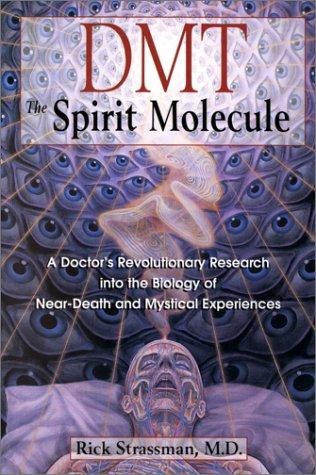 01 / Researcher’s account / interpretations
DMT: The Spirit Molecule
Human DMT research and the author’s interpretations of participants’ experiences.
View book on AmazonBook & source detailsWhy this pick?
A foundational participant-research account; published reception is collected by the publisher. Its metaphysical interpretations are not established findings.
The stamp is an editorial recommendation informed by published reviews, source quality, and relevance. It is not a claim about the highest Amazon customer rating. Selection source.
 02 / Research / speculative interpretations
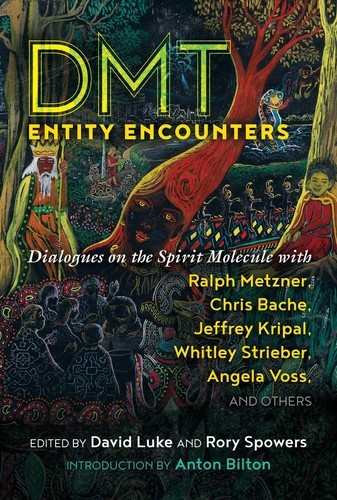
DMT Entity Encounters
Different approaches to reported entity encounters. External beings are not established by those reports.
View book on AmazonBook & source details 03 / First-person psychedelic memoir
True Hallucinations
A formative account of McKenna’s Amazon journey and speculative worldview.
View book on AmazonPublished review
A place on this shelf is not a verdict on every claim inside. Selection checked 2 October 2026. Cover artwork belongs to its respective rights holders; cover sources & editions. Links open a specific edition. Cover artwork may show a different edition; check the format, availability, and price on Amazon before buying.
A QUESTION LEFT IN THE MARGIN / EDITORIAL PROMPT
Bring one source.
A witness encounters something that feels more real than ordinary life. What evidence could decide whether that certainty tells us about an entity or about the mind?
A useful first note: the source, what it establishes, and what it leaves open.
FOLLOW ANOTHER THREAD
Follow this thread.
Meet the researcher and author developing one influential interpretation of DMT worlds.
 RESEARCH DOCUMENTED / EXTERNAL INTELLIGENCE UNVERIFIEDDOSSIER 081 / FICTIONAL ART
Andrew Gallimore’s DMT Theory: Is the Brain Building Alien Worlds—or Receiving Them?
He couldn’t forget the encounter. He wanted enough time to understand it.
 REALITY CODE UNVERIFIEDDOSSIER 066
Danny Goler: the DMT laser and the Code of Reality
A red light on a wall. A claim that the wall is hiding the machinery.
 DocumentedDOSSIER 057
Stargate: psychic espionage
They funded remote viewing. Success is another question.