DOSSIER 077 / HISTORY & TRAGEDY
October 7: Catastrophic Failure—or a Deliberate Stand-Down?
The warnings. The missing protection. The allegation that goes further.
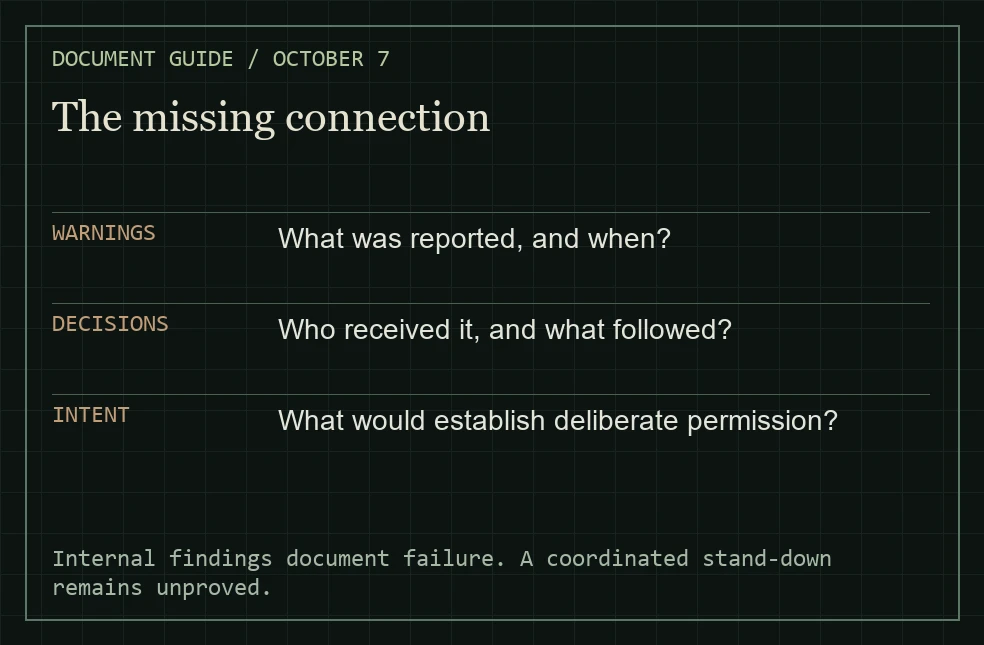
Internal inquiries and independent reporting document grave intelligence and response failures. The reviewed record does not establish a coordinated order by senior leaders to permit the assault.
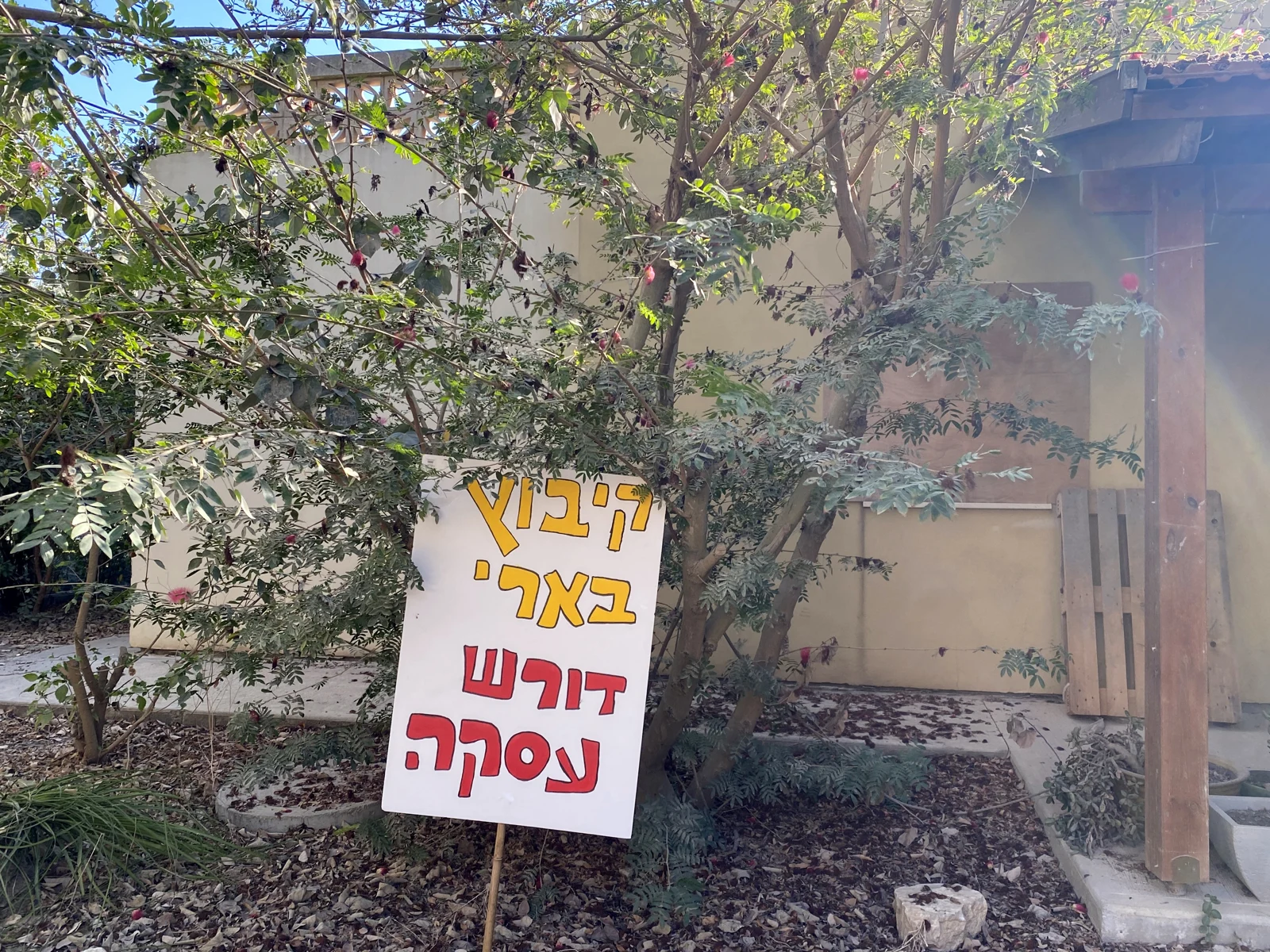
For the people waiting inside attacked communities on October 7, 2023, the missing army was not an internet argument. It was an immediate failure of protection. Years later, the delay has acquired another meaning in conspiracy accounts: perhaps the help was withheld deliberately. The distinction between those two statements is where this file begins. One describes a documented catastrophe. The other alleges a decision that still has to be proved.
01 / The hours that no later explanation can restore
The IDF’s Be’eri inquiry acknowledges that it failed to protect the community. Its reconstruction describes residents defending themselves for hours, inadequate early warning and serious shortcomings in the military response. This is the military’s investigation of its own conduct. It deserves close reading and independent scrutiny, not automatic acceptance because it carries an official insignia.
Human Rights Watch’s separate investigation assembled survivor interviews and audiovisual evidence concerning the Hamas-led assault. It documents attacks on civilians and hostage-taking. These accounts concern real victims and real perpetrators; failure by the defending institutions does not transfer responsibility away from the armed groups that carried out the attacks.
Several events need to remain separate: the preparation of the attack, the intelligence assessment beforehand, the collapse of defenses and the response once communities were under assault. A source may establish one without settling the others. A survivor who waited for rescue knows the delay in a way no later official can dismiss. That experience does not necessarily reveal which information reached a senior commander, or when.
The uncertainty is not about whether people suffered. It concerns the explanation for a failure that was both extensive and consequential. Begin with the sequence rather than with an imagined order.
02 / The warnings had people behind them
Roni Eshel’s father told Le Monde in April 2025 that the surveillance soldiers had been afraid and had seen equipment and base-security problems. This is a bereaved father’s retrospective account of what observers experienced and reported; it is not firsthand access to decisions in the highest command. His daughter was killed in the attack. The testimony matters without being inflated into knowledge he did not claim.
Reporting on the IDF investigation describes warning signs identified before the attack and assessed through years of mistaken assumptions about Hamas. Reuters’s account of Shin Bet’s review likewise describes signs being ignored and the belief that Hamas did not seek all-out war. These institutional accounts support serious failures of interpretation. They do not establish that every warning contained the precise date, scale and operational plan later visible in hindsight.
That distinction should not excuse the dismissal of observers. A warning can deserve action even when it is incomplete. The important questions are what they reported, where it went, who assessed it and what preparation followed. Gender, rank and institutional confidence can become subjects for investigation where testimony supports them. They should not be asserted as the explanation for every decision without that evidence.
The recurring tragedy in these accounts is that knowledge can exist inside an institution without becoming an effective warning. Establishing where that conversion failed is a demanding task. It is also more informative than pretending the institution either knew everything or knew nothing.
03 / The stand-down allegation and the missing link
The deliberate stand-down narrative argues that the failures were too numerous to be accidental, that Israel’s security capabilities should have prevented the attack, and that later military action supplied a political motive. PolitiFact recorded versions of the false-flag allegation in October 2023. The archive presents that inference as a claim, not an explanation established by its circulation.
The strongest question it raises is legitimate: how did a heavily defended border and established intelligence apparatus fail so profoundly? Its weakest move is treating the inability to imagine institutional failure as evidence of intentional permission. A capability is not a guarantee that operators will interpret information correctly, deploy it effectively or respond in time.
A deliberate order would need evidence of its content, issuer, recipient and purpose. An instruction affecting a particular unit would also need its surrounding operational context before it could be described as a national decision to permit the assault. A delay, an absence or a later benefit cannot supply all of those elements by itself.
The counterargument is grounded in the institutional accounts of misjudgment and breakdown. It is not that a secret order would be impossible. It is that the linked inquiries have not established one. A future authenticated record could change that assessment. Suspicion based solely on the magnitude of the disaster cannot do the same work.
Nor does identifying a political beneficiary establish prior authorship. Consequences can be exploited after an event. To demonstrate that they were planned beforehand requires a chronological connection, not simply a compelling explanation assembled afterward.
04 / A civilian story that refuses to become a prop
In the publisher’s excerpt from Lee Yaron’s 10/7, Yanon Azougi brings two young sisters into his family’s home in Sderot after a stranger hands them to him during the attack. The family shelters and cares for them while trying to locate their parents. Yaron’s reconstruction makes the collapse of ordinary safety tangible. It is reported narrative based on her work, not a scene witnessed or embellished by this archive.
The account matters because the language of plots can erase the actions of ordinary people: sheltering a child, searching for a relative, deciding whether to leave a room. Those experiences do not need a hidden director to make them consequential. They also cannot be mined selectively to prove a command-level allegation the participants were in no position to observe.
Human Rights Watch’s interviews provide another route into civilian experience, with a different method and institutional perspective. Compare accounts where they address the same event; do not assume that disagreement over one detail dissolves the entire attack or makes every witness suspect. Memory, immediate perception and later reconstruction should be identified as such.
The archive will not reproduce graphic victim imagery to make this file feel more persuasive. An accurately credited aftermath photograph, a dated account and a careful reconstruction carry more evidentiary value than an anonymous shock montage.
05 / Why an independent inquiry still matters
September 25, 2026 reporting in The Atlantic revisits Egyptian warnings and demands for an independent inquiry into the failures preceding the attack. The controversy remains current as the anniversary approaches. The existence of those demands should not be presented as evidence that their most extreme proposed answer is correct.
An internal inquiry can provide useful operational detail while leaving broader political responsibility incompletely examined. An independent inquiry can ask about information shared across institutions, decision-making, resources and accountability. Neither process should be expected to guarantee the conclusion a faction wants. Its value lies in access, method, transparency and the ability to test competing accounts.
The present assessment is specific: grave failures and delayed protection are documented; deliberate permission by senior leaders has not been established by the linked record. That assessment does not settle every warning dispute or endorse every institutional explanation. It identifies the boundary between what the evidence supports and what the stand-down narrative adds.
The question for a reader is therefore more demanding than whether the disaster feels suspicious. Which document would connect a particular warning to a particular decision? Which witness had access to that decision? Which alternative explanation survives the complete chronology? The people who waited for help deserve an answer that can withstand those questions.
QUESTIONS LEFT ON THE DESK
The questions readers bring.
FAQ & search review: 2026-10-05 · Source links identify the record behind each answer. This date does not certify a new investigation of every chapter.
Were intelligence and response failures documented?
Yes. The IDF’s inquiries and reporting on Shin Bet’s review describe serious misjudgments and failures to protect civilians. Internal investigations remain open to independent scrutiny.
Do missed warnings establish a deliberate stand-down?
No. Intentional permission requires evidence connecting warnings to a deliberate decision, including its issuer, recipients and purpose. The reviewed sources do not establish that chain.
Where can I read civilian accounts?
The Human Rights Watch investigation includes survivor interviews; Lee Yaron’s publisher provides an excerpt from 10/7. These are attributed external accounts, not interviews conducted by the archive.
Compare the records: Pearl Harbor: the foreknowledge claim · Operation Northwoods · 9/11: controlled demolition.
The allegation, in brief
Senior Israeli leaders knowingly permitted the Hamas-led attack to justify subsequent military action.
Where the archive stands
Internal inquiries and independent reporting document grave intelligence and response failures. The reviewed record does not establish a coordinated order by senior leaders to permit the assault.
A warning ignored is a failure. Intent requires a further connection.
ARCHIVIST’S NOTE / EXPANDED RESEARCH: 05 OCT 2026
THE SHELF BEHIND THE FILE
For further reading
One carefully chosen book for this file. Read the longer account beside the original records.
As an Amazon Associate I earn from qualifying purchases. Purchases through these links may earn this archive a commission.
- THE WATCHER’S
FAVORITE 01 / Reported civilian accounts
10/7: 100 Human Stories
Victims and survivors at the center of a reconstruction of the attack.
View book on AmazonBook & source detailsWhy this pick?
Selected for topic relevance, reported source material and the published reviews linked in the book details. This is an editorial favorite, not an Amazon-rating claim.
The stamp is an editorial recommendation informed by published reviews, source quality, and relevance. It is not a claim about the highest Amazon customer rating. Selection source.
A place on this shelf is not a verdict on every claim inside. Selection checked 5 October 2026. Cover artwork belongs to its respective rights holders; cover sources & editions. Links open a specific edition. Cover artwork may show a different edition; check the format, availability, and price on Amazon before buying.
A QUESTION LEFT IN THE MARGIN / EDITORIAL PROMPT
Bring one source.
What would turn an ignored warning into evidence of deliberate permission? Identify the missing connection rather than the most suspicious coincidence.
A useful first note: the source, what it establishes, and what it leaves open.
FOLLOW ANOTHER THREAD
Follow this thread.
Compare documented misconduct, disputed explanations and the evidence needed to establish intent.
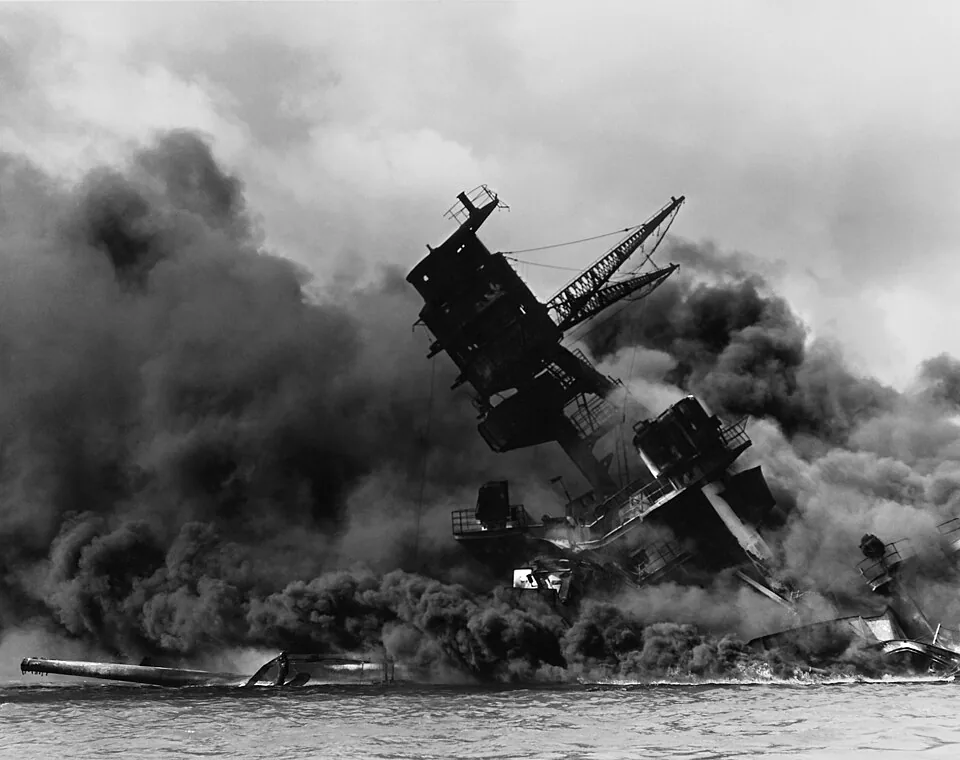 UnsupportedDOSSIER 028
Pearl Harbor: the foreknowledge claim
Warnings missed are recast as an attack permitted.
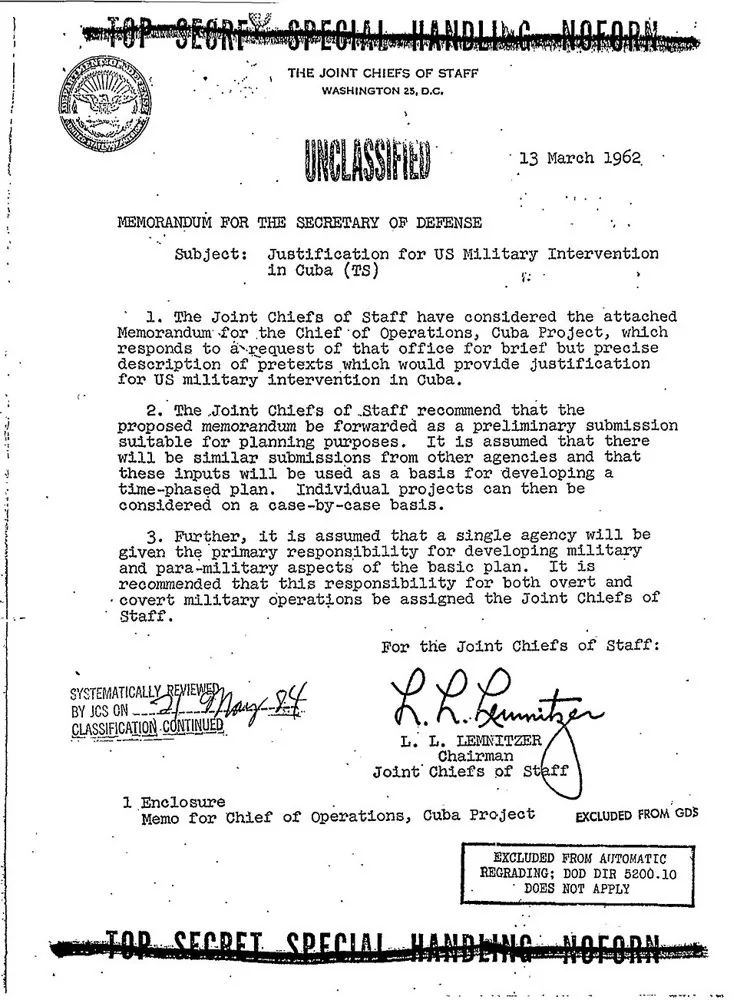 DocumentedDOSSIER 049
Operation Northwoods
The false flag existed as a proposal.
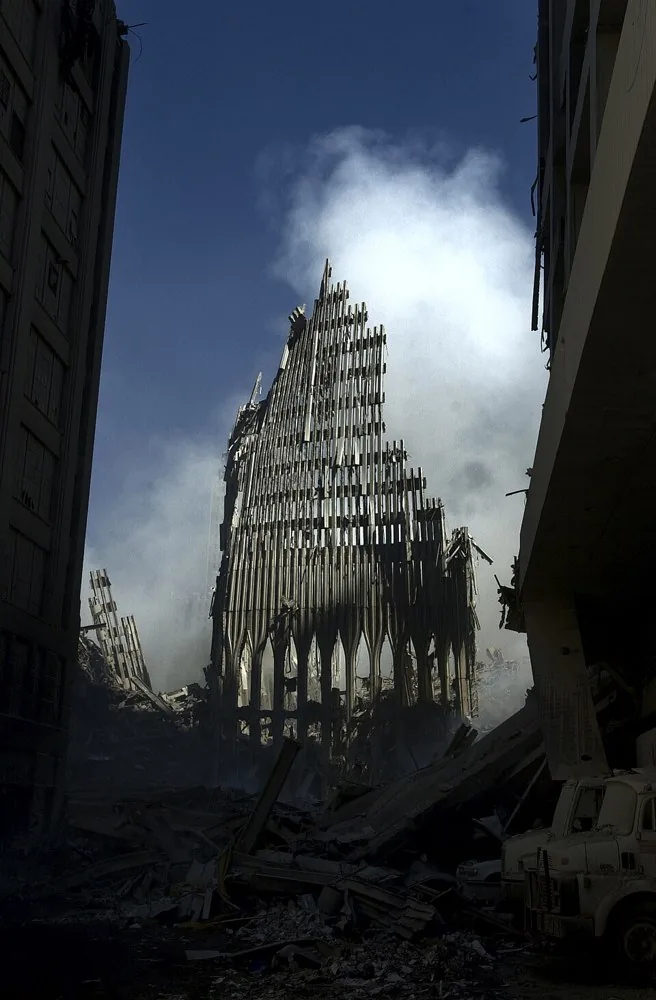 RefutedDOSSIER 029
9/11: controlled demolition
A catastrophic collapse, replayed frame by frame.