DOSSIER 029 / HISTORY & TRAGEDY
9/11: controlled demolition
A catastrophic collapse, replayed frame by frame.
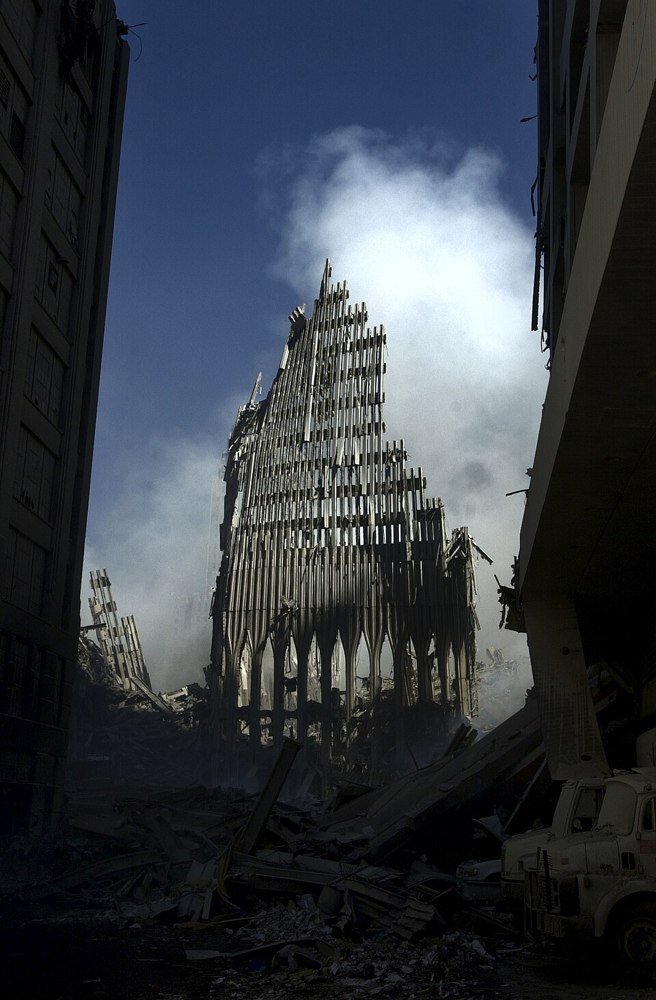
The morning is often reduced to a few repeated frames. Inside the buildings it was a sequence of decisions made with incomplete information: stairwells, announcements, radios, and people trying to work out whether the danger was above them or already everywhere.
01 / Two impacts, two evacuations, cascading confusion
On 11 September 2001, hijacked airliners struck the North and South Towers. The 9/11 Commission’s chapter on the emergency response reconstructs what occupants and responders could know as the crisis unfolded. Some people in the South Tower initially received instructions that did not call for immediate evacuation. Firefighters climbed with incomplete information about impact floors, usable stairs, and water. That confusion belongs to the event’s actual story.
02 / What survivors and responders described
The Commission draws on interviews and communications to document journeys through stairwells, blocked routes, and failures to receive evacuation orders. After the South Tower fell, the loss of command posts and communication problems impeded the flow of critical information. Some personnel received warnings orally rather than over radios. These accounts show why witnesses at different locations describe very different mornings.
Reports of loud bangs or explosions must also be located in time and space. A witness can reliably describe a noise without being able to identify its physical cause. The original context is essential before an isolated sentence is turned into a demolition claim.
03 / The inside-job argument
Believers question collapse behavior, intelligence failures, and the political consequences of the attacks. Demolition proponents argue that the buildings’ fall looked too rapid or too organized to follow from impacts and fires. Other theories concentrate on prior knowledge rather than explosives. These are separate hypotheses: a missed warning does not establish a planted charge, and a dispute about structural response does not identify who organized the hijackings.
04 / What the engineering account actually says
NIST’s tower investigation describes impact damage, damaged fire protection, heating, and structural failure. It does not require steel to melt before a structure loses capacity. The distinction is central because a familiar objection attacks melting as though that were the proposed mechanism. NIST also addresses collapse direction and the absence of evidence for a blast initiating failure below the affected floors.
Official investigations should face specific methodological questions. A competing account must likewise account for the full observation set and supply evidence for its proposed mechanism. The survivors’ experiences deserve a place in the file without making their trauma carry technical conclusions they did not observe.
The allegation, in brief
The Twin Towers were allegedly destroyed with planted explosives rather than aircraft damage and subsequent fires.
Where the archive stands
NIST’s engineering investigation found no corroborating evidence for controlled demolition. Its collapse-initiation analysis addresses structural damage, fire, and loss of load-bearing capacity.
Resemblance in a video is not a structural analysis.
ARCHIVIST’S NOTE / EXPANDED RESEARCH: 02 OCT 2026
THE SHELF BEHIND THE FILE
For further reading
Take the longer trail. These are the books we would keep beside this file.
As an Amazon Associate I earn from qualifying purchases. Purchases through these links may earn this archive a commission.
- THE WATCHER’S
FAVORITE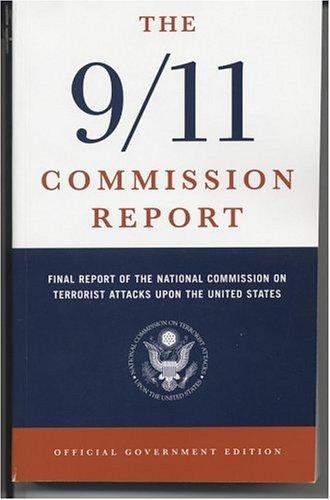 01 / Primary investigative report
The 9/11 Commission Report
The official account of planning, intelligence, and response. Not a substitute for NIST’s structural investigations.
Find editions on AmazonBook & source detailsWhy this pick?
National Book Award finalist in nonfiction. An official report can still be examined critically.
The stamp is an editorial recommendation informed by published reviews, source quality, and relevance. It is not a claim about the highest Amazon customer rating. Selection source.
 02 / Historical scholarship
Conspiracies of Conspiracies
Follow the recurring hidden-hand stories through American history.
Find editions on AmazonBook & source details
A place on this shelf is not a verdict on every claim inside. Selection checked 2 October 2026. Cover artwork belongs to its respective rights holders; cover sources & editions. Covers identify a selected edition; Amazon lists current editions, availability, and prices.
A QUESTION LEFT IN THE MARGIN / EDITORIAL PROMPT
Bring one source.
Choose one finding in the official record. What does it establish, and what question does it leave outside its scope?
A useful first note: the source, what it establishes, and what it leaves open.
FOLLOW ANOTHER THREAD
Adjacent files
 ContestedDOSSIER 025
JFK: the second gunman
Six seconds in Dallas. A lifetime of arguments.
 ContestedDOSSIER 026
Martin Luther King Jr.: conspiracy claims
An assassination, and the agencies already watching him.
 UnsupportedDOSSIER 027
Diana: the alleged royal plot
A Paris tunnel became a world of accusations.