DOSSIER 025 / HISTORY & TRAGEDY
JFK: the second gunman
Six seconds in Dallas. A lifetime of arguments.
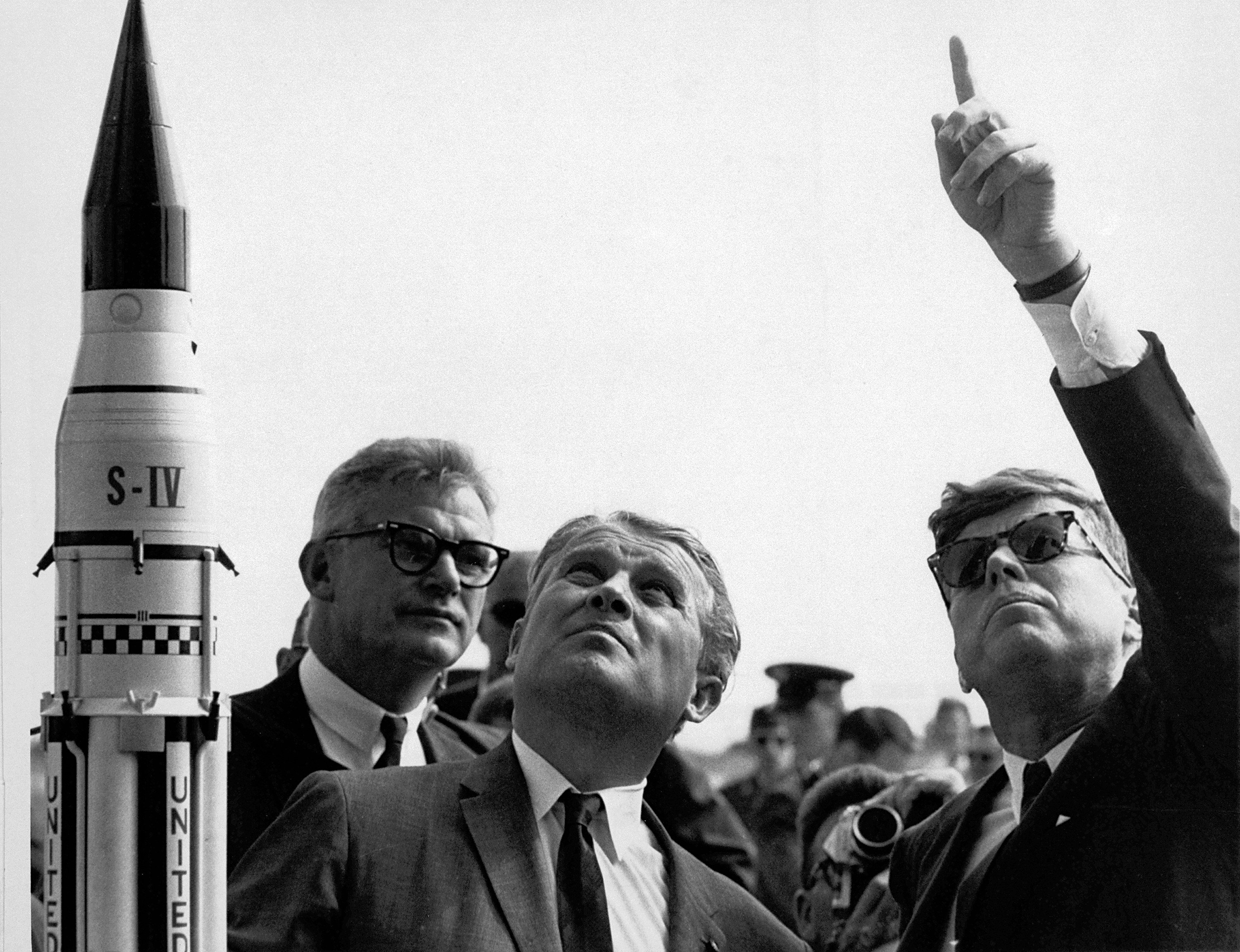
A motorcade turns into Dealey Plaza. Shots break the public ceremony. In the hours that follow, the country gets a suspect; two days later, that suspect is shot before he can be tried. The story’s missing courtroom becomes one of its permanent absences.
01 / Dallas, and the investigation that followed
President John F. Kennedy was killed on 22 November 1963. Lee Harvey Oswald was arrested, then killed by Jack Ruby in police custody on 24 November. The Warren Commission concluded that Oswald fired the fatal shots from the Texas School Book Depository and found no demonstrated conspiracy. Its report assembled firearms evidence, medical evidence, photographs, and testimony. The conclusion was a reconstruction after the killing, rather than a verdict reached at Oswald’s trial.
02 / Brennan’s view from the plaza
Howard Brennan told the Commission that he saw a man with a rifle at a Depository window. His testimony is useful precisely because it can be read in full: observation, description, identification, and the explanations for his earlier reluctance are not identical claims. The Commission relied on several witnesses and other evidence, rather than treating any one spectator as a camera with perfect recall.
The photographs and films preserve sequences that memory alone cannot. Witnesses heard gunfire amid a crowd and buildings; a recollection of direction must be weighed alongside the physical evidence. Readers should compare the original account with a later author’s selection from it. The transcript often contains qualifications that disappear in the retelling.
03 / The case for more than one participant
Believers point to conflicting perceptions of the shots, disputes about the wounds and bullet paths, Ruby’s access to Oswald, and the secrecy surrounding intelligence records. These are different lines of argument and should be tested separately. The House Select Committee on Assassinations later concluded that Kennedy was probably killed as a result of a conspiracy, relying importantly on disputed acoustic analysis, while retaining its conclusion that Oswald fired shots that struck the president.
That finding matters: conspiracy suspicion was not confined to private authors. It also does not identify the CIA, the Mafia, Cuba, or any other proposed sponsor. A finding about the possible number of gunmen and a finding about who organized them are separate evidentiary tasks.
04 / What a careful critic keeps separate
The Warren Commission’s reconstruction should be tested against its supporting evidence, not protected from criticism by its official status. The same applies to the later committee’s acoustic inference. A released document about surveillance, an informant, or bureaucratic concealment can expose an important failure without showing that its author planned the assassination. Start with the document’s date, recipient, and actual subject before importing it into Dealey Plaza.
This file links the testimony, the major competing official assessment, and the records collection so readers can follow those distinctions. The unresolved history of every intelligence contact does not make all assassination scenarios equally supported. The missing trial is real; the absence cannot be filled by whichever account supplies the most satisfying villain.
The allegation, in brief
Oswald was allegedly part of a coordinated assassination involving additional shooters or institutional accomplices.
Where the archive stands
The Warren Commission found Oswald acted alone. The later House committee judged a conspiracy probable, relying in part on disputed acoustic evidence. The extensive public record does not support treating every proposed sponsor as established.
The archive is larger than any one explanation
The official investigations did not produce identical conclusions. Their disagreements deserve to be read directly, particularly where a later finding depended on evidence that was subsequently challenged. New document releases may illuminate intelligence contacts, institutional decisions, or concealment without necessarily establishing an assassination conspiracy. A dossier should distinguish the record of an agency’s knowledge from proof that it ordered a killing.
- Read the Warren Commission and House committee conclusions separately.
- Ask which evidence links an alleged participant to the assassination itself.
- Distinguish a newly released document from a newly established conclusion.
A disputed investigative conclusion cannot authenticate a different, unsupported plot.
ARCHIVIST’S NOTE / EXPANDED RESEARCH: 02 OCT 2026
THE SHELF BEHIND THE FILE
For further reading
Take the longer trail. These are the books we would keep beside this file.
As an Amazon Associate I earn from qualifying purchases. Purchases through these links may earn this archive a commission.
- THE WATCHER’S
FAVORITE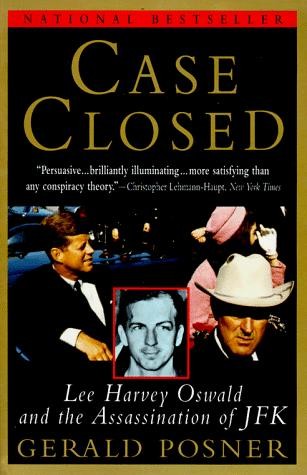 01 / Investigative history
Case Closed
A detailed argument for Oswald acting alone. Read it against the primary record.
View book on AmazonBook & source detailsWhy this pick?
A Pulitzer history finalist, with extensive published reviews collected on the author’s page. Its conclusions remain open to scrutiny.
The stamp is an editorial recommendation informed by published reviews, source quality, and relevance. It is not a claim about the highest Amazon customer rating. Selection source.
 02 / Historical scholarship
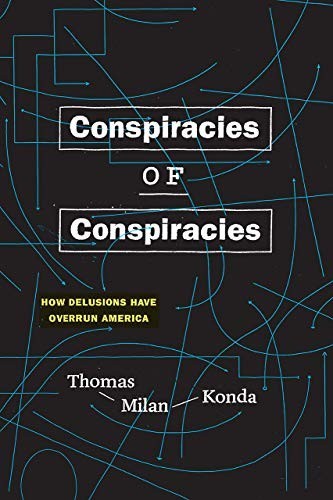
Conspiracies of Conspiracies
Follow the recurring hidden-hand stories through American history.
Find editions on AmazonBook & source details
A place on this shelf is not a verdict on every claim inside. Selection checked 2 October 2026. Cover artwork belongs to its respective rights holders; cover sources & editions. Covers identify a selected edition; Amazon lists current editions, availability, and prices.
A QUESTION LEFT IN THE MARGIN / EDITORIAL PROMPT
Bring one source.
Choose one disputed point. Which investigation supports it, what evidence does it use, and what is the strongest criticism?
A useful first note: the source, what it establishes, and what it leaves open.
FOLLOW ANOTHER THREAD
Adjacent files
 ContestedDOSSIER 026
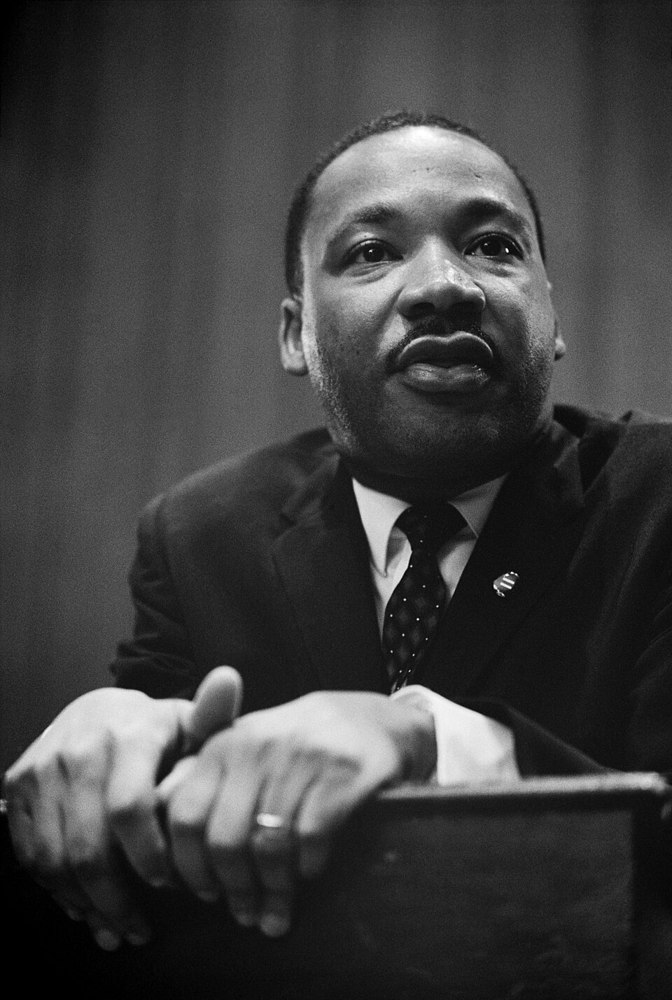
Martin Luther King Jr.: conspiracy claims
An assassination, and the agencies already watching him.
 UnsupportedDOSSIER 027
Diana: the alleged royal plot
A Paris tunnel became a world of accusations.
 UnsupportedDOSSIER 028
Pearl Harbor: the foreknowledge claim
Warnings missed are recast as an attack permitted.