DOSSIER 009 / EARTH & SKY
CERN and the end of the world
A machine beneath Europe. A catastrophe above it.
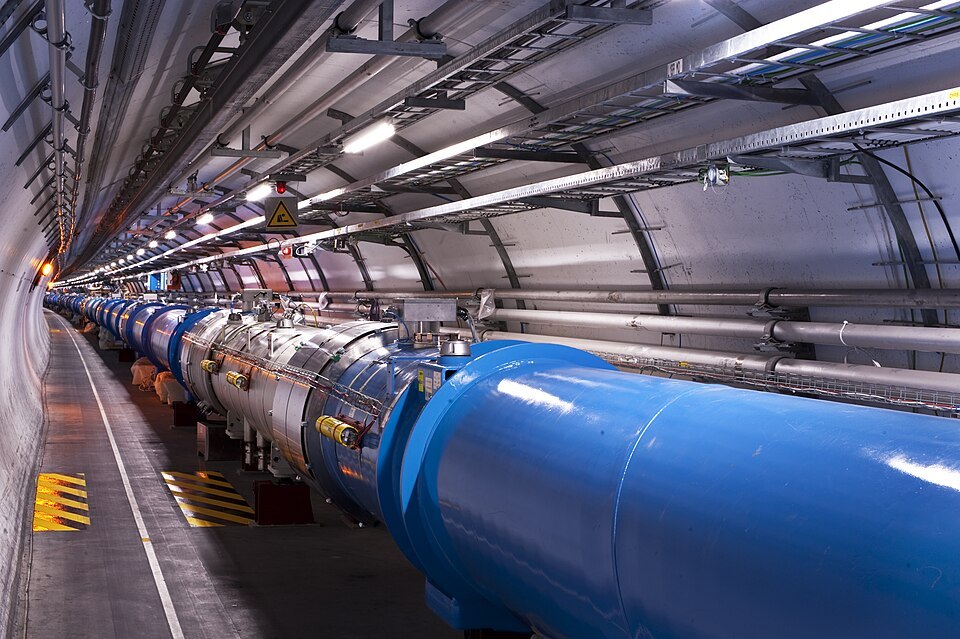
A machine built to discover unfamiliar physics invites a disturbing question: how can its builders be certain that the unfamiliar will be harmless? The LHC controversy lived inside that question before the first beam circulated.
01 / The safety dispute before the switch was thrown
As CERN prepared the Large Hadron Collider for operation in 2008, public fears centred on exotic objects, including hypothetical microscopic black holes. CERN described safety reviews undertaken before commissioning and later reassessments of those questions. The dispute was about consequences of particle collisions, not an observed catastrophe waiting to be reported.
There was also a real accident soon after the first-beam milestone: a technical incident caused a major helium leak and equipment damage. CERN's analysis treats it as an engineering failure. Folding that incident into the black-hole allegation changes the subject from one documented mechanism to another proposed mechanism without supplying evidence that they are connected.
02 / Who can testify to what?
Operators and investigators can give direct accounts of the equipment accident and its causes. Safety physicists can explain calculations and the astronomical observations used to constrain hypothetical dangers. Neither category is an eyewitness to an Earth-consuming black hole. This is a prediction-and-risk controversy, so demanding a dramatic witness scene would produce fiction rather than better evidence.
03 / The concern underneath the apocalypse story
Opponents ask whether researchers have understated uncertainty because their careers and an expensive project depend on continuing. That concern deserves a transparent answer about assumptions and review. It does not follow that every imaginable danger has equal probability. A claim of secret intent needs evidence beyond disagreement over a risk calculation.
04 / The counterargument from the natural experiment
CERN's safety account points to much higher-energy cosmic-ray collisions occurring naturally and to the continued existence of astronomical objects exposed to them. These comparisons are intended to test hypothetical hazards even where a particular theoretical assumption is disputed. Readers should inspect those arguments and their limits rather than accepting the reassurance as a promise of omniscience. The relevant standard is a reasoned assessment constrained by observations, not a guarantee that science has exhausted every unknown.
The allegation, in brief
The Large Hadron Collider is accused of risking planet-devouring black holes while scientists conceal the danger.
Where the archive stands
CERN’s safety assessments compare collider events with higher-energy natural cosmic-ray collisions. Speculative microscopic black holes would not produce the imagined catastrophe. Independent physics societies reviewed the safety analysis.
An intimidating machine is not a substitute for a mechanism.
ARCHIVIST’S NOTE / EXPANDED RESEARCH: 02 OCT 2026
THE SHELF BEHIND THE FILE
For further reading
Take the longer trail. These are the books we would keep beside this file.
As an Amazon Associate I earn from qualifying purchases. Purchases through these links may earn this archive a commission.
- THE WATCHER’S
FAVORITE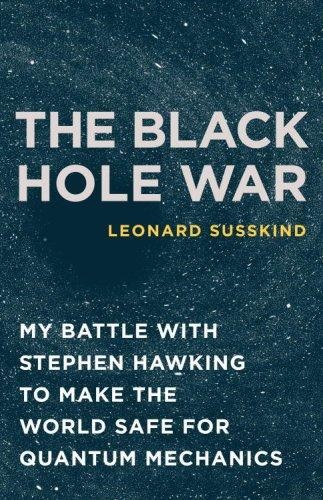 01 / Physics
The Black Hole War
The real argument over black holes and information, told by a participant.
View book on AmazonBook & source detailsWhy this pick?
A physicist’s account of the actual scientific dispute; selected for its relevance rather than a customer-star comparison.
The stamp is an editorial recommendation informed by published reviews, source quality, and relevance. It is not a claim about the highest Amazon customer rating. Selection source.
 02 / Science / critical thinking
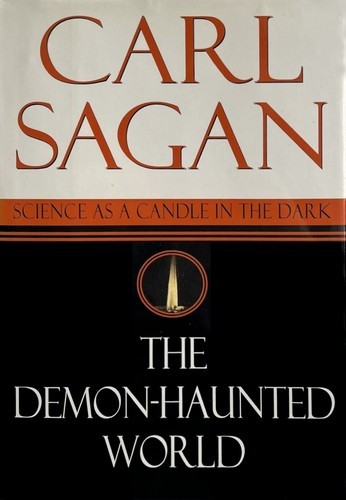
The Demon-Haunted World
A working kit for examining extraordinary claims without losing your sense of wonder.
View book on AmazonBook & source details
A place on this shelf is not a verdict on every claim inside. Selection checked 2 October 2026. Cover artwork belongs to its respective rights holders; cover sources & editions. Covers identify a selected edition; Amazon lists current editions, availability, and prices.
A QUESTION LEFT IN THE MARGIN / EDITORIAL PROMPT
Bring one source.
Which physical assumption does the catastrophe claim depend on? Compare it with the assessment linked in the file.
A useful first note: the source, what it establishes, and what it leaves open.
FOLLOW ANOTHER THREAD
Adjacent files
 RefutedDOSSIER 001
Flat Earth
The horizon became an accusation.
 RefutedDOSSIER 002
The Moon landing hoax
Six landings. One stubborn allegation.
 UnsupportedDOSSIER 003
Hollow Earth
An entire world beneath our feet.