DOSSIER 075 / HISTORY & TRAGEDY
The Epstein Files: Who Protected Him—and What Is Still Hidden?
A secret agreement. A financial trail. A question that outlived its defendant.
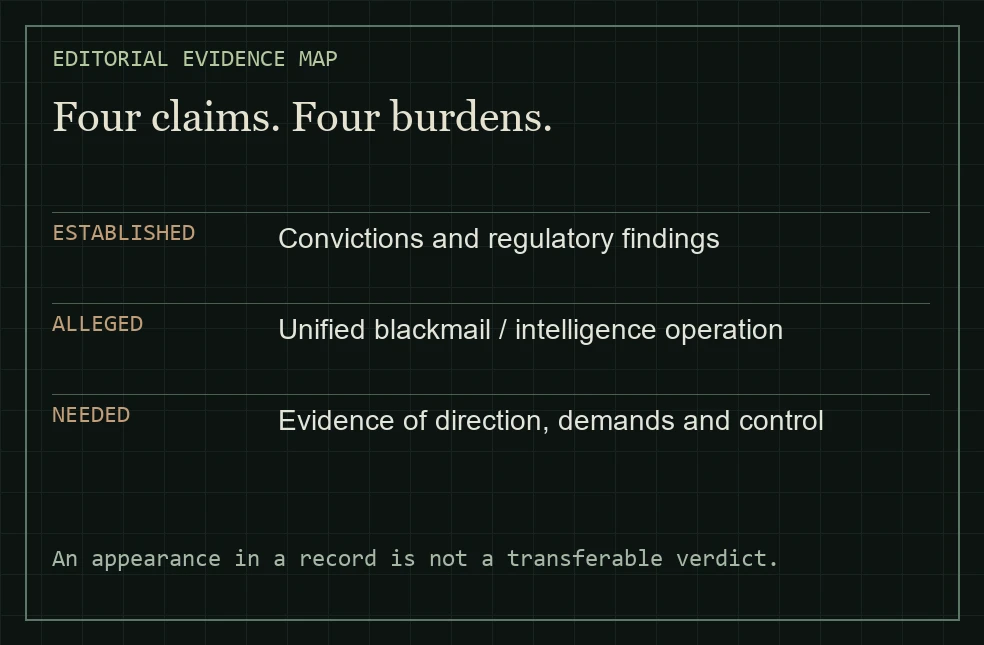
Criminal abuse, Maxwell’s conviction, a controversial agreement and financial oversight failures are documented. A unified intelligence-run blackmail network is not established.
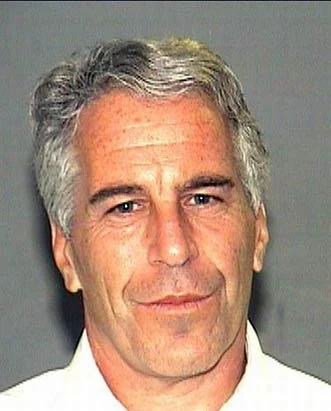
The question that belongs at the top of the Epstein file is not which famous face appears in a photograph. It is who had a chance to stop him, what they knew at the time, and what they did with that knowledge. Follow that question through a police complaint, a negotiated agreement, a bank account and a prison corridor. The trail is disturbing before a single intelligence-service theory enters the room.
01 / Before the island became a symbol
In 2005, the parents of a fourteen-year-old girl brought a complaint to Palm Beach police. The subsequent investigation widened beyond a single encounter. According to the Justice Department’s later review, police leaders considered the state’s handling inadequate and referred the matter to the FBI. A federal prosecutor prepared a proposed sixty-count indictment in 2007. These were investigative and charging steps, not sixty convictions. They demonstrate that authorities had substantial concerns years before the case became a national obsession.
The 2019 Manhattan indictment described an alleged recruitment system: girls were paid, some were encouraged to bring others, and abuse was disguised as appointments for massages. Prosecutors alleged conduct in New York and Florida involving victims as young as fourteen. Epstein died before those charges could be tried. The distinction matters because a charging document is an accusation whose supporting evidence must still be tested. It also matters because reducing the story to an island obscures the much less exotic places where people allegedly recruited, paid and exploited children.
Start here and the question changes. The mystery is no longer whether wrongdoing existed somewhere behind a locked gate. Epstein’s Florida conviction and Maxwell’s later conviction establish criminal conduct. The harder investigation asks how a known offender kept access to resources and respectability. A glamorous social photograph cannot answer that. A dated warning, followed by a dated decision, might.
02 / The agreement that closed one door and opened another
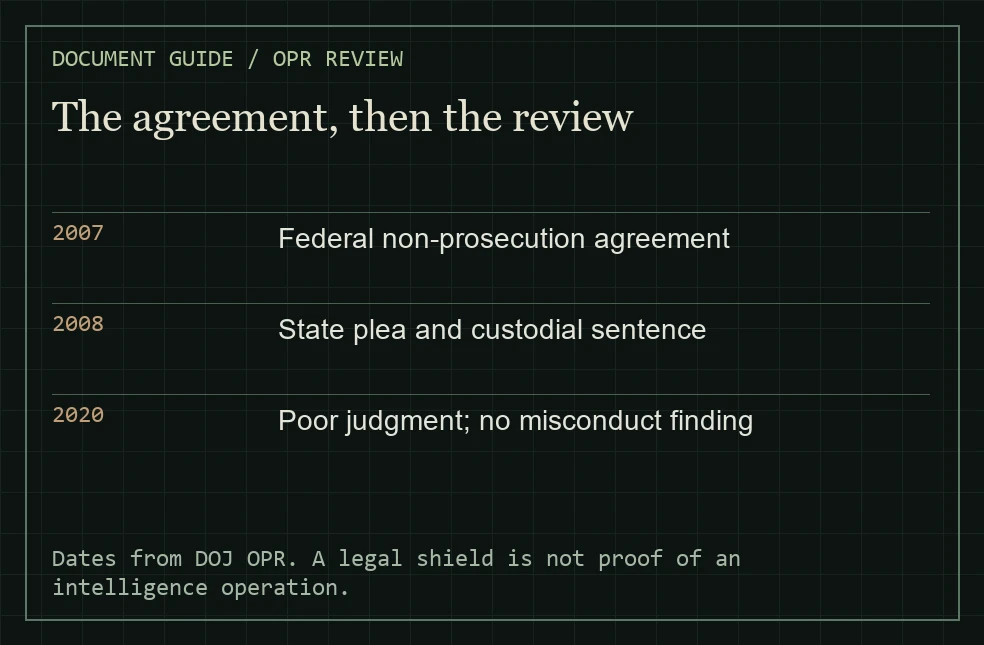
The federal non-prosecution agreement was signed in September 2007. It exchanged a state-based resolution for an end to the federal investigation in the Southern District of Florida, with protection extending to named and potential co-conspirators. Victims were neither informed nor consulted before it was signed. In 2008 Epstein pleaded guilty to state offenses, received an eighteen-month sentence and later obtained extensive work release. The scope and handling of that agreement are central to the protection question.
The Justice Department’s 2020 professional-responsibility review criticized Alexander Acosta’s judgment but did not find professional misconduct under the standards it applied. Those conclusions are not interchangeable. An internal finding that a prosecutor did not violate a sufficiently clear professional standard does not mean the result was fair, prudent or harmless. Conversely, a plainly lenient outcome does not by itself identify bribery, blackmail or an intelligence instruction.
There are several meanings of protection. A negotiated legal shield is one. Unequal access to skilled lawyers is another. Deliberately overlooking a warning to preserve a profitable relationship would be another still. They need different evidence. Calling everything a cover-up can conceal the particular decision that actually deserves scrutiny. The agreement offers something firmer than a mood: terms that can be read, a date that can be checked, and people whose official responsibilities can be identified.
The archival question is therefore precise: why were those terms accepted, who objected, and what opportunities for investigation were lost? A serious answer follows drafts, correspondence and testimony. It does not begin by choosing a foreign agency and fitting every subsequent event into its presumed plan.
03 / The people who had to fight to be heard
Julie K. Brown’s 2018 Miami Herald investigation restored survivor accounts to the center of the story. Its importance was listening to people a celebrated defendant had overshadowed.
Courtney Wild pursued the victims’ rights challenge. The April 2021 appellate outcome constrained the legal route she had taken; it should not be omitted when recounting the earlier district-court ruling. Her effort is evidence of a survivor demanding a place in the process, not proof of every larger theory attached to Epstein. Legal disputes about when statutory protections apply can leave an experience of exclusion intact even when the available remedy narrows.
Maxwell’s trial brought testimony into a different setting, where the prosecution’s account could be challenged by defense counsel. The SDNY sentencing announcement describes evidence that Maxwell helped recruit and groom minors and participated in abuse. She received twenty years in June 2022. That conviction establishes her own criminal responsibility. It is not a transferable verdict against every person who met Epstein.
The archive has not interviewed these survivors. The linked reporting, court-related records and prosecution account identify where these accounts came from. Keeping that provenance visible prevents an atmospheric retelling from acquiring a false eyewitness authority. It also protects the distinction between a person describing what happened to her and a commentator guessing why the entire system behaved as it did.
A survivor’s credibility cannot sensibly be measured by whether her account supplies a satisfying final theory. Firsthand evidence may illuminate one room, one appointment or one act of recruitment. That limitation does not make the account weak. It tells an investigator where to seek corroboration rather than inviting a narrator to furnish the missing rooms.
04 / Follow the bank account, not the celebrity collage
In July 2020, New York’s Department of Financial Services announced a $150 million penalty against Deutsche Bank covering its Epstein relationship and two separate correspondent-banking relationships. The regulator identified monitoring failures despite Epstein’s known criminal history. The combined penalty must not be described as $150 million exclusively for Epstein. This is regulatory evidence of compliance failures, not a criminal conviction establishing a global blackmail operation.
Senator Ron Wyden’s August 4, 2026 report argues that major banks repeatedly failed to identify or promptly report suspicious Epstein-related transactions. It draws on financial records and recommends further investigation. The report is a primary record of a congressional investigation conducted by Wyden’s staff; its allegations must remain attributed. It does not adjudicate the guilt of every banker or customer it mentions. The earlier Senate demand for Treasury records shows the disclosure dispute already existed in 2025.
Money offers a practical way to test the larger claim. For a particular payment, ask who sent it, who controlled the receiving account, what explanation was supplied, and what the institution knew before permitting the transfer. A suspicious-activity report records concern. It does not automatically prove that the entire sum was criminal proceeds. A large transfer may merit investigation without authorizing an accusation about its sender’s sexual conduct.
This is where the allegation of institutional protection can become specific enough to investigate. Compare a warning with the response. Compare a termination decision with subsequent services. Compare what was reported promptly with what appeared only retrospectively. The documents may support negligence, deliberate commercial accommodation or another explanation. The motive should emerge from that comparison rather than be supplied because the customer was notorious.
The financial trail also makes a useful correction to internet storytelling. Influence need not arrive as a secret order from an invisible council. It can operate through incentives, exceptions and the refusal to ask an unwelcome question. Establishing any such failure would be serious in its own right, even if no spectacular master plan ever materialized.
05 / The intelligence and blackmail theory: what would establish it?
The strongest version of the blackmail theory does not merely point to famous guests. It proposes a mechanism: collect compromising material, retain it, use it to influence someone, and receive protection or money in return. Each verb requires evidence. Who collected the material? Who possessed it? What demand was made? What action followed? Without those connections, a story about access has been promoted into a story about control.
An AP review of released Justice Department records reports that investigators found insufficient evidence for the sweeping narrative of Epstein supplying powerful men through a vast trafficking ring. That reported investigative conclusion deserves a place beside, rather than underneath, the allegations. It does not erase Maxwell’s conviction or settle every potential offense. It constrains what can honestly be presented as an established network.
An intelligence link would require another chain altogether: a credible record of tasking, financing, reporting, recruitment or operational direction. An acquaintance with someone who once worked in intelligence is not that chain. Neither is wealth with an unexplained origin. These may be leads; they cannot be silently upgraded into proof that a service ran the operation.
Believers find the theory persuasive because it supplies a common cause for apparently separate failures. The plea agreement, continued access to money and incomplete accountability look less accidental when arranged around a single hidden purpose. The weakness is the same feature: a flexible common cause can absorb contradictory evidence. When every absence is declared successful concealment and every disclosure is declared controlled release, the theory loses a clear condition under which it could fail.
Skeptics should not take the opposite shortcut. There is no requirement to assume every institution acted properly until an intelligence conspiracy is proved. Legal privilege, financial incentives and professional failure are explanations with their own records. Rejecting an unsupported master narrative still leaves substantial misconduct to examine.
06 / A death that created another missing trial
Epstein was found dead in federal custody on August 10, 2019. The New York medical examiner determined suicide. The Justice Department inspector general’s 2023 review described serious failures in supervision, staffing and recording systems, including falsified checks and the absence of a required cellmate. It reported that the FBI found no criminality in the manner of death. These are the findings of the linked investigations, not an independently conducted autopsy by this archive.
The report supplies reasons for anger and distrust. It does not establish an assassin. To get from failed safeguards to a planned killing requires evidence of intervention, coordination or a mechanism inconsistent with the documented death findings. The severity of a failure is not a substitute for that missing connection.
Death also changed the legal future of the case. Epstein could no longer be questioned at his own trial, and the 2019 charges would not receive a jury verdict against him. Maxwell’s prosecution established important facts later, but it was not a replacement trial covering every question about Epstein’s life. The lost opportunity for a fuller public account explains why a prison failure can become a continuing political wound.
A responsible inquiry keeps two files open at once: what happened in custody, and what the death prevented the justice system from testing. Confusing them lets an unsupported murder claim overshadow documented custody failures. Treating the death finding as the end of every accountability question makes the reverse mistake.
07 / The released files are not a ready-made verdict
The DOJ Epstein Library lists a September 11, 2026 update and warns that some records are difficult to search electronically. It also warns of possible inadvertent disclosure of private information. This is a large, changing collection, not a fully annotated map of guilt. The archive links readers to it without reproducing victim identifiers or treating private people as public suspects.
A name can appear because someone was interviewed, accused, invited, employed, represented by counsel, or mentioned by another person. Those roles cannot be collapsed into client. A flight record can establish recorded travel; it needs additional evidence to establish a crime. A photograph may establish that two people were together at a moment. It cannot supply their conversation, knowledge or motives.
For a new document, begin with its author, date, purpose and procedural status. Is it a witness statement, an investigator’s note, a lawyer’s allegation or a court finding? Has the relevant passage been contradicted elsewhere? Is the online image complete? Redactions may protect survivors, uncharged people or investigative material. Their presence alone does not establish which interest was being protected.
The most useful reading habit is to preserve the difference between being visible in a record and being responsible for an act. That habit makes the file less convenient for viral accusation. It makes it considerably more useful for accountability.
08 / Who was protected? Ask it one decision at a time
The question in the headline remains justified because there are documented decisions worth investigating. The answer cannot honestly be a single list of famous names. Separate legal protection, financial accommodation, reputational shelter and the alleged intelligence operation. Then specify which record supports which claim.
For the next disclosure, the archive’s test is straightforward. Does it identify an actor, an action and contemporaneous knowledge? Does it establish a connection that was previously missing? Does it change the assessment, or simply repeat an allegation already present in the record? A file should be revised because the evidence changes, not because a new screenshot makes the old accusation fashionable again.
The unresolved question is not permission to pretend that nothing has been established. Nor is the established wrongdoing permission to treat every suspicion as solved. The victims’ accounts, convictions, regulatory findings and oversight reports already describe a disturbing story. Its unfinished chapters deserve investigation on their own terms.
There is a final editorial choice here. The easiest story places a hidden mastermind behind every door. The harder story asks which doors were actually opened, by whom, and why ordinary safeguards failed to close them. Follow that harder trail. It has names, dates and documents—and it can survive a reader checking the sources.
QUESTIONS LEFT ON THE DESK
The questions readers bring.
FAQ & search review: 2026-10-05 · Source links identify the record behind each answer. This date does not certify a new investigation of every chapter.
Was Epstein’s abuse real?
Yes. His Florida conviction and Maxwell’s later federal conviction concern real criminal conduct. That does not establish every larger blackmail or intelligence allegation.
Does appearing in the Epstein files prove guilt?
No. Records contain people in different roles, including witnesses and people merely mentioned. Identify the document and supporting evidence before inferring responsibility.
Was Epstein murdered?
The medical examiner determined suicide. The 2023 inspector-general review documented custody failures and reported that the FBI found no criminality in the manner of death. Those findings do not resolve every separate accountability question.
Compare the records: Watergate · QAnon · CIA relationships with journalists.
The allegation, in brief
Epstein’s continued access and lenient treatment demonstrate a coordinated intelligence-run blackmail and protection operation.
Where the archive stands
Criminal abuse, Maxwell’s conviction, a controversial agreement and financial oversight failures are documented. A unified intelligence-run blackmail network is not established.
A name in a file is a lead, not a verdict.
ARCHIVIST’S NOTE / EXPANDED RESEARCH: 05 OCT 2026
THE SHELF BEHIND THE FILE
For further reading
One carefully chosen book for this file. Read the longer account beside the original records.
As an Amazon Associate I earn from qualifying purchases. Purchases through these links may earn this archive a commission.
- THE WATCHER’S
FAVORITE 01 / Investigative reporting
Perversion of Justice: The Jeffrey Epstein Story
The reporter’s reconstruction of the investigation and the survivors’ fight to be heard.
View book on AmazonBook & source detailsWhy this pick?
Selected for topic relevance, reported source material and the published reviews linked in the book details. This is an editorial favorite, not an Amazon-rating claim.
The stamp is an editorial recommendation informed by published reviews, source quality, and relevance. It is not a claim about the highest Amazon customer rating. Selection source.
A place on this shelf is not a verdict on every claim inside. Selection checked 5 October 2026. Cover artwork belongs to its respective rights holders; cover sources & editions. Links open a specific edition. Cover artwork may show a different edition; check the format, availability, and price on Amazon before buying.
A QUESTION LEFT IN THE MARGIN / EDITORIAL PROMPT
Bring one source.
If the intelligence-blackmail theory vanished tomorrow, which documented decision would still demand accountability—and who should answer for it?
A useful first note: the source, what it establishes, and what it leaves open.
FOLLOW ANOTHER THREAD
Follow this thread.
Compare documented misconduct, disputed explanations and the evidence needed to establish intent.
 DocumentedDOSSIER 052
Watergate
A break-in became a presidency’s undoing.
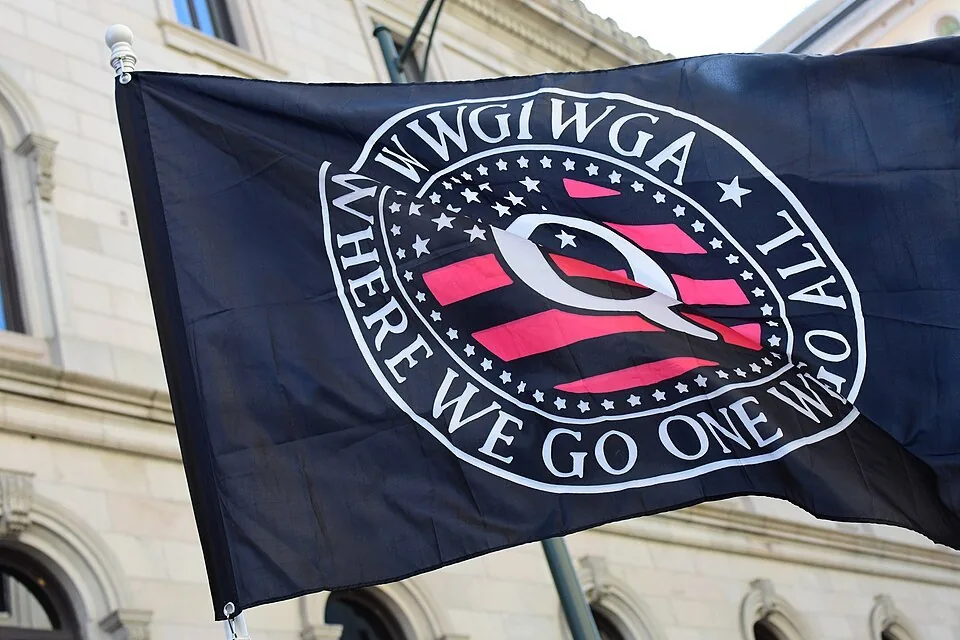 UnsupportedDOSSIER 040
QAnon
Anonymous posts became a promise of revelation.
 DocumentedDOSSIER 060
CIA relationships with journalists
The relationship was acknowledged. The legend grew wider.